WTA expands fertility benefits, players can freeze eggs with ranking protection
The WTA is pairing paid maternity leave with egg-freezing ranking protection, a move that could reshape who can stay elite long enough to build a family.
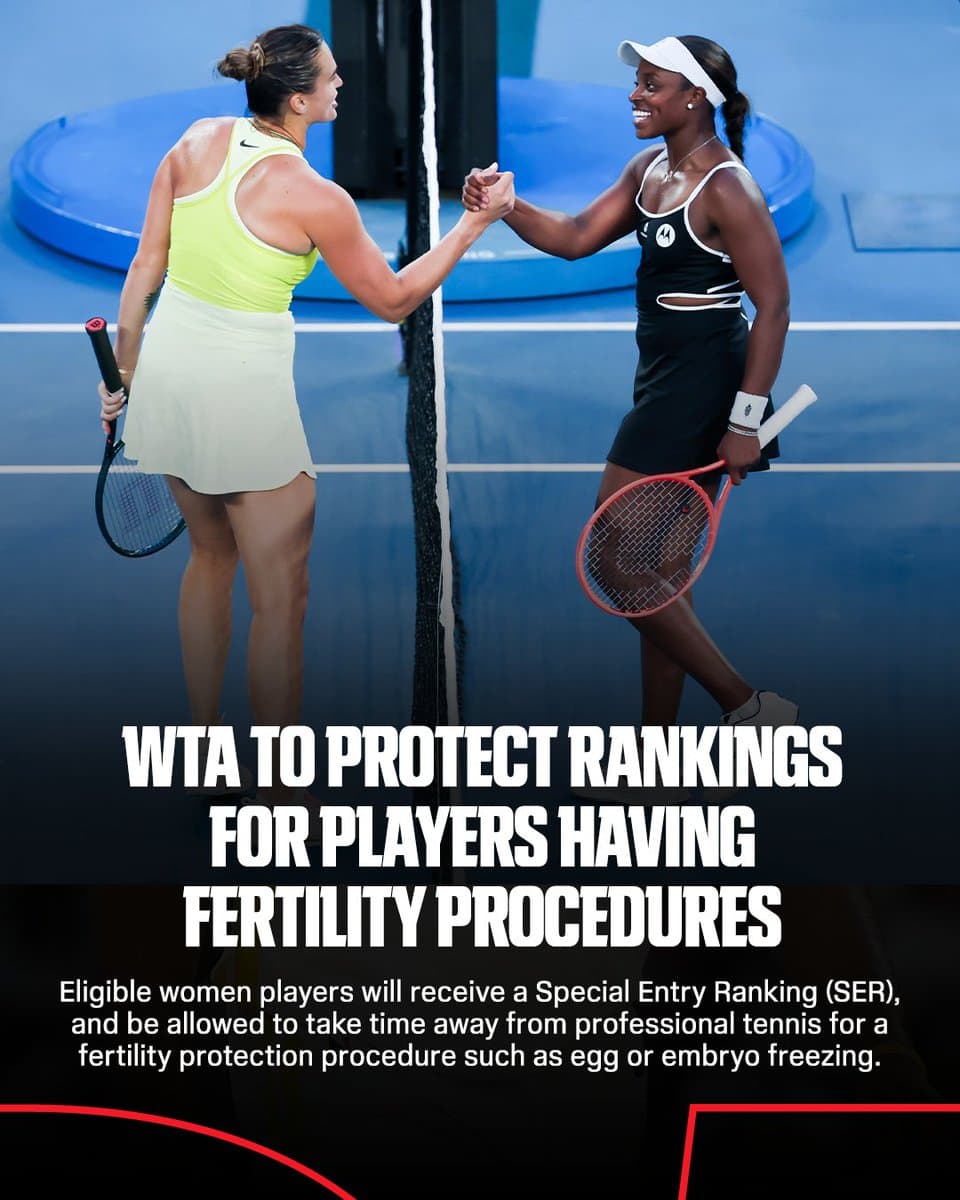
Tennis has long rewarded players who can treat their bodies like full-time investments, but the Women’s Tennis Association is now trying to make family planning part of that equation. In March 2025, the tour announced a maternity leave scheme that offers up to 12 months of paid leave and subsidies for fertility treatments, including egg freezing and IVF, with at least 320 of the world’s top players eligible to access the fund.
The package also extended paid leave to players who become parents through a partner’s pregnancy, surrogacy or adoption, signaling that the WTA was trying to move beyond a narrow definition of motherhood. WTA players’ council representative Victoria Azarenka said the response from players had been “incredible,” and the organization said the program was player-led. For a sport built on rankings, that matters because time away usually comes with a penalty that can be hard to outrun.

On June 11, 2025, the WTA added another layer: a Fertility Protection Special Entry Ranking Rule for players taking time away for procedures such as egg or embryo freezing. Eligible players can use a Special Entry Ranking for up to three tournaments when they return, and the ranking is based on the 12-week average of a player’s WTA ranking from eight weeks before the out-of-competition period began. CNBC reported that players must be out for 10 consecutive weeks for the rule to apply. The tour said the new rule expands its Family Focus Program, which already included ranking protection during pregnancy or another form of parenthood, postpartum support, paid maternity leave and grants for fertility protection through the PIF WTA Maternity Fund.
WTA chief executive Portia Archer said the policy gave players more choice and agency over when to start a family, and that it could be especially transformational for lower-earning players who are self-employed independent contractors. That is the equity question at the center of the policy shift: the WTA is offering a rare safety net in a sport where every week away can mean lost ranking points, lost entry rights and lost income. The protections may widen the path to parenthood, but they still reach a defined class of athletes, mainly those already inside the tour’s financial and ranking structure.
Sloane Stephens has become the most visible example of why that matters. The eight-time WTA singles champion said in a WTA release that the sport had created a “safe space” for players to explore their options. Motherly described Stephens as the only elite-level tennis player who has been open about freezing her eggs, and said she won the 2017 US Open and reached No. 3 in the world in 2018 after Wimbledon. Her visibility has helped turn a private medical decision into a workplace issue with public stakes, and the WTA’s newest rules suggest elite women’s tennis is finally admitting that a viable career cannot depend on choosing between peak performance and family life.
This article was produced by Prism’s automated news system from verified source data, official records, and press releases, then run through automated quality and moderation checks before publishing. The system is built and supervised by the people who set the standards it runs under. Read our full AI policy.
Know something we missed? Have a correction or additional information?
Submit a Tip