MPs demand urgent insolvency plan for universities under financial pressure
MPs warned that a university collapse could leave students in limbo over tuition, housing and visas, while Westminster still lacks a clear rescue plan.

If a university ran out of money halfway through term, students could face immediate uncertainty over tuition already paid, whether their degree would be taught out, where they would live, what happens to visas and whether research projects would be stranded. MPs said that risk is no longer theoretical and accused the government of still lacking a clear plan for what happens when a university approaches insolvency.
The Education Select Committee said in a report published on 12 May 2026 that the higher education sector in England is under “unprecedented” financial pressure and that there is no clearly understood government protocol for responding to imminent insolvency. The committee wants an early warning system triggered when the Office for Students classifies a provider as at risk, followed by costed plans to protect students, staff and the wider community. Those plans should set out options for restructuring, merger, direct financial support or an orderly exit.

MPs also said ministers should legislate to clarify whether an insolvent university can continue operating, and back a special insolvency regime for higher education, modelled on the further education sector. The committee warned that the current approach risks leaving institutions to fail without a proper teach-out plan, which could create geographical cold-spots where students lose local access to higher education.
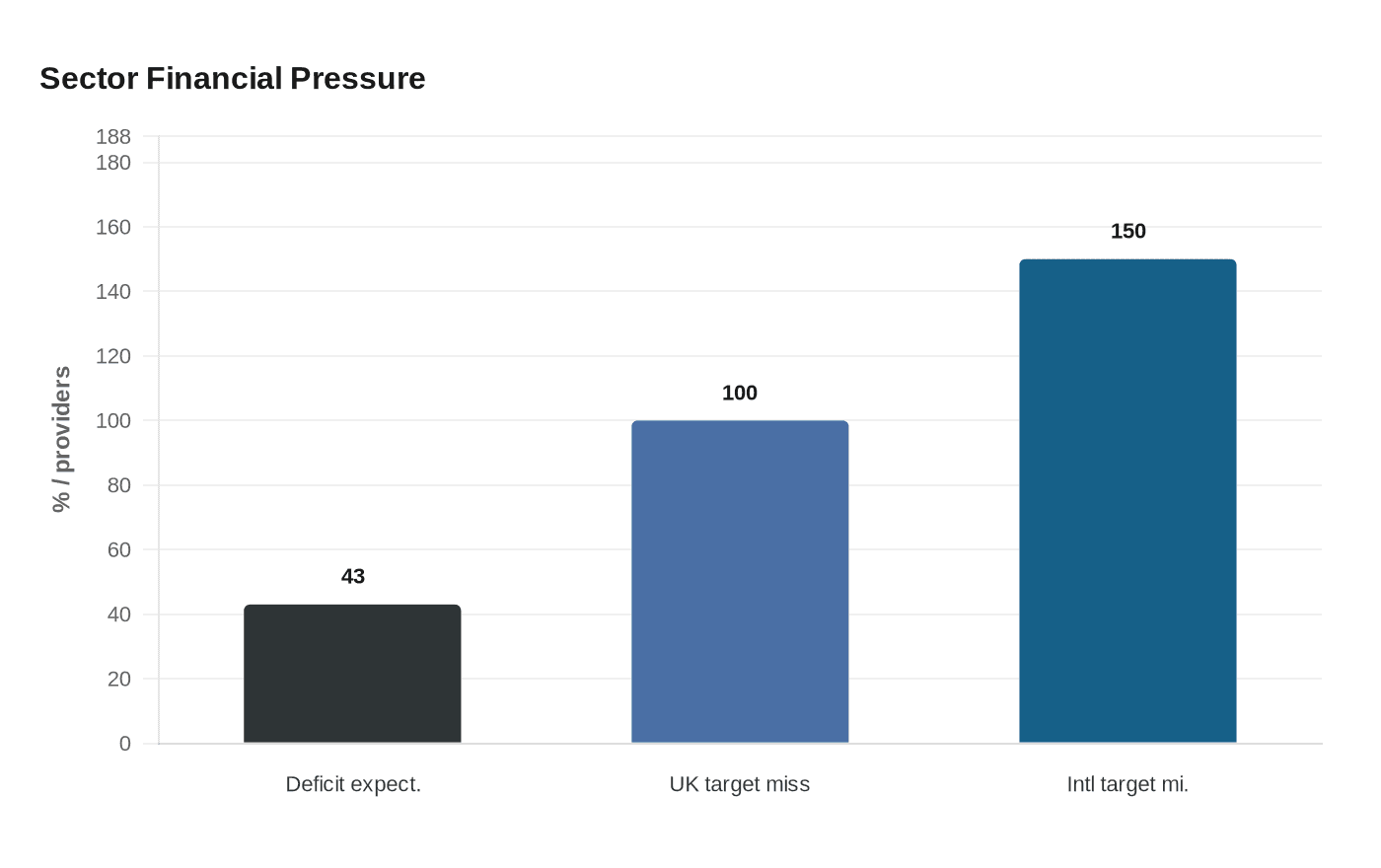
The warning lands against a worsening balance sheet across the sector. The Office for Students said on 8 May 2025 that 43% of institutions in its analysis expected a deficit in 2024-25 and that financial performance was forecast to decline for a third consecutive year, driven mainly by lower-than-expected international student recruitment. It also said many providers were already cutting costs, closing courses and selling assets. In March 2025, OfS board papers reportedly modelled a £3.4 billion drop in sector net income in 2025-26, with around 100 providers missing UK undergraduate recruitment targets and about 150 missing international recruitment targets.
The House of Commons Library said the total income of higher education providers in England was £44.6 billion in 2023-24, but the sector’s margins are being squeezed by policy and market pressure. Universities UK has estimated that government decisions will reduce funding to providers in England by £3.7 billion between 2024-25 and 2029-30, including the impact of tuition fee policy, tighter immigration rules and the proposed international student levy.
In earlier evidence to the inquiry, committee chair Helen Hayes said universities were facing a “perfect storm” because tuition fees had barely risen in a decade, research funding was under pressure and immigration policy was reducing international student numbers. The committee said the sector’s financial problems are already feeding through into redundancies, recruitment freezes, course and department closures and asset sales, threatening universities not just as educators but as economic anchor institutions in their towns and cities. Westminster now has to decide whether it will build a resolution framework before a failure exposes how unprepared it really is.
This article was produced by Prism’s automated news system from verified source data, official records, and press releases, then run through automated quality and moderation checks before publishing. The system is built and supervised by the people who set the standards it runs under. Read our full AI policy.
Did this article answer your question?
%3Amax_bytes(150000)%3Astrip_icc()%2FCertificate-of-deposit-2301f2164ceb4e91b100cb92aa6f868a.jpg&w=1920&q=75)