Multi-Group Rescue at Yankee Doodle Canyon Evacuates Two for Hypothermia
Two hikers were airlifted from Yankee Doodle Canyon after a multi-agency rescue of 15 people; the incident underscores cold hazards in slot canyons and the need for winter preparation.
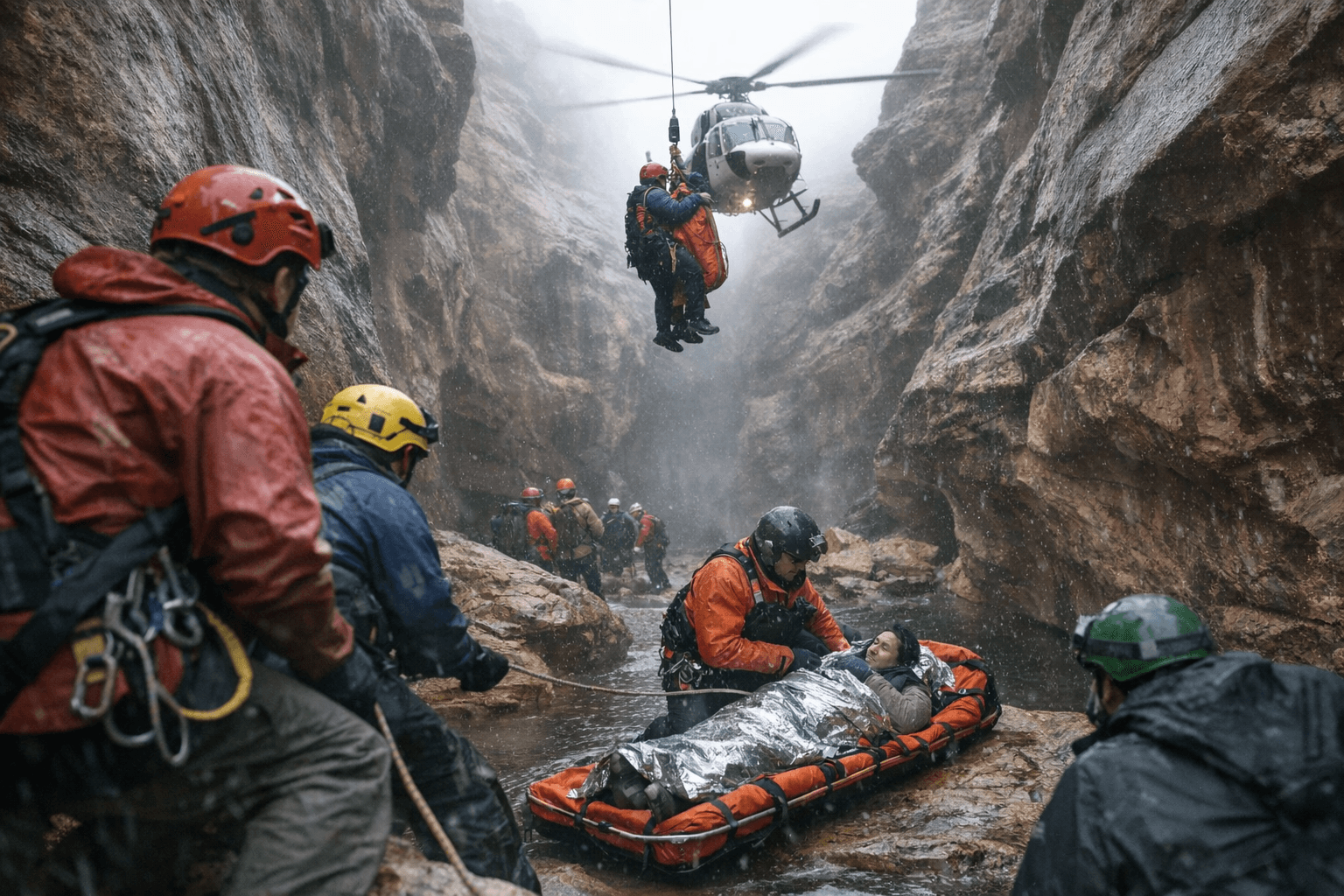
Two hikers were evacuated by rope from Yankee Doodle Canyon for hypothermia after Washington County Search and Rescue and the Utah Department of Public Safety led a multi-group rescue in Zion National Park. Crews responded around 4:15 p.m. to an initial report of 10 hikers struggling in icy, cold conditions; two showed signs of hypothermia and required helicopter extraction.
Rescuers arrived to find narrow canyon walls holding in cold air and slippery surfaces from ice. While escorting most of the first group back toward the trailhead, crews encountered a second group of five lost hikers, bringing the total number assisted to 15. After roughly three hours on scene, all 15 declined medical transport and walked out to the trailhead on their own.
The operation involved rope evacuations by helicopter for the two most affected hikers, a technique often used when steep canyon walls or unstable ground make ground carries unsafe. Washington County Search and Rescue and the Utah Department of Public Safety coordinated the response in the late afternoon, working against dropping temperatures and decreasing daylight to move everyone off the canyon floor.
The incident matters to everyday hikers and local recreational users because slot canyons like Yankee Doodle often stay much colder than open trails in winter. Narrow walls block sunlight and trap cold air, creating patches of black ice and sudden microclimate shifts that can overwhelm unprepared groups. Late starts and inadequate gear increase the risk of hypothermia and complicate rescues for volunteer and state crews.
Practical takeaways for winter canyon travel include verifying sunrise and sunset times, checking weather and trail conditions before you go, and carrying traction devices such as microspikes or crampons. Bring insulating layers, a waterproof outer shell, extra food and water, a headlamp, and a personal locator beacon or phone with battery backup. Establish clear turnaround times with your group and know bail-out routes before committing deeper into slot canyons.
This rescue also underscores resource impacts: multi-hour responses draw volunteer and state assets during peak demand for other winter incidents. Verify route conditions, carry the right winter gear, and plan for shorter days to reduce the chance your group becomes stranded. For anyone planning canyon trips in the coming weeks, take this event as a reminder that cold, compact slot canyons behave differently than open desert trails and require winter-specific preparation.
Know something we missed? Have a correction or additional information?
Submit a Tip