Musk Asks Judge to Overturn Twitter Verdict, Claims Jury Sent a Message
Musk's lawyer argued a San Francisco jury wrote "$4.20" in blue ink on the verdict form as a joke, asking the judge to toss a ruling that could cost Musk $2.1 billion.
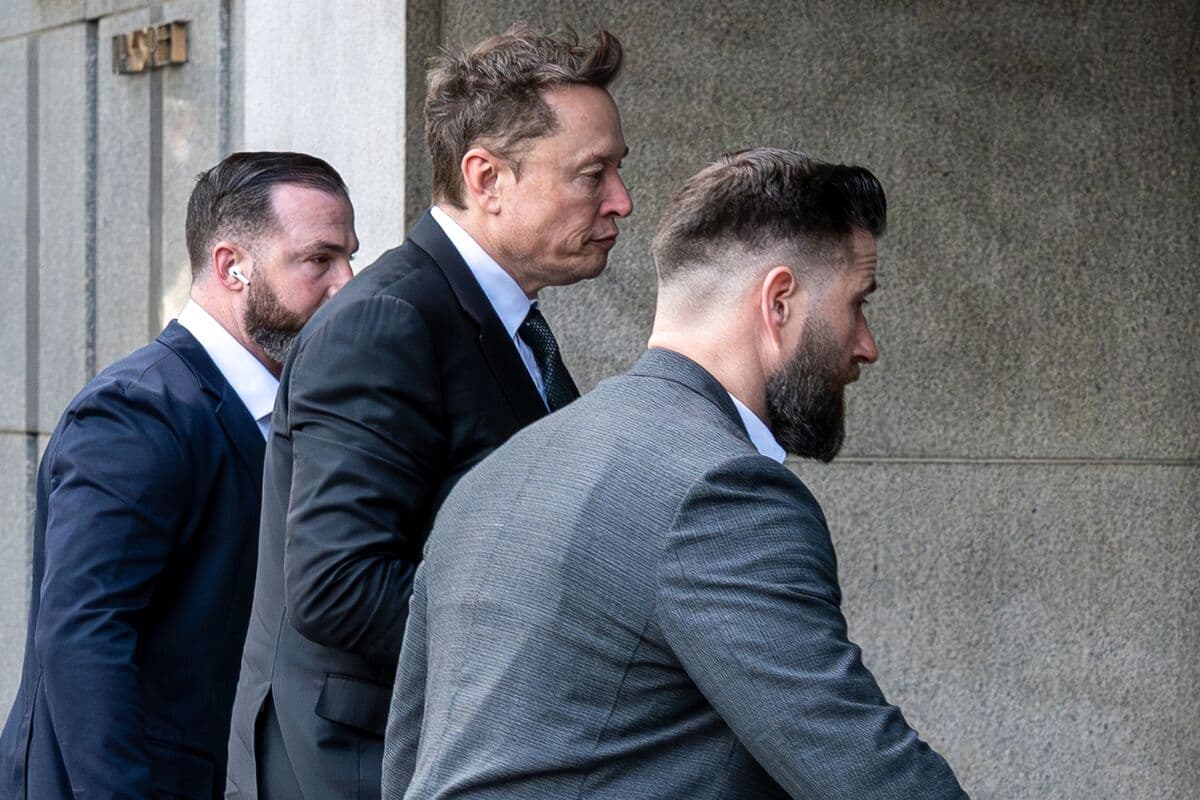
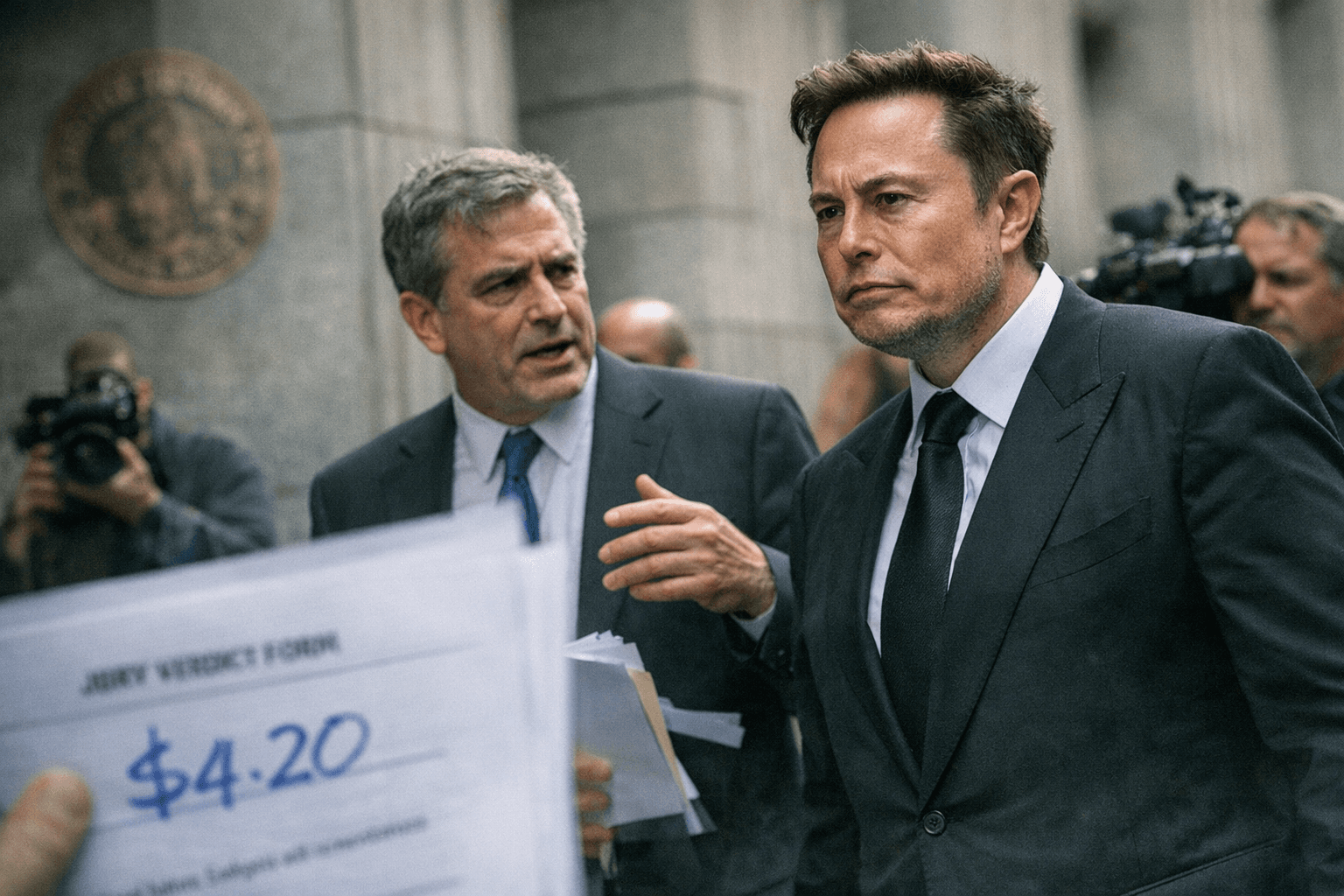
Elon Musk's attorney Alex Spiro told a federal judge that the billionaire did not get a fair trial after a San Francisco jury slipped what Spiro called a "bizarre and highly questionable" joke into the verdict form, highlighting the number $4.20 in blue ink when computing how much Musk's tweets depressed Twitter's stock price. The number 420 is cultural slang for marijuana.
The underlying verdict, returned March 20, was a rare courtroom loss for Musk. A jury found him liable for misleading investors by deliberately driving down Twitter's stock price in the months leading up to his 2022 acquisition of the social media company for $44 billion, but absolved him of some fraud allegations. The nine-person jury returned the verdict after nearly four days of deliberation, nearly three weeks after the trial began on March 2, finding that while Musk misled investors with two tweets, including one that said the Twitter deal was "temporarily on hold," he did not intentionally "scheme" to defraud investors.
The jury unanimously found that Musk's tweets on May 13 and May 17 were materially false or misleading. Investors claimed those posts, including the May 13, 2022, tweet stating the deal was "temporarily on hold" pending a review of the number of bots, were part of a deliberate plan to drive down the company's stock price so Musk could renegotiate at a better price.
The jury awarded shareholders between about $3 and $8 per share per day as damages, which the plaintiffs' lawyers said amounts to about $2.1 billion. Mark Molumphy, an attorney for the plaintiffs, called it "the largest securities jury verdict in United States history."
In a letter submitted to the court, Musk's lawyers said that Musk intends to challenge the jury's decision and would do so in filings to be submitted to Judge Breyer on or before April 24. While they did not specify the grounds they will raise, the lawyers have not been shy about their opinion that the trial was fatally flawed and that Breyer should have declared a mistrial when they asked him to do so on March 7.
Musk's lawyers also said that if they are unsuccessful in convincing Breyer to throw out the verdict, they expect to appeal to the U.S. Court of Appeals for the 9th Circuit, something they would like to do "without delay."
During the trial itself, Musk took the stand in San Francisco and told jurors that people "read too much" into his posts, characterizing the tweets at issue as "extremely literal" and not intended to reduce the price he would have to pay. His lead-up to the $44 billion deal was complicated by an earlier attempt to walk away: after serving notice in July 2022 that he was pulling out, Musk reversed course just before a Delaware Chancery Court trial was scheduled to begin and agreed to pay the original price. He testified that he followed through because his lawyers had advised him that Delaware Chancery Court Chancellor Kathleen St. Jude McCormick was "extremely biased" against him and that he had no chance of prevailing.
Joseph Cotchett, an attorney for the plaintiffs, called the verdict "an important victory, not just for investors of Twitter, but for the public markets," adding: "I think the jury's verdict sends a strong message that just because you're a rich and powerful person, you still have to obey the law, and no man is above the law."
Musk's lawyers at Quinn Emanuel Urquhart & Sullivan characterized the outcome differently: "We view today's verdict, where the jury found both for and against the plaintiffs and found no fraud scheme, as a bump in the road. And we look forward to vindication on appeal."
Whether the $4.20 notation ultimately becomes the basis for a new trial now rests with Judge Charles Breyer. Breyer has the authority to set aside or override parts of the jury's verdict, and even though the jury indicated that damages should be awarded to class members, the amount to be paid to individual plaintiffs still needs to be determined. Musk's lawyers had motioned for a mistrial several times during the contentious trial, contending that the billionaire could not get a fair trial in San Francisco because of public animosity toward him. The $4.20 notation now gives that argument a concrete, if unconventional, foothold.
Know something we missed? Have a correction or additional information?
Submit a Tip

