Musk trial exposes OpenAI wealth, mission fight in federal court
An inflatable Elon Musk doll and fancy butt cushions framed a trial over who controls OpenAI, where billions in stakes and a binding judge's ruling collided.
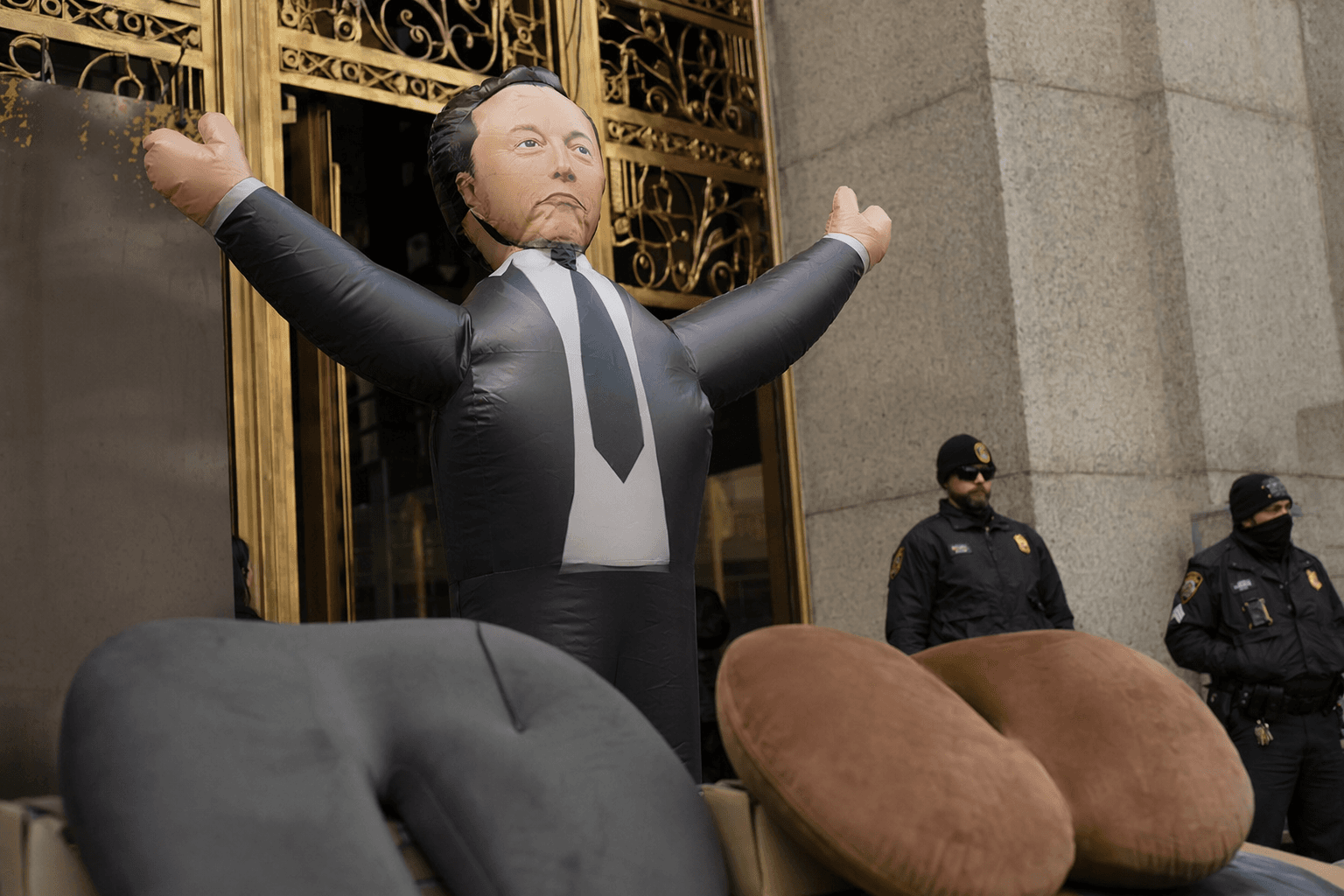
The spectacle inside the Ronald V. Dellums Federal Building in Oakland was as much about wealth as it was about artificial intelligence. An inflatable Elon Musk doll, fancy butt cushions and the reported passage of six tech billionaires through the courthouse turned the three-week trial into a rare public viewing of Silicon Valley power, even as the underlying fight asked a far larger question: who controls the future of OpenAI.
The case put Elon Musk against OpenAI, Sam Altman and Greg Brockman over whether the company violated its nonprofit roots by creating a for-profit arm and taking outside investment, including Microsoft’s. Judge Yvonne Gonzalez Rogers presided over the proceedings in equity, which means her ruling will be binding even though the jury serves in an advisory role. By mid-May, the jury was preparing to deliberate after testimony that centered on the company’s origins, its money and the meaning of its mission.
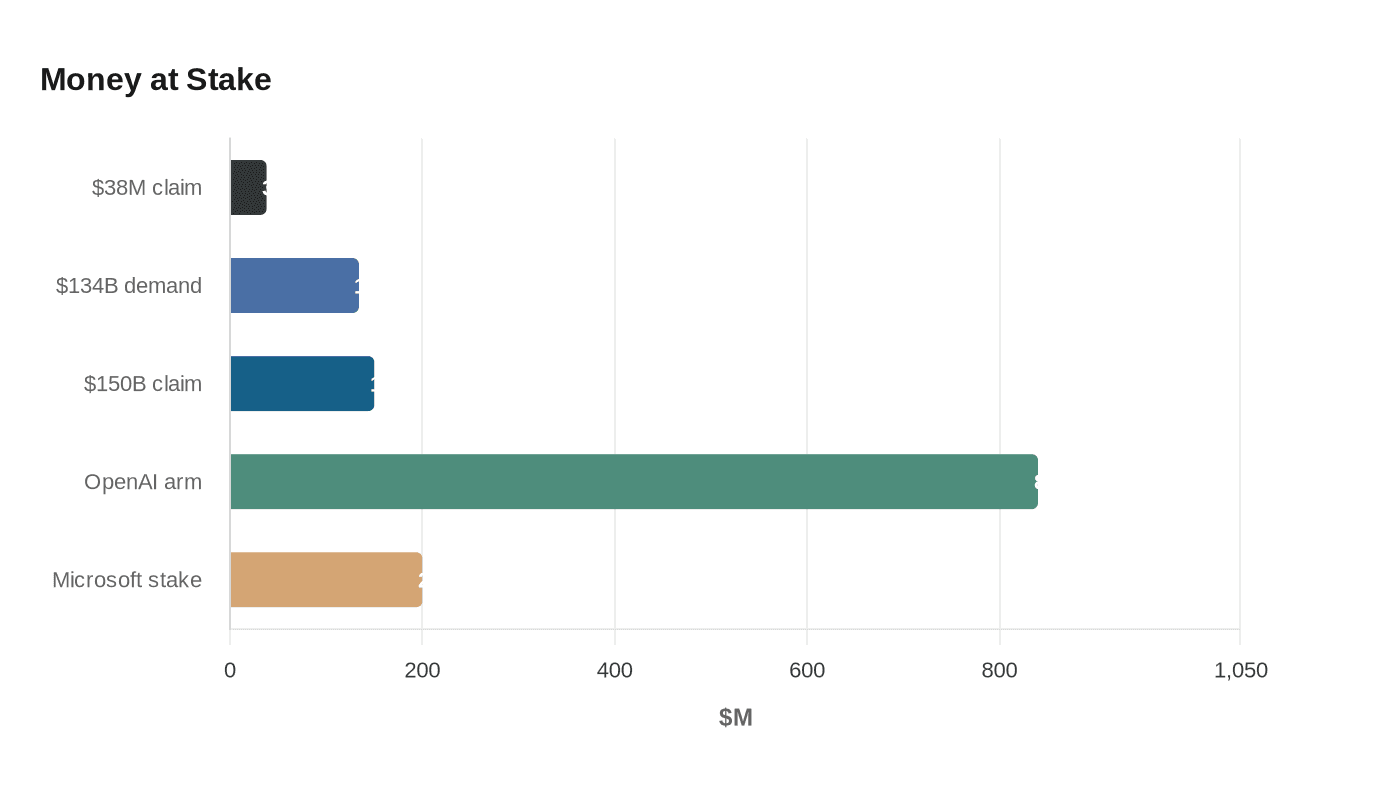
Musk testified on the second day and said he founded OpenAI as a counterweight to Google. He also said he was not opposed to a small for-profit subsidiary, so long as it did not control the mission. OpenAI and Microsoft countered that OpenAI remains controlled by a nonprofit and that Musk, now leading xAI, was using the suit to harass a rival startup. The case has also drawn in Musk’s earlier claim that roughly $38 million in contributions were used for unauthorized commercial purposes, along with his broader damages demands that were once framed as up to $134 billion and later as “all ill-gotten gains” for the OpenAI charity.
The courtroom record exposed the scale of the money at stake. Courthouse News Service reported that Musk’s claims also sought $150 billion in compensatory and punitive damages from OpenAI and Microsoft. Greg Brockman testified about his own financial interests while defending OpenAI’s mission, and his stake in the for-profit arm was reported as worth between $20 billion and $30 billion. OpenAI’s for-profit arm has been valued at $840 billion, while Microsoft’s 27% stake has been valued at about $200 billion.
The case reached back to OpenAI’s founding in 2015, Musk’s departure from the board in 2018, and the creation of the for-profit subsidiary in 2019. It now stands as a test of whether a company built around public-minded promises can keep that identity after attracting the kind of capital that turns ideals into balance-sheet numbers. As Catherine Bracy of TechEquity put it, “This is probably the most contact they’ve had with normal people in 10 years, at least.”
This article was produced by Prism’s automated news system from verified source data, official records, and press releases, then run through automated quality and moderation checks before publishing. The system is built and supervised by the people who set the standards it runs under. Read our full AI policy.
Did this article answer your question?


