MV Trisha Kerstin 3 sinks off southern Philippines with over 350 aboard
Ferry sank en route from Zamboanga to Jolo, leaving at least 15 dead and dozens missing.
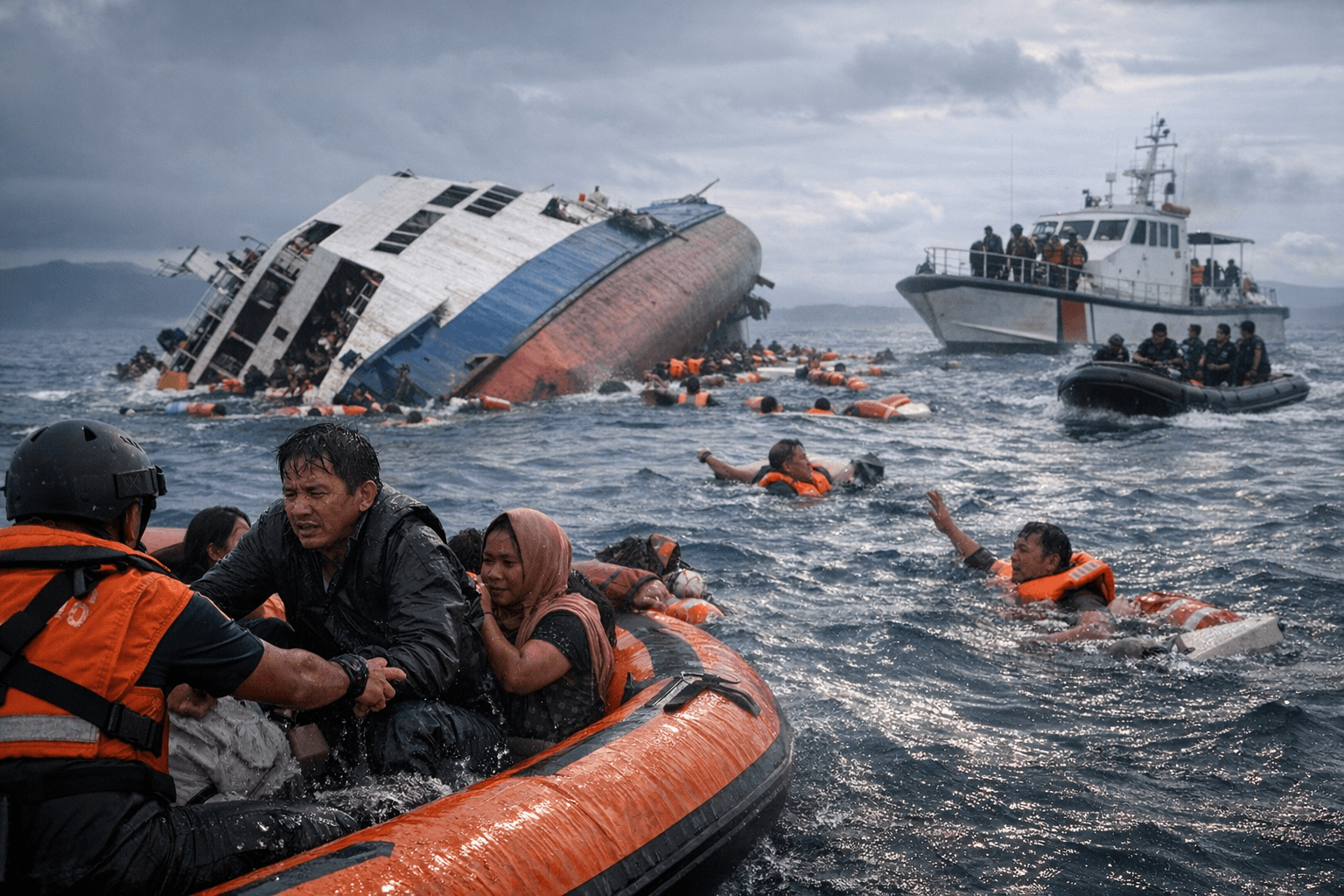
At least 15 people have died and dozens remain unaccounted for after the passenger ferry MV Trisha Kerstin 3 foundered in choppy seas off the southern Philippines, Philippine Coast Guard officials said. The vessel departed Zamboanga bound for Jolo in Sulu province in the early hours of January 26, 2026, carrying more than 350 passengers and crew.
The coast guard reported that about 316 people have been rescued. Rescue operations continue amid worsening weather and limited light, with authorities racing to locate survivors before conditions deteriorate further. The loss underlines the particular vulnerability of coastal travel in the southern Philippine archipelago, where communities depend on regular ferry links across difficult, often stormy waters.
Details about what caused the MV Trisha Kerstin 3 to founder remain sparse. Local officials cited choppy seas as a factor, but an official cause has not been released. Maritime investigators are expected to examine the vessel's condition, passenger manifest and compliance with safety rules as the search moves into a sustained recovery phase. Families of passengers have gathered at ports in Zamboanga and in Sulu, where anxiety and grief are compounded by the remoteness of the islands and the difficulty of fast, coordinated emergency responses.
The sinking will revive long-standing concerns in the Philippines about maritime safety, enforcement and the capacity of local authorities to manage large-scale sea rescues. Ferry travel is a vital lifeline between islands for people, goods and services, but it also poses perennial hazards: sudden weather changes, aging hulls and overcrowding have been cited in past tragedies. The archipelago's fragmented geography and limited infrastructure mean that delays in emergency medical evacuation and damage control can have severe consequences.
The incident also carries local political and humanitarian dimensions. Sulu province sits at the periphery of the Philippine state and has faced decades of underinvestment and periodic unrest. The remoteness of many island communities complicates logistics for both immediate rescue and longer-term reconstruction of transport links. Humanitarian agencies and provincial authorities are coordinating to assist survivors and families, including arranging temporary shelter, medical care and transport to larger hospitals in Zamboanga.
Regional governments and international maritime organizations often play advisory roles in such disasters, offering technical assistance for search and rescue and for investigations into safety compliance. In the short term, the priorities are clear: find and help survivors, provide accurate manifests to families and establish the sequence of events that led to the sinking. In the medium term, authorities will face renewed pressure to bolster inspections, upgrade emergency services and strengthen the regulatory oversight that governs passenger vessels operating in Philippine waters.
For the families waiting on shore, the immediate imperative is information and support; for policymakers, it is the harder task of translating grief into durable reforms that reduce the risk of another maritime catastrophe in an archipelago where the sea is both lifeline and peril.
This article was produced by Prism’s automated news system from verified source data, official records, and press releases, then run through automated quality and moderation checks before publishing. The system is built and supervised by the people who set the standards it runs under. Read our full AI policy.
Did this article answer your question?


