Myanmar Frees 6,186 Prisoners in Independence Day Amnesty Amid Election
Myanmar’s military government announced an Independence Day amnesty freeing 6,186 prisoners as a monthlong, multi-stage general election moves forward. The measure, which includes the deportation of 52 foreigners and a one-sixth reduction in other sentences, raises questions about whether political detainees were among those released and what the gesture means for domestic stability and international relations.
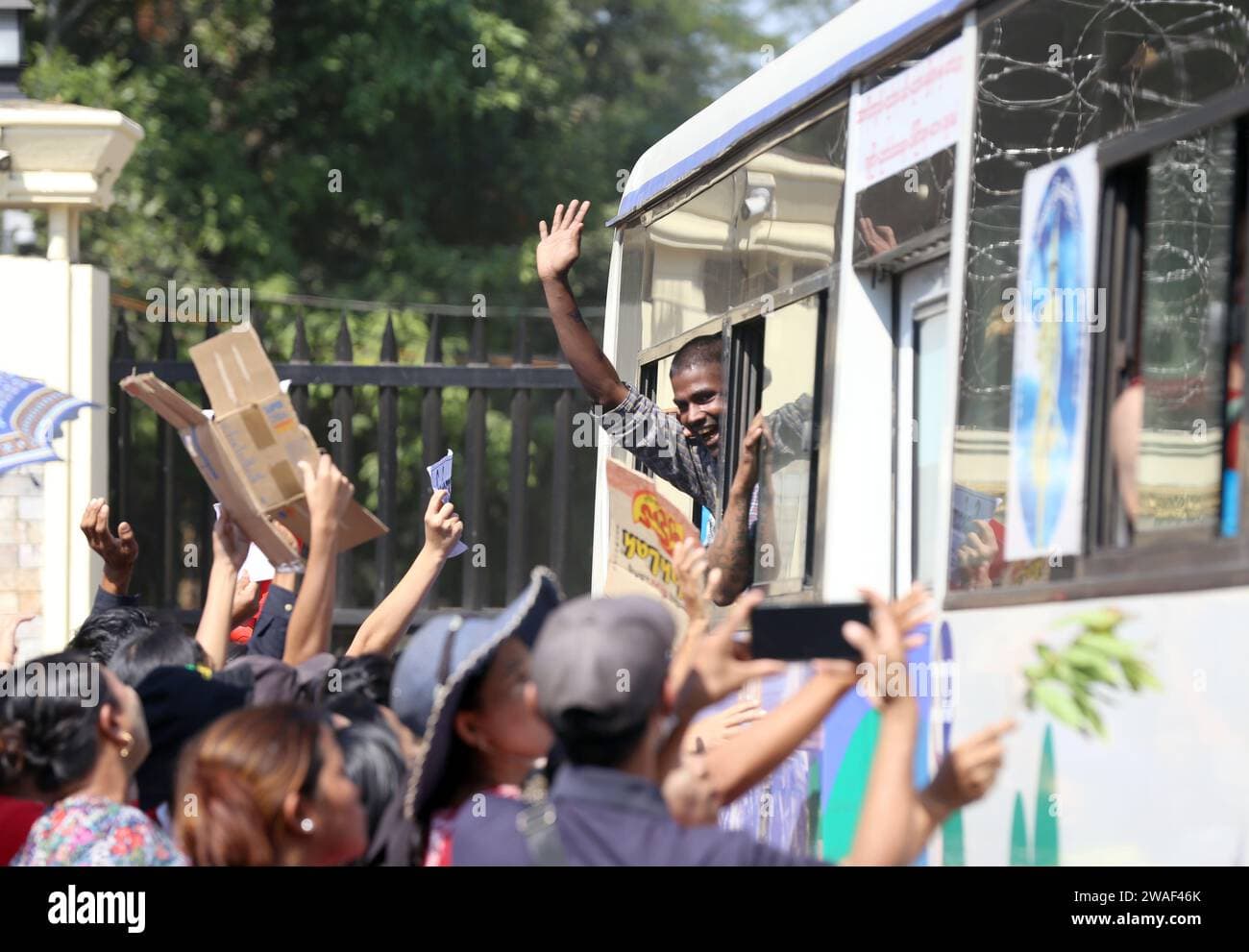
Myanmar’s military government announced on Jan. 4 that 6,186 prisoners would be freed under an Independence Day amnesty, state-run media said, a move that coincides with the country’s 78th anniversary of independence and comes as the junta conducts its first election since the Feb. 1, 2021 coup. The government provided a breakdown of 6,134 Myanmar nationals to be pardoned and 52 foreigners who will be released and deported, but did not publish names or nationalities.
State-run MRTV described the amnesty as a "humanitarian gesture that takes into consideration the public’s peace of mind." A statement attributed to the National Defence and Security Council said the measure was granted "on humanitarian and compassionate grounds." Regime media reported that Senior General Min Aung Hlaing granted the pardons.
The announcement also included a one-sixth reduction in sentences nationwide for other inmates, equivalent to roughly 16.7 percent of remaining terms, though officials excluded those convicted of what they termed "serious crimes." Authorities specified that murder, rape, terrorism, corruption and arms- or drug-related offences were not eligible for the sentence reduction or pardon, but offered no list identifying individual beneficiaries.
The timing and opacity of the releases underscore competing political motives. The amnesty comes during a three-stage electoral process that began about a week earlier and will run through the month. Critics and observers have characterized the vote as an attempt by the junta to manufacture legitimacy after the 2021 military takeover. The government’s clemency move is likely intended to project benevolence and ease tensions as polling continues, but the lack of independent verification has left key questions unanswered.
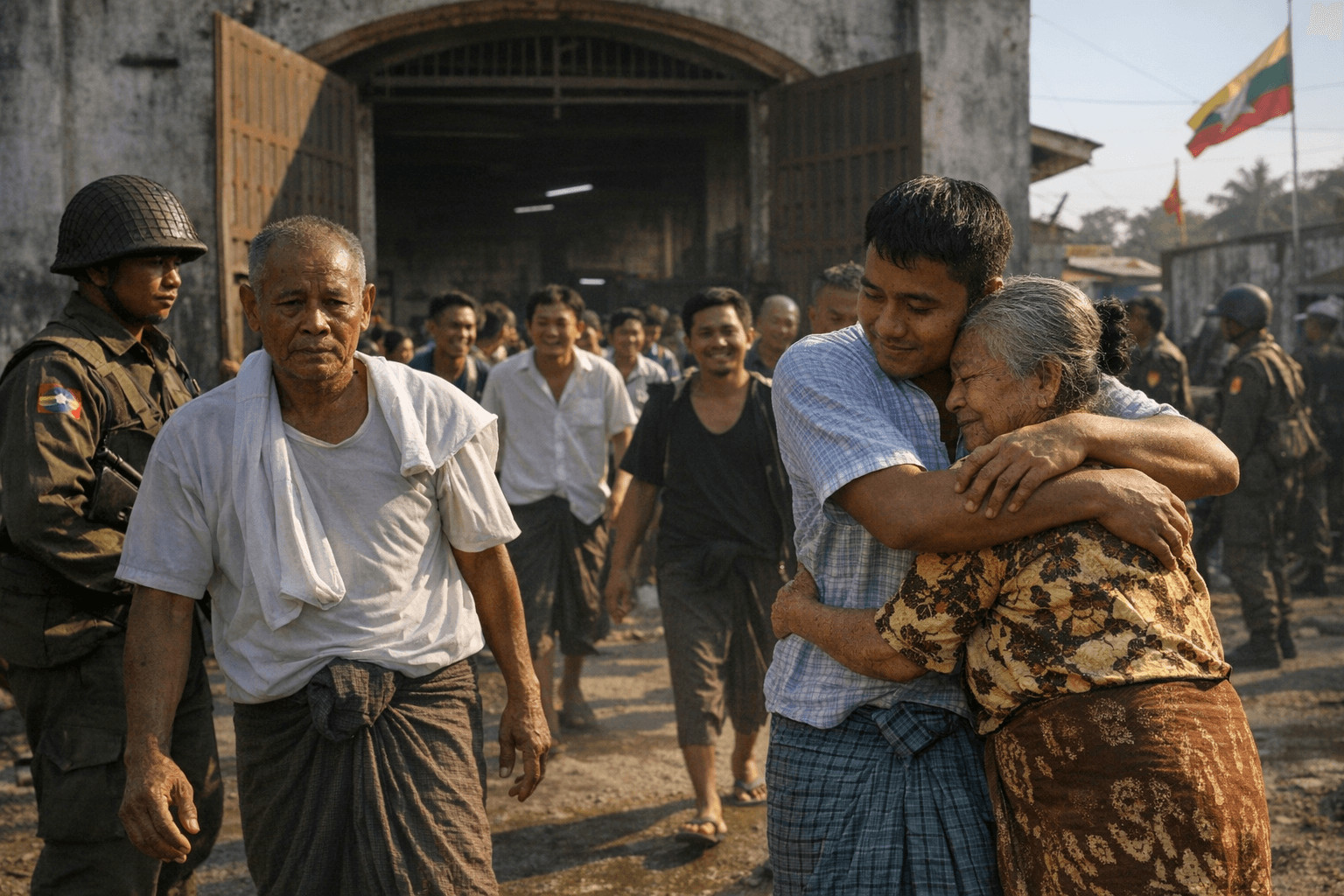
It is not clear whether the freed include thousands of political detainees arrested for opposing military rule, multiple outlets noted. No comprehensive list of names was published, and observers have yet to confirm whether prominent political prisoners are among those released. Scenes accompanying state coverage showed relatives celebrating outside Yangon’s Insein prison and a flag-raising ceremony in Naypyidaw, but reporting did not identify individual beneficiaries.
Beyond immediate political optics, the amnesty carries economic and diplomatic implications. The deportation of 52 foreigners could strain consular relations and affect bilateral ties, depending on the countries involved. For markets and potential foreign investors, gesture-driven signals of conciliation may provide only limited reassurance without transparency, rule-of-law improvements and clarity over the fate of political detentions. Sanctions and risk assessments tied to governance and human rights are unlikely to lift on the basis of an unverified, holiday-timed pardon.
For long-term stability and investor confidence, independent verification of the list of released prisoners, disclosure of the nationalities of those deported and clarity on whether political detainees were included will be critical. Until such details emerge, the amnesty will be judged by many analysts as a narrow political maneuver rather than a substantive policy shift.
This article was produced by Prism’s automated news system from verified source data, official records, and press releases, then run through automated quality and moderation checks before publishing. The system is built and supervised by the people who set the standards it runs under. Read our full AI policy.
Did this article answer your question?


