Myanmar Junta Announces Three Stage Elections, Critics Call Process Sham
Myanmar’s military government has published a three stage schedule for the first parliamentary voting since the 2021 coup, with phase one set for December 28, 2025. Observers warn the tightly managed ballots, exclusions of rebel held areas and prosecutions of dissenters make the polls unlikely to restore democratic rule or end the civil war, deepening political and economic uncertainty.
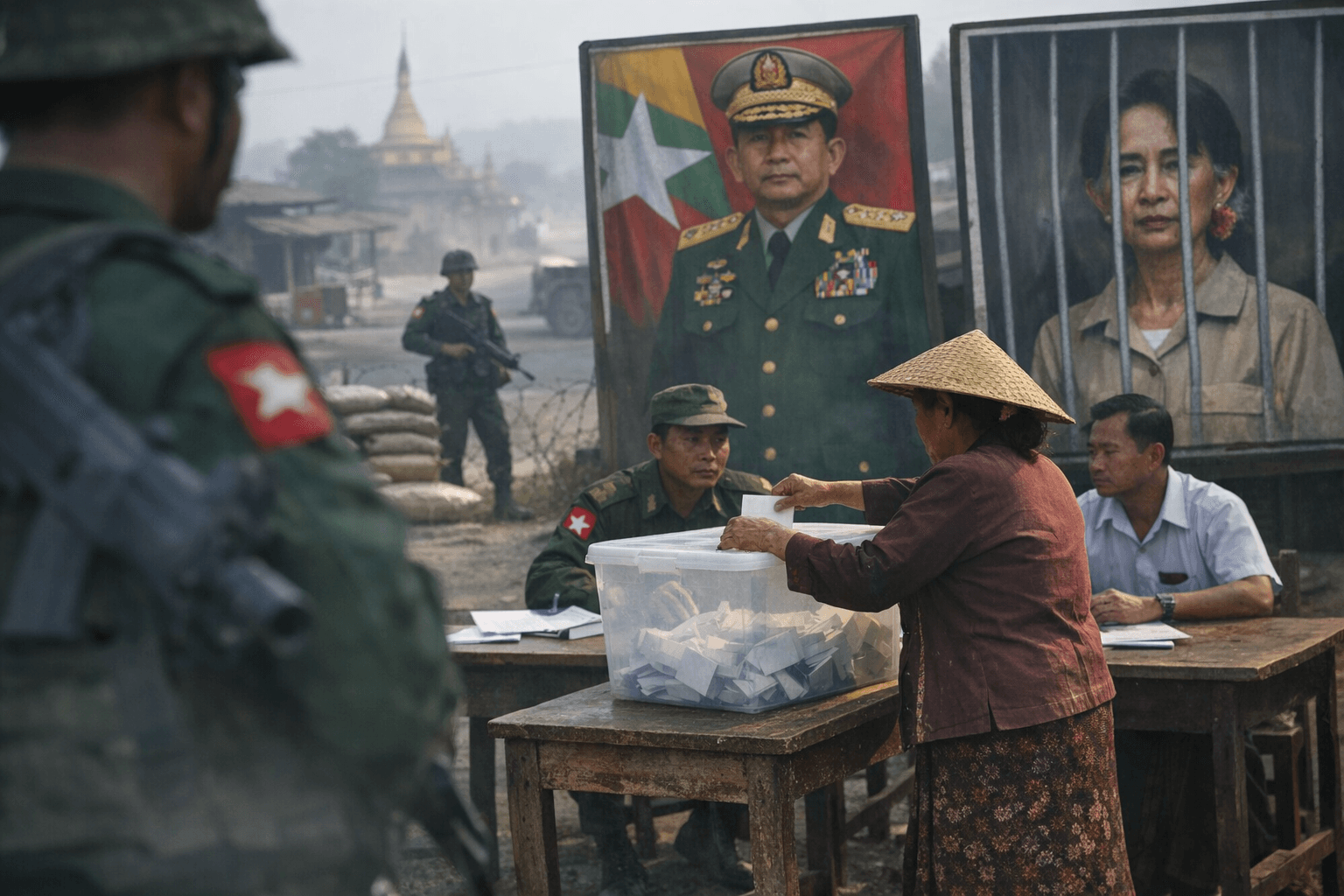
Myanmar’s junta has set a three stage parliamentary election beginning this weekend, with voting scheduled for December 28, 2025, followed by further rounds on January 11 and January 25, 2026. The Union Election Commission under military control announced in August that the vote would be held in stages, and on August 21 it designated the phase one constituencies, listing 102 townships to go to the polls in the opening round.
The commission’s timetable covers seats in both houses of the Assembly of the Union, the Amyotha Hluttaw and the Pyithu Hluttaw. A UEC official said on September 11 that results would be announced by the end of January, though the commission has not published a detailed timeline for counting or for formal result tabulation. With the first ballots due in two days, major operational details remain undisclosed.
The staged format reflects stark geographic and security constraints. The ballot will not take place in areas controlled by insurgent groups, and reporting indicates 121 constituencies, including 56 townships, were excluded from the first phase. Phase three will take place in 63 of the country’s 330 townships, underscoring that the process will cover only fragments of the country at each stage rather than delivering a simultaneous nationwide vote. Military authorities argue that continuing clashes between state forces and opposition armed groups make a single nationwide election unfeasible.
Political context and legal changes since 2021 matter to legitimacy. These will be the first elections since the military ousted the elected government in 2021. The civilian leader Aung San Suu Kyi remains imprisoned and her party was dissolved after the putsch. The junta and the UEC present the vote as a return to multiparty democracy and a potential route to peace, a narrative advanced by military leaders even as they acknowledge the conflict limits full participation.
Human rights organizations, democracy watchdogs and international monitors have broadly dismissed the phased election as a managed exercise designed to rebrand military rule. Critics point to the exclusion of large areas, the dissolution and jailing of principal opposition actors, a severe crackdown on dissent ahead of the polls and laws that authorities are using to prosecute more than 200 people for alleged disruption of the vote. The Assistance Association for Political Prisoners estimates roughly 22,000 political prisoners remain in junta custody, a figure analysts say undercuts prospects for an inclusive vote.
The political and economic implications are immediate. Financial markets and foreign investors active in Southeast Asia have treated Myanmar as high risk since 2021, and a vote viewed as unrepresentative may prompt further diplomatic pressure and targeted measures from Western governments. For a country already contending with conflict induced economic strain, continued international isolation would hamper reconstruction, trade and long term investment flows. Most analysts say the election is unlikely to reconcile rival factions or end the civil war, and without clear operational transparency the process will struggle to win domestic or international confidence. Major questions therefore remain about who will participate, how results will be certified and whether the vote will alter the trajectory of Myanmar’s political crisis.
This article was produced by Prism’s automated news system from verified source data, official records, and press releases, then run through automated quality and moderation checks before publishing. The system is built and supervised by the people who set the standards it runs under. Read our full AI policy.
Did this article answer your question?


