Nadella weighs AI backlash as Trump pushes broader public gains
Satya Nadella faced AI backlash as Trump pressed a bigger public payoff, sharpening questions over who shares in the gains and who pays the costs.

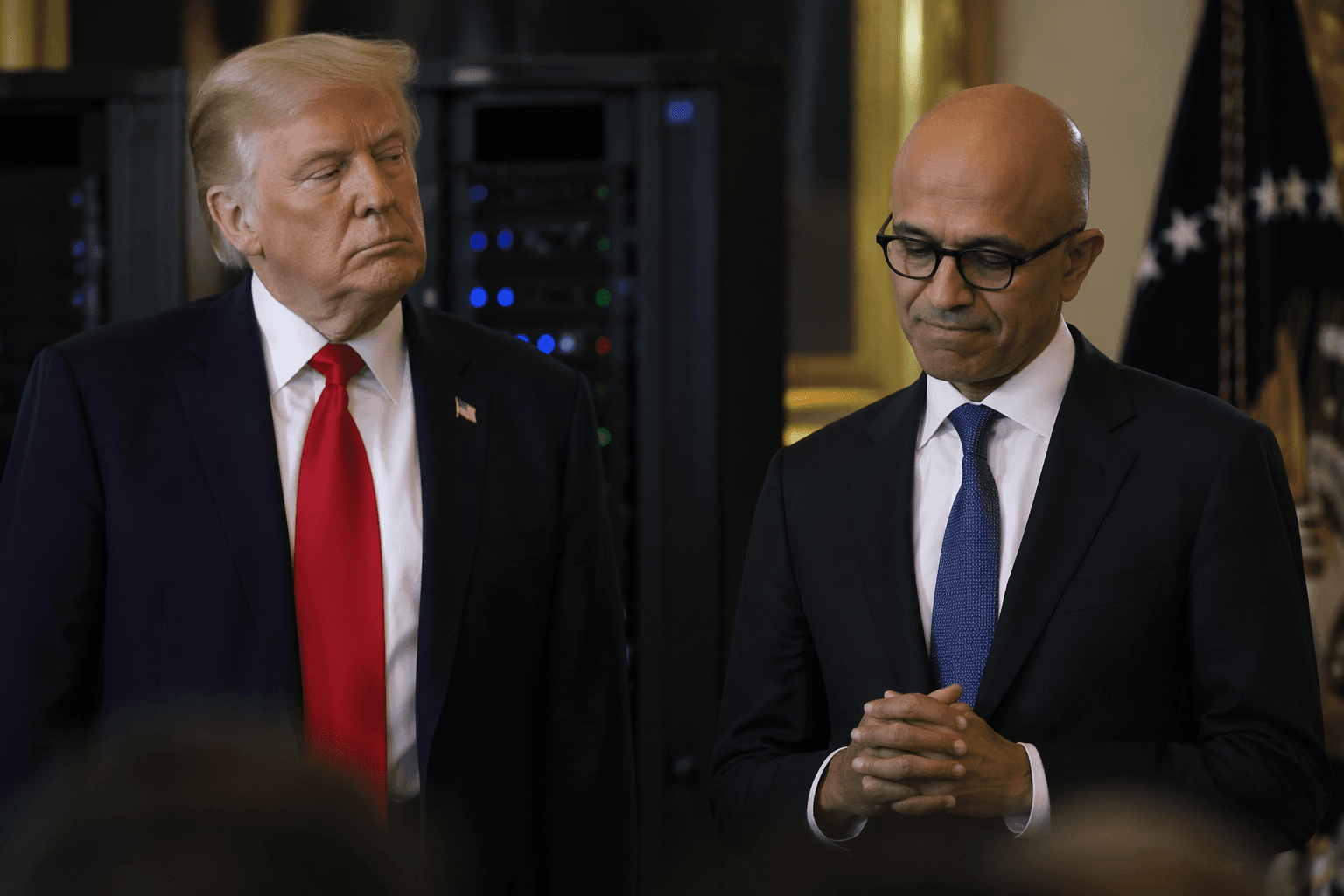
Satya Nadella used The New York Times’s Hard Fork Live stage in New York City to confront the backlash around artificial intelligence as President Donald J. Trump pushed the idea that Americans should share in the wealth created by A.I. companies. The exchange turned into a sharper credibility test for Big Tech: whether AI will spread its gains widely or leave workers, creators and communities carrying the costs.
The White House has made AI a national priority. On July 23, 2025, it released America’s AI Action Plan, which laid out more than 90 federal policy actions across innovation, infrastructure, and international diplomacy and security. On June 2, 2026, the White House said Trump signed an executive order aimed at advancing AI innovation and security, reinforcing the administration’s argument that the United States should move faster and partner closely with private industry.
But the political case for speed has run into a public trust problem. A White House AI framework published in March 2026 said some Americans feel uncertain about AI’s effects on children’s wellbeing and electricity bills, a sign that the debate is no longer limited to engineering or competition with China. It now touches household costs, the pace of workplace change, and whether the public sees any clear benefit from systems that are increasingly embedded in daily life.
Microsoft has tried to place itself on the side of responsibility. Its 2025 Responsible AI Transparency Report says the company is building and deploying AI responsibly, supporting customers, and engaging in global governance efforts. The company says its responsible AI framework is guided by fairness, reliability and safety, privacy and security, transparency, accountability, and inclusiveness. It also says it used the National Institute of Standards and Technology’s AI Risk Management Framework in its development and deployment process.
Microsoft’s report says its newer policy approach includes a Frontier Governance Framework, which it says was shared publicly in February 2025 and grew out of voluntary Frontier AI Safety Commitments made in May 2024 by Microsoft and 15 other AI organizations. That history matters because Nadella’s comments landed in the middle of a larger question that neither Washington nor Silicon Valley has settled: if AI keeps advancing, who gets a real stake in the upside, and who is left to absorb the fallout.
This article was produced by Prism’s automated news system from verified source data, official records, and press releases, then run through automated quality and moderation checks before publishing. The system is built and supervised by the people who set the standards it runs under. Read our full AI policy.
Did this article answer your question?