Nairobi matatus, colorful minibuses define city life and youth culture
Nairobi’s matatus carry most city trips, but they also carry style, status and youth ambition, turning transport into one of the city’s loudest cultural arenas.
The matatu as Nairobi’s moving public square
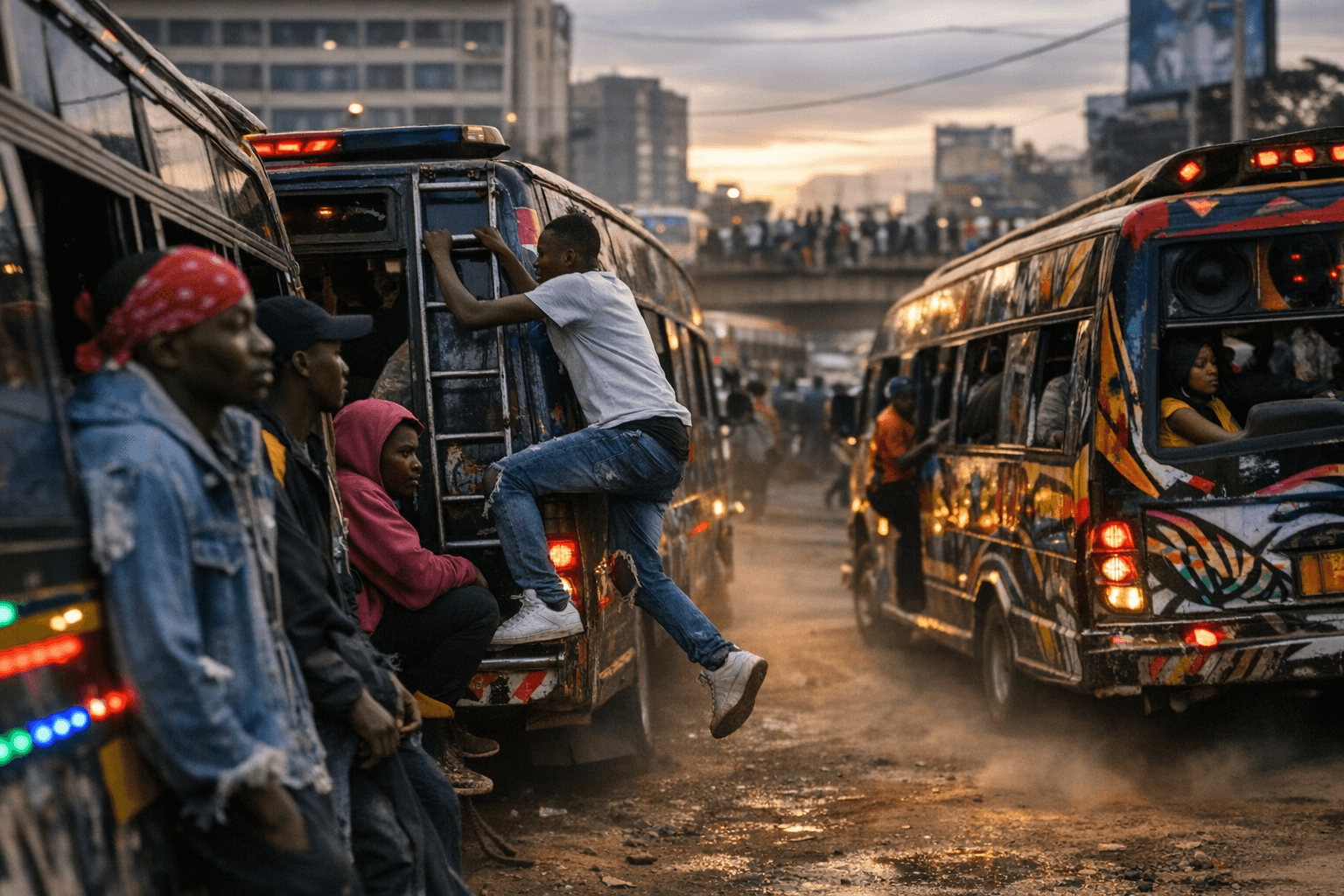
Bright paint, booming music and flashing interiors make Nairobi’s matatus impossible to ignore, but their real power is practical: reports say they carry more than 70% of commuter trips in the city. These privately owned minibuses are legally public transport, which means they sit at the center of daily mobility even as they behave like rolling expressions of taste, class and status.
That dual identity explains why matatus matter far beyond transport policy. They are how workers reach jobs, how students cross the city and how neighborhoods stay connected to the Nairobi CBD and to each other. At the same time, they are one of the clearest windows into what young Nairobi finds cool, from graffiti and custom interiors to the music blasting from their speakers.
From colonial workaround to urban institution
The matatu system began in the 1950s, when informal taxis emerged under colonial-era transport restrictions. What started as a workaround became a durable city institution, and scholarly histories trace its growth through the 1960s, 1980s and 1990s as the vehicles became more decorated, more visible and more culturally influential.
The name itself reflects that early economy. The word “matatu” is widely said to come from the Swahili word for “three,” a reference to the three pennies passengers originally paid. That origin still matters because it shows how deeply the system was tied to ordinary fare-paying riders from the beginning, not just to vehicle owners or transport officials.
By the time matatus spread through Nairobi’s neighborhoods, they were no longer simply a way to get from one point to another. They had become a recognizable urban language, one that spoke to the city’s pace, informal enterprise and constant reinvention. In that sense, the matatu is less a bus than a public institution built from the ground up by commuters, drivers and owners.
Design, music and youth identity on wheels
The most visible matatus are also the most deliberate. Graffiti, custom interiors, flashing lights and loud music are used to attract riders and project status, turning each vehicle into a moving canvas and mobile sound system. That style is not decoration for its own sake; it is part of the business model, where attention helps define which vehicle feels current, desirable and worth boarding.
This is where youth culture enters the picture. Matatus are a stage for what Nairobi’s younger generation considers aspirational, and recent reporting shows the culture remains commercially competitive, with flashy new nganyas drawing crowds, selfies and debate. The vehicles become an everyday test of who gets to define Nairobi cool, and the answer is negotiated in real time by passengers, crews and observers on the street.
The cultural meaning is broader than fashion. Researchers and historians describe matatus as sites of entrepreneurship, cultural innovation, political critique and social contestation. They have also been read as a window into rapid urbanization, social insecurity, organized crime and popular culture, which helps explain why a ride across the city can feel like a moving commentary on urban life itself.
Across corridors linking places such as Eastlands and the Nairobi CBD, the matatu reveals how class and creativity intersect. A bright exterior can signal ambition, a curated sound system can signal taste and a packed vehicle can signal demand. The result is a transport system that does more than move people; it stages Nairobi’s social hierarchy in public.
Why the sector is an economic lifeline
The scale of dependence makes every disruption visible. Nairobi commuters and the broader economy rely heavily on matatu service, so strikes and crackdowns quickly spill into stranded workers, delayed deliveries and disrupted routines. Industry reporting has repeatedly shown how vulnerable the city is when matatus stop moving, because so much of everyday commuting depends on them.
That dependence is one reason the industry remains politically important. The Matatu Owners Association and other industry actors sit in a constant negotiation with regulators and the public over fares, safety and route access. In practice, the matatu sector is not a fringe economy; it is a core piece of urban infrastructure with labor, capital and political stakes attached to every trip.
The public value is obvious, but so is the fragility. Because the system is built on privately owned vehicles serving public routes, it can respond quickly to demand and style trends, yet it can also be thrown off by enforcement drives, labor disputes or route interruptions. That mix of flexibility and instability is part of what makes matatus so central to Nairobi and so difficult to govern cleanly.
Regulation, safety and the fight over order
The National Transport and Safety Authority, known as NTSA, is the Kenyan agency responsible for transport safety regulation and enforcement. It oversees PSV licensing, route permits and related services for transport providers, and that makes it a key actor in deciding how the matatu ecosystem operates on the road. The NTSA Act No. 33 of 2012 formalized that role, placing safety and compliance at the center of public service vehicle oversight.
That regulatory framework sits uneasily beside the creativity that makes matatus culturally powerful. The same features that attract riders, such as sound, color and spectacle, can also trigger concerns about road safety, discipline and public order. Every attempt to regulate the sector therefore becomes a negotiation over more than vehicles; it becomes a negotiation over how much disorder a city will tolerate in exchange for mobility, affordability and expression.
Nairobi cool, defined in motion
The reason matatus endure is that they do several jobs at once. They are transport, but also advertising, entertainment, entrepreneurship and social signaling. They connect the city physically while also revealing the tension between aspiration and constraint that shapes everyday Nairobi life.
That is why the matatu remains one of the sharpest symbols of the city. It carries workers, students and traders, but it also carries arguments about class, taste, safety and belonging. In Nairobi, the bus is never just a bus; it is a moving statement about who the city is, who gets to profit from it and who gets to define its future.
This article was produced by Prism’s automated news system from verified source data, official records, and press releases, then run through automated quality and moderation checks before publishing. The system is built and supervised by the people who set the standards it runs under. Read our full AI policy.
Did this article answer your question?