NASA Artemis II Crew Prepares for First Crewed Moon Mission in Decades
With launch set for April 1, four astronauts spoke from quarantine at Kennedy Space Center, three days from becoming the first humans beyond low Earth orbit in over 50 years.
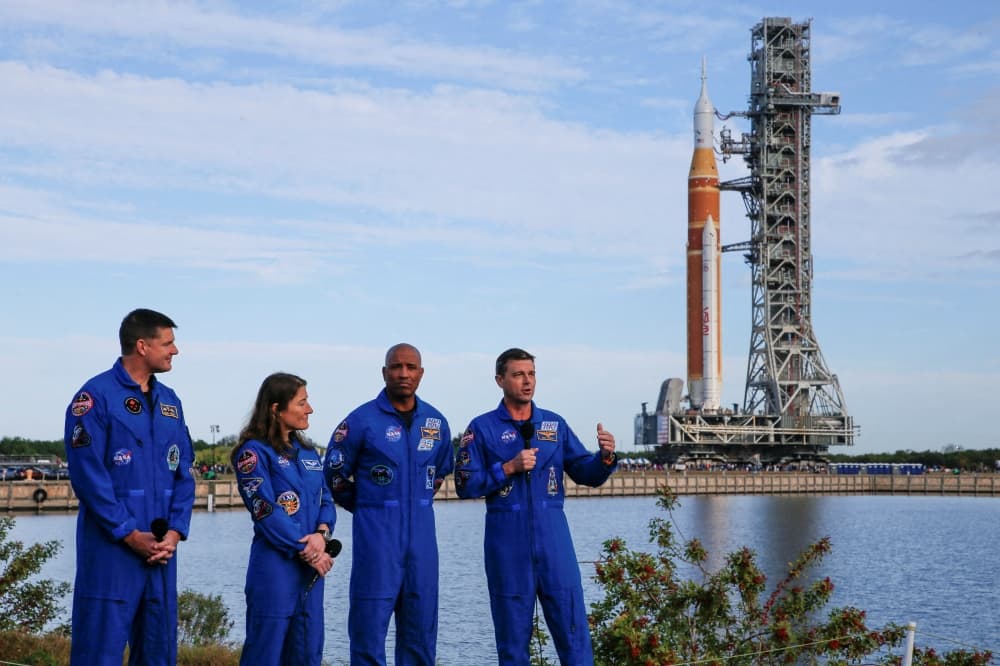
The four-person Artemis II crew took questions Sunday from quarantine at Kennedy Space Center, separated from reporters by a screen and three days from a launch that will send humans farther from Earth than any crew has ventured in more than 50 years.
Commander Reid Wiseman, pilot Victor Glover, mission specialist Christina Koch, and Canadian Space Agency astronaut Jeremy Hansen arrived at Cape Canaveral on March 27 and entered isolation immediately, with liftoff targeting April 1 aboard the Space Launch System and Orion spacecraft.
"We are honored to be part of this historic mission that will pave the way for future human exploration of the Moon," Wiseman said during the virtual press conference.
The mission's central technical challenge is one no Artemis flight has previously faced: testing the Orion spacecraft's life support systems for the first time with people aboard. Paul Boehm, Orion crew support and thermal systems functional area manager, has described the capsule's equipment as what the crew will depend on "to live, work, and keep them safe" throughout the 10-day test. About eight minutes after liftoff, Orion and its four passengers will reach space.
The crew's international makeup carries its own historic weight. Hansen will become the first Canadian to travel to the Moon, a milestone that extends Artemis beyond American program boundaries and reflects the deep-space agreements with allied agencies built into the mission's architecture.
Months of hardware work preceded Sunday's press conference. On January 31, the SLS rocket and Orion stood atop the mobile launcher at Launch Pad 39B as teams ran wet dress rehearsal timelines. By February 25, the vehicle had rolled back toward the Vehicle Assembly Building for additional processing before the final countdown.
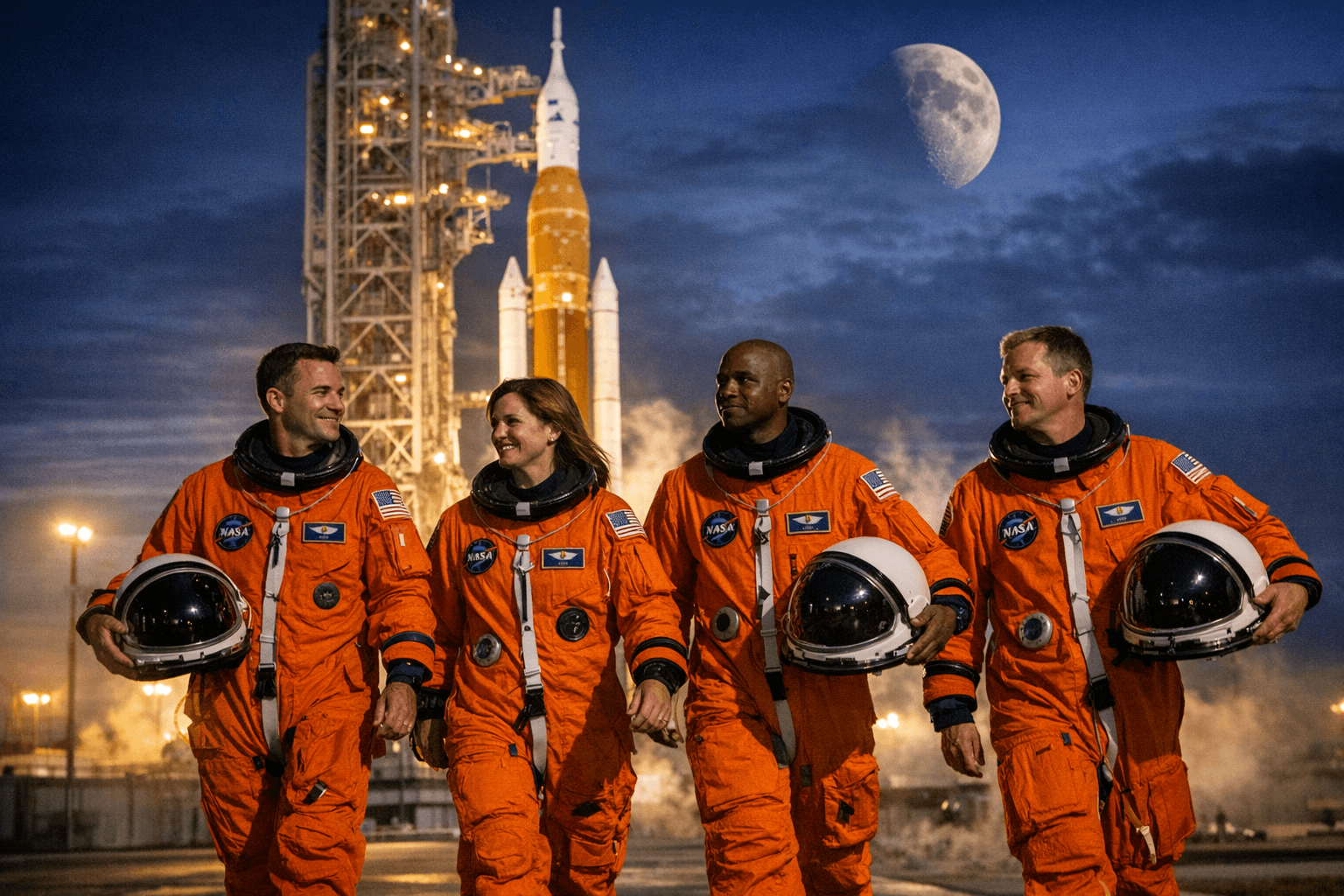
The crew's public profile reached Washington earlier this week when House Speaker Mike Johnson of Louisiana invited all four astronauts to the State of the Union Address. "It is my privilege to welcome these brave and courageous astronauts as my guests at the State of the Union Address," Johnson said. Louisiana's Michoud Assembly Facility in New Orleans manufactures significant portions of the SLS rocket before the hardware ships to Kennedy Space Center for integration, giving Johnson a direct stake in the mission's success.
Koch, speaking from quarantine Sunday, drew the mission's reach beyond the astronaut corps. "This is a dream come true for all of us, and we can't wait to inspire the next generation of space explorers," she said.
A successful Artemis II would clear the path for Artemis III, a 2027 mission designed to test commercial lunar landers from SpaceX and Blue Origin in low Earth orbit, and Artemis IV, which NASA has targeted for early 2028 without revision since mid-2025. That mission would deliver the first crewed lunar landing, with a crew transferring from Orion to a commercial lander for descent to the surface.
For Wiseman, Glover, Koch, and Hansen, the quarantine is nearly over. In three days, Orion carries humans toward the Moon for the first time; what the spacecraft's life support systems demonstrate over the following 10 days will set the pace for every crewed mission that follows.
Know something we missed? Have a correction or additional information?
Submit a Tip