NASA awards contracts for first Moon Base missions to the lunar south pole
NASA locked in rover and lander work for the lunar south pole, turning Moon Base from a concept into a test of whether the agency can build a real operating foothold.
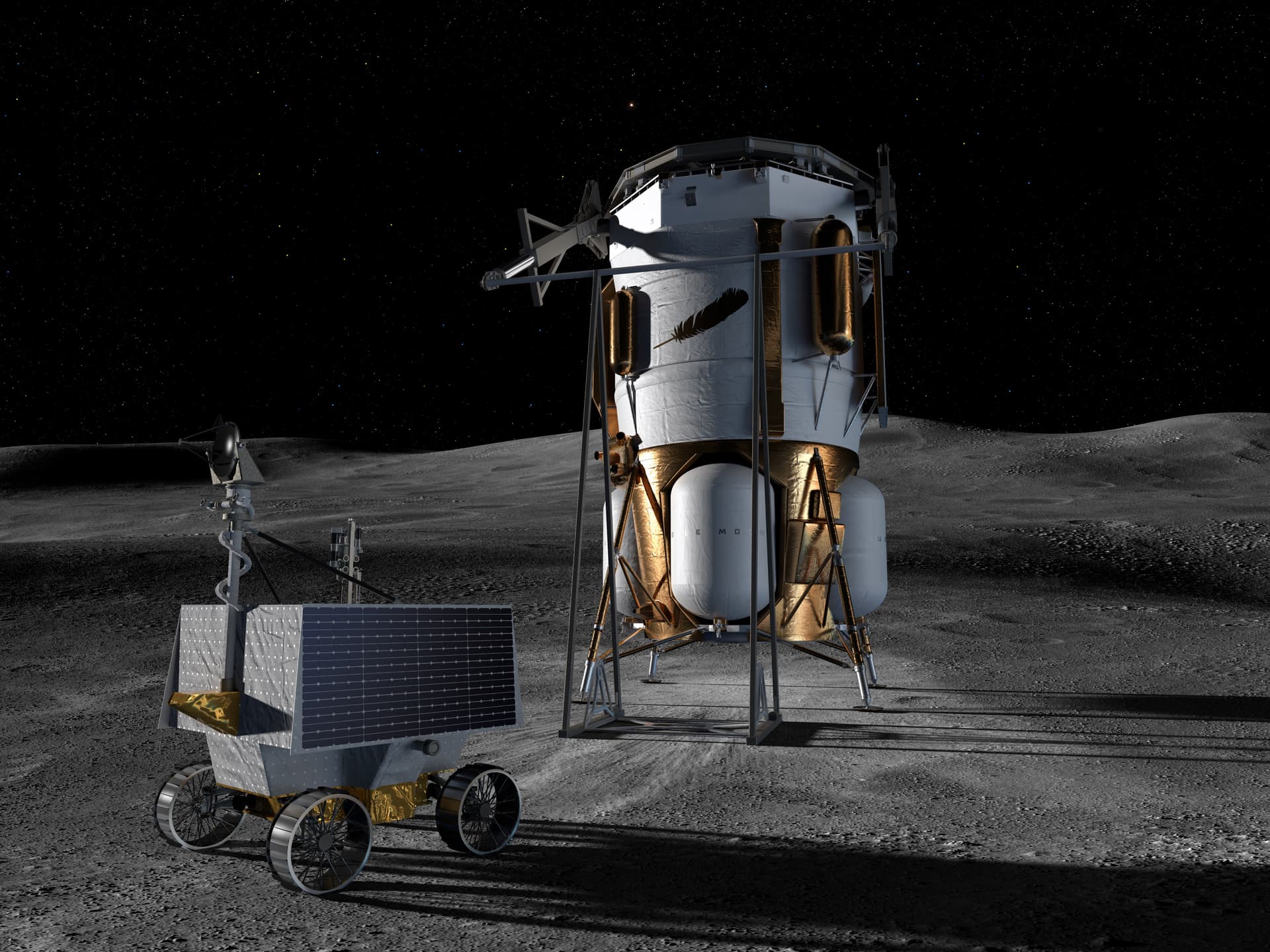
NASA deepened its moon-base push on Tuesday, awarding rover and lander work meant to turn the lunar south pole from a destination into a proving ground for sustained operations. The agency said the new contracts are part of Moon Base, a phased effort to build human presence, scientific activity and eventually permanent infrastructure on the Moon.
The first mission, Moon Base I, is targeted to launch no earlier than fall 2026 on Blue Origin’s Blue Moon Mark 1 Endurance lander. It will carry the Stereo Cameras for Lunar Plume-Surface Studies and a Laser Retroreflective Array to Shackleton Connecting Ridge, a site NASA says should lower risk for crewed landings now planned as early as 2028. Moon Base II is planned for later in 2026 and will deliver more than 1,100 pounds of cargo on Astrobotic’s Griffin lander, including Astrolab’s FLIP rover. Moon Base III is also targeted for 2026 and will carry the first payload chosen through NASA’s Payloads and Research Investigations on the Surface of the Moon program.
The awards show how NASA is trying to assemble the architecture of a moon base piece by piece. Rovers are not just side projects; they are what will let astronauts move cargo, scout terrain and test operations before a larger footprint exists. Astrolab said its CLV-1 vehicle is designed primarily to carry astronauts and their supplies, while also operating remotely in some modes, and NASA officials said the first phase also includes Firefly Aerospace’s Elytra spacecraft carrying the first lunar drones. That combination of landers, rovers and drones is designed to map hazards, gather data and support Artemis crews before any lasting outpost can take shape.

NASA Administrator Jared Isaacman called the Moon Base “America’s and humanity’s first outpost on another celestial world,” framing the effort as both a learning program and a step toward Mars. He thanked President Donald Trump, Congress, industry and international partners, along with the NASA workforce. The broader plan is built in phases: experimentation and robotic scouting through 2029, permanent infrastructure and a power grid in the early 2030s, and longer-term human habitation later in the 2030s.
The contracts also extend NASA’s Commercial Lunar Payload Services strategy. In July 2025, the agency awarded Firefly Aerospace $176.7 million to deliver two rovers and three scientific instruments, the first multiple-rover mission intended to study the lunar south pole and permanently shadowed regions. NASA had already chosen Intuitive Machines, Lunar Outpost and Venturi Astrolab in 2024 for lunar terrain vehicle development under a contract that could reach $4.6 billion. On Tuesday, NASA said Astrolab and Lunar Outpost received the rover task orders, while Blue Origin will deliver the rovers to the Moon under its lander deal, reported at $188 million with an additional $280.4 million option period. The result is a more concrete Moon Base, but also a timeline that still depends on multiple launches, new hardware and a narrow runway before astronauts are meant to arrive.
This article was produced by Prism’s automated news system from verified source data, official records, and press releases, then run through automated quality and moderation checks before publishing. The system is built and supervised by the people who set the standards it runs under. Read our full AI policy.
Did this article answer your question?