NASA says Cape Cod meteor may have been an iron meteorite
A fireball that boomed from Delaware to Montreal may have dropped an iron-rich meteorite into Cape Cod Bay, where fragments could be reachable by magnet.

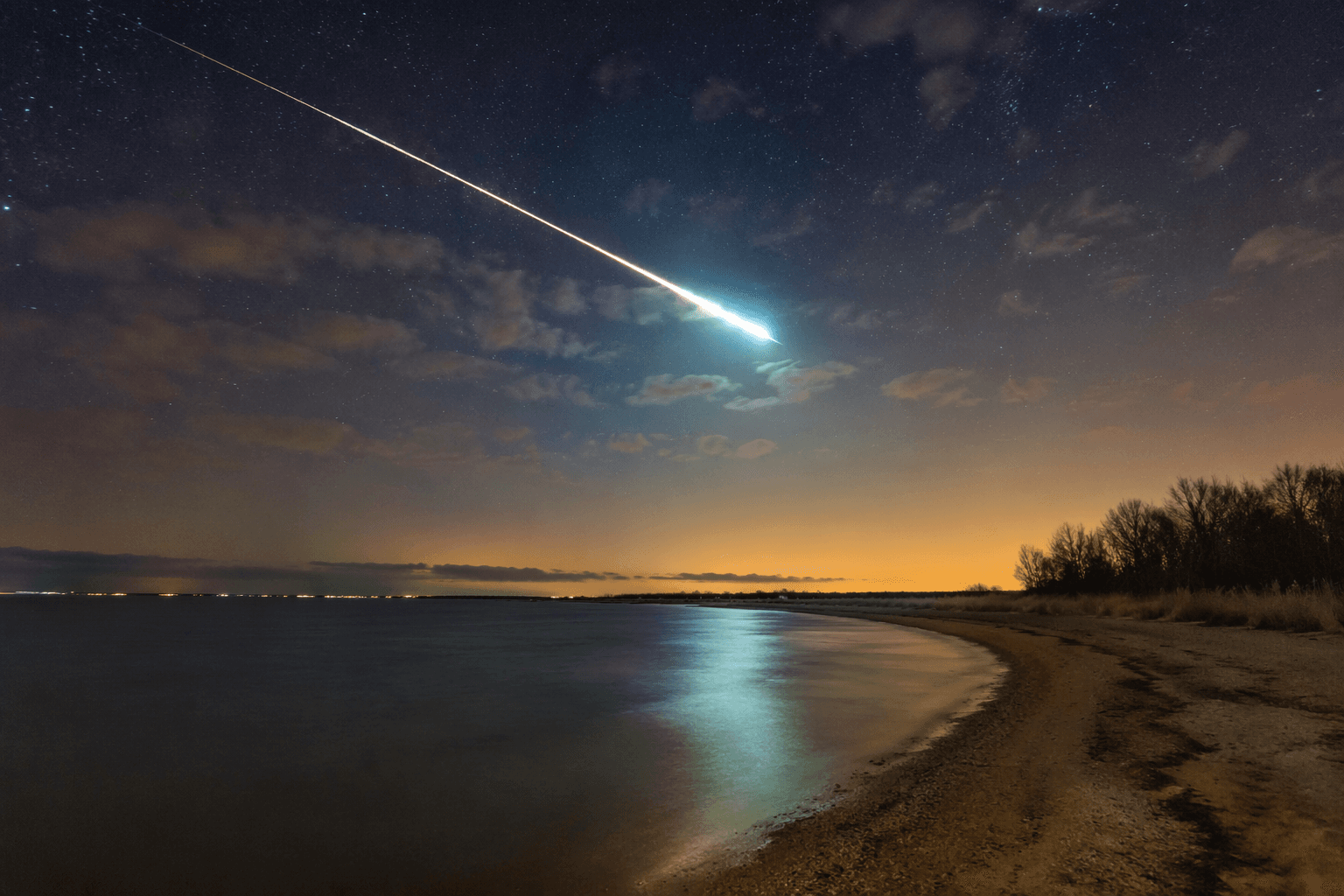
A fireball that rattled windows across New England may have ended as an unusually dense iron meteorite in Cape Cod Bay, giving scientists a rare look at what survives a violent plunge through the atmosphere.
NASA’s meteorite-fall analysis lists the Cape Cod Bay event as a daytime bolide on May 30, 2026, at 18:06 UTC. The agency said the object reached a very high altitude terminus of about 50 kilometers, far higher than the roughly 25 kilometers typical for similar events, and stayed visible to radar for about two minutes instead of the usual eight to 10. That short radar track, combined with the steep entry angle and fragmentation pattern, points to an object with high mechanical strength.
NASA’s experimental density estimate came in at about 8,000 kilograms per cubic meter, a figure the agency said is consistent with an iron meteorite. That does not make the identification absolute, but it does strengthen the case that this was not an ordinary stony space rock. NASA also said the meteorite fragments were concentrated in the hundreds of grams to kilogram range, rather than the more common 1- to 100-gram pieces that often result from atmospheric breakup.
The object was large enough to make the stakes clear. It was about 5 feet in diameter, weighed about 5.6 metric tons and entered the atmosphere at roughly 42,000 miles per hour. NASA said it traveled about 26 miles from northwest to southeast before breaking apart at an altitude of about 31 miles and falling into Cape Cod Bay.
The likely debris field sits about 10 miles northeast of Sandwich Harbor, 17 miles southeast of Plymouth and 15 miles southwest of Provincetown. NASA said the meteorite may be recoverable in water roughly 70 to 100 feet deep, and that a strong magnet could help locate it if fragments remain intact on the bay floor. That possibility matters because iron meteorites are especially valuable to researchers studying the early solar system and the material that built the planets.
The public heard the event as much as it saw it. Reports came in from across the Northeast, including Delaware to Montreal, and witnesses described rattling windows, shaking homes and startled pets when the boom arrived around 2:11 p.m. Eastern time. The American Meteor Society received dozens of sighting reports as the fireball streaked overhead, turning a sudden burst of light into a rare scientific opportunity off the Massachusetts coast.
This article was produced by Prism’s automated news system from verified source data, official records, and press releases, then run through automated quality and moderation checks before publishing. The system is built and supervised by the people who set the standards it runs under. Read our full AI policy.
Know something we missed? Have a correction or additional information?
Submit a Tip

