NASA’s Lucy finds asteroid Donaldjohanson is a wobbly peanut-shaped body
Lucy’s close pass showed Donaldjohanson is a 2-mile-wide peanut that both spins and tumbles, giving NASA a rehearsal before the Trojan encounters ahead.
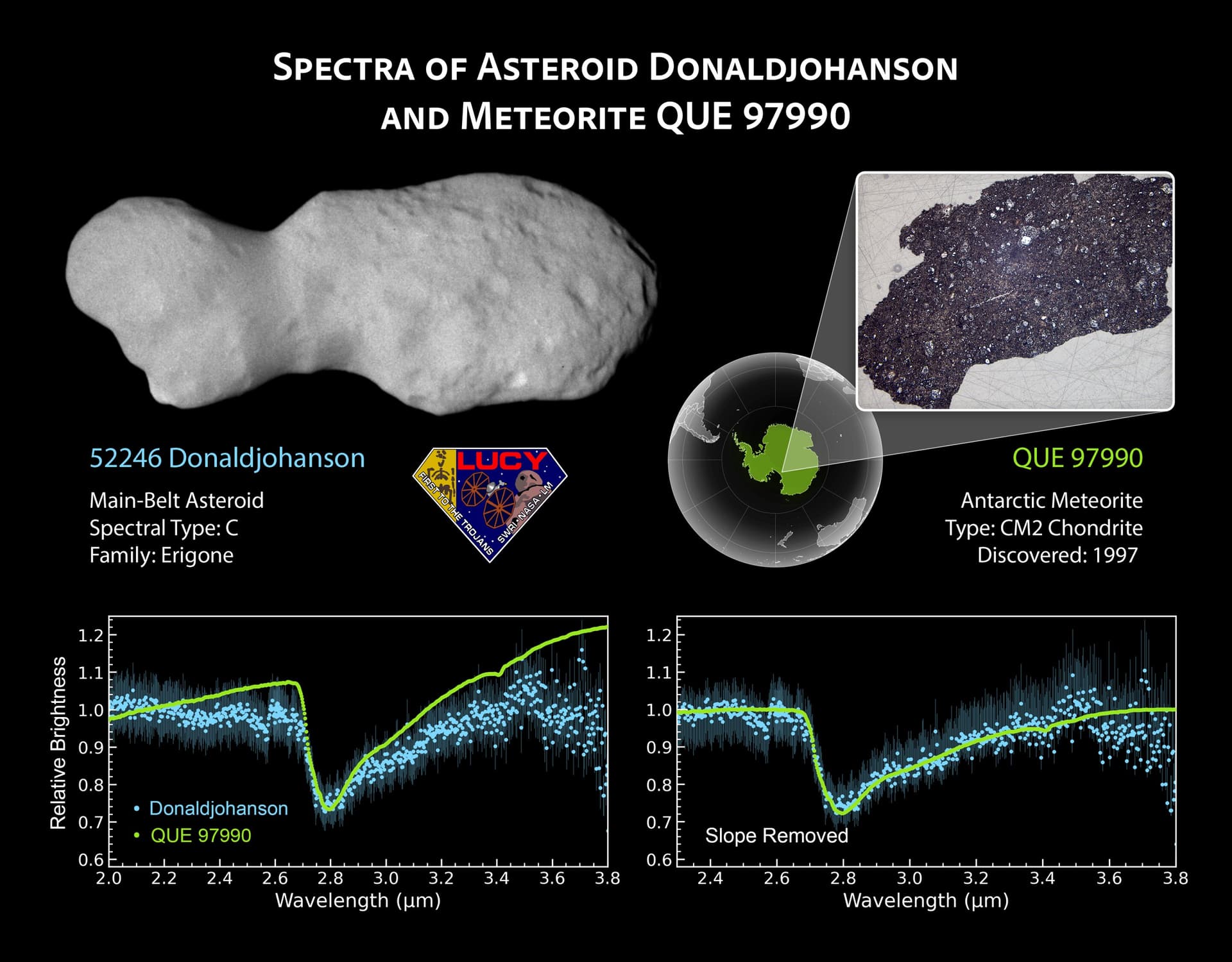
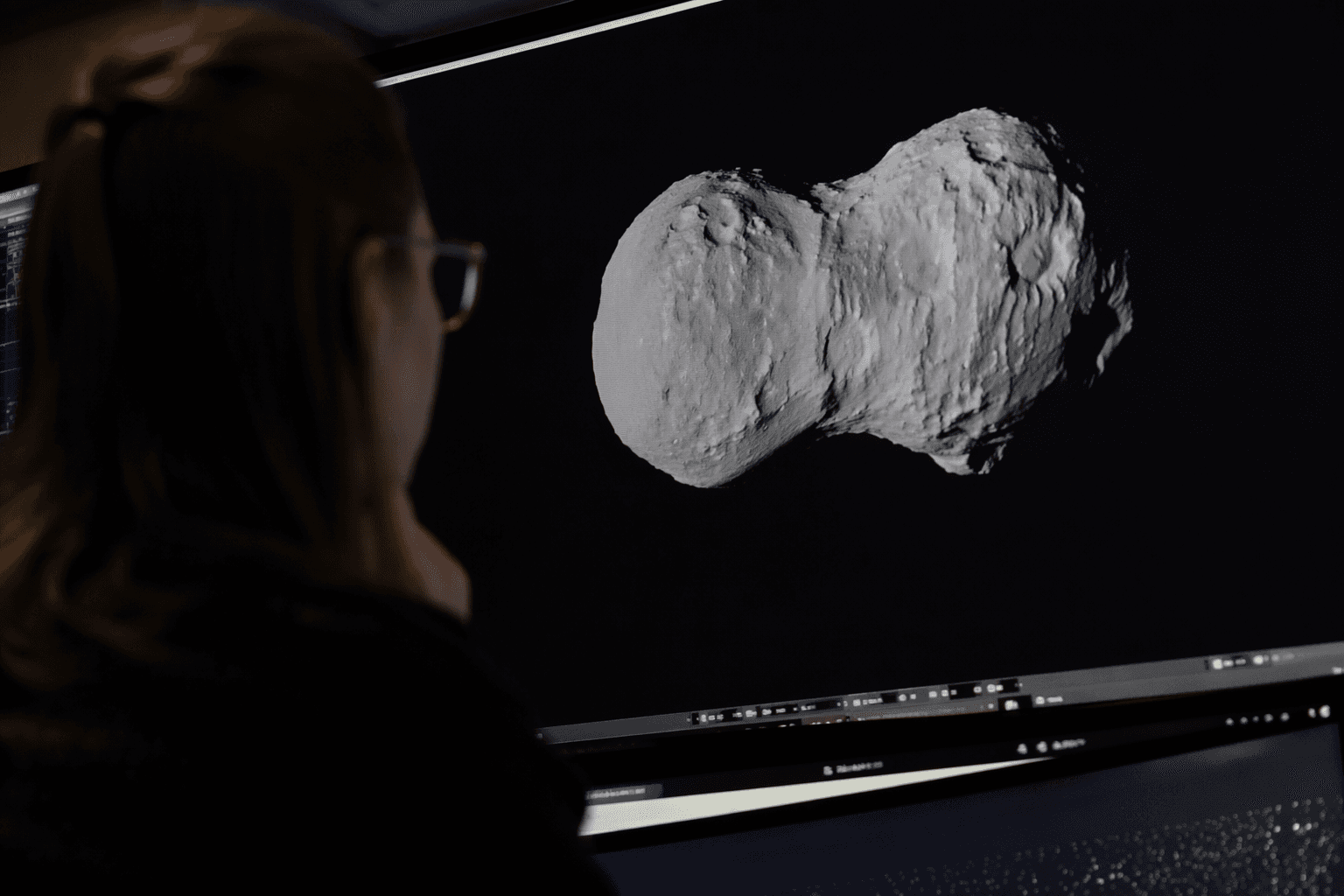
Lucy’s close pass of Donaldjohanson turned a small main-belt asteroid into a test of how NASA will handle the harder targets still ahead. The spacecraft’s April 20, 2025 flyby, at a distance of about 600 miles, showed a body that is not simply rotating in space but wobbling end over end, a finding that sharpens both the science and the navigation challenge for the mission.
NASA said the asteroid is about 2 miles wide and has a peanut-like shape with craters and ridges across its surface. New analysis released June 18 found two distinct motions: Donaldjohanson spins once every 10.5 Earth days and also tumbles around its long axis on a 26.5-day cycle. That unusual pattern points to a complicated history, not a cleanly settled rock. Scientists think it formed from fragments after a violent collision about 155 million years ago, then was further altered by the slow effects of solar radiation. Earlier modeling had put its origin at about 150 million years ago, and NASA has identified it as part of the Erigone asteroid family.
The flyby also suggested the asteroid may preserve signs of brief liquid water in its distant past. That matters because even a small object in the main asteroid belt between Mars and Jupiter can retain a record of the processes that shaped the early solar system. For NASA, Donaldjohanson offered more than a geological puzzle. It gave Lucy a chance to prove that its instruments, pointing, and procedures worked as expected during a fast-moving encounter.
That rehearsal carries clear value for the mission’s next phase. Lucy is the first spacecraft launched to explore the Jupiter Trojan asteroids, primitive remnants that orbit in tandem with Jupiter. Its primary Trojan campaign begins in 2027, with an encounter with Eurybates scheduled for Aug. 12, 2027, and additional targets in the L4 swarm in 2027 and 2028, followed by the L5 swarm in 2033. Each close look is intended to refine how scientists understand collisions, accretion, and the slow evolution of the small bodies that helped build the planets.
The asteroid’s name adds another layer to the mission’s identity. Donaldjohanson was named in 2015 for paleoanthropologist Donald Johanson, who discovered the Lucy fossil in 1974. NASA tied that human-origin story to a spacecraft built to study the solar system’s own fossils, using a wobbling peanut-shaped asteroid to prepare for one of the mission’s most scientifically important chapters.
This article was produced by Prism’s automated news system from verified source data, official records, and press releases, then run through automated quality and moderation checks before publishing. The system is built and supervised by the people who set the standards it runs under. Read our full AI policy.
Know something we missed? Have a correction or additional information?
Submit a Tip