Signal president warns AI chatbots could become surveillance tools
Meredith Whittaker said AI chatbots are not friends, warning that agents, device scanning and ad tech are converging into a new surveillance architecture.

Meredith Whittaker used a blunt warning to recast the AI chatbot boom as a privacy and power problem, not a companionship story. In a June 19 Bloomberg interview with Mishal Husain, the Signal Foundation president said, “These are not your friends. These are not conscious beings. These are not sentient interlocutors.”
Whittaker’s core argument was that autonomous AI agents, device scanning and digital advertising are converging into what she described as a new architecture of surveillance. That critique lands sharply because Signal has built its identity around the opposite model: a nonprofit messaging service that uses end-to-end encryption, says it cannot read users’ messages or listen to calls, and is designed around minimal data collection. Signal Foundation was formed in 2018 to support Signal Messenger, which originated in 2012.

The warning is part of a longer campaign by Whittaker against agentic AI and the way it is sold to consumers. At SXSW in Austin, Texas, in March 2025, she argued that AI agents are marketed as convenient assistants that can look up concerts, book tickets, schedule events and message friends, but that doing so would require broad access to a user’s browser, calendar, credit cards, messaging apps and other sensitive data. She said that would amount to something like root-level permission across a device, and that powerful models would likely have to run in the cloud rather than on-device, deepening privacy and security risks. She also described the idea as “putting your brain in a jar.”

She returned to the theme at the AI for Good Global Summit in Geneva, Switzerland, on July 8, 2025, warning that agentic AI could reach a “very dangerous juncture.” The summit framed the systems as “magic genie bots” promising to manage daily life, but her argument was that the convenience comes with a steep cost in access to private data.

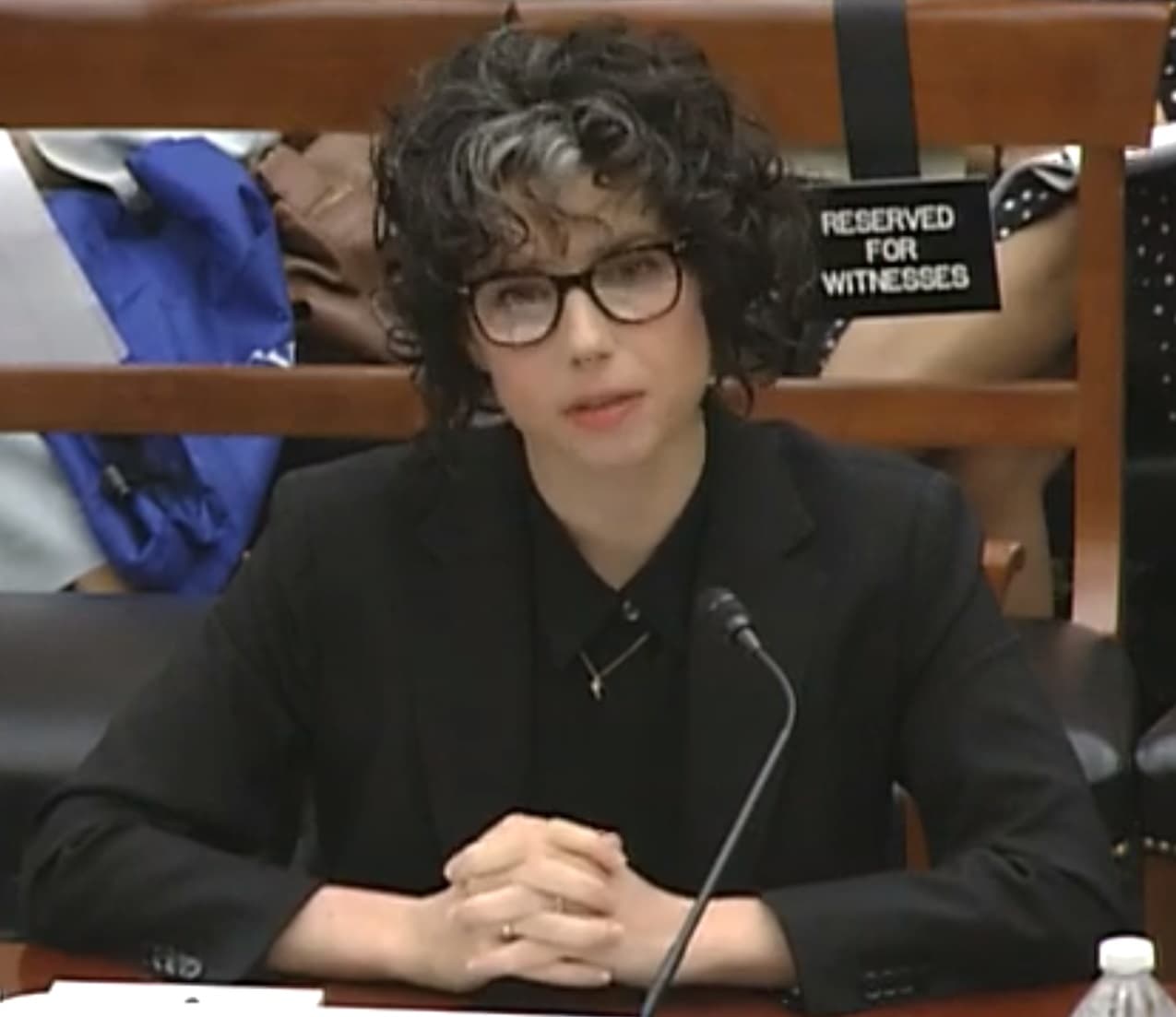
The June 19 conversation also touched the broader business models behind data collection, the rise of AI assistants and the tension between safety efforts and private communication. For Whittaker, the issue is not whether chatbots can sound warm or helpful. It is whether users mistake designed intimacy for trust while handing over the information that makes surveillance possible.
This article was produced by Prism’s automated news system from verified source data, official records, and press releases, then run through automated quality and moderation checks before publishing. The system is built and supervised by the people who set the standards it runs under. Read our full AI policy.
Know something we missed? Have a correction or additional information?
Submit a Tip