New site scores how strongly AI models recognize people
A new site turns AI recognition into a score, raising a sharper question: who gets remembered by models, and who gets misread or erased?

A new website is putting a number on something people usually only sense in the background: whether AI models can summon a recognizable version of you without web search. In the Weights asks large models, “Who is <name>?” then clusters the answers into a strength score, turning recognition itself into a measurable form of online reputation.
That is what makes the project more than a curiosity. The site’s leaders say the point is to see whether someone is “in the weights,” meaning a model can recall that person from what it has absorbed during training. Its leaderboard does not just reward one strong answer. It averages how strongly each model recognized a name, then adds a bonus for how many models recognized it at all.

The public-facing caveats are blunt. Typos lower scores. Model confidence is uncalibrated. Common names can perform worse because of ambiguity. And the models can hallucinate details or events that never happened, which means the score may say as much about machine certainty as it does about a real person’s prominence.
The project was built by Thomas Dimson and Joey Flynn, both former OpenAI employees. OpenAI said Dimson, Flynn and Taylor Gordon founded Global Illumination in 2021, and that it acquired the startup on August 16, 2023, bringing the full team in to work on core products including ChatGPT. Dimson’s personal site says he wrote Instagram’s original content ranking algorithms and worked there as a principal engineer and director from 2013 to 2020.
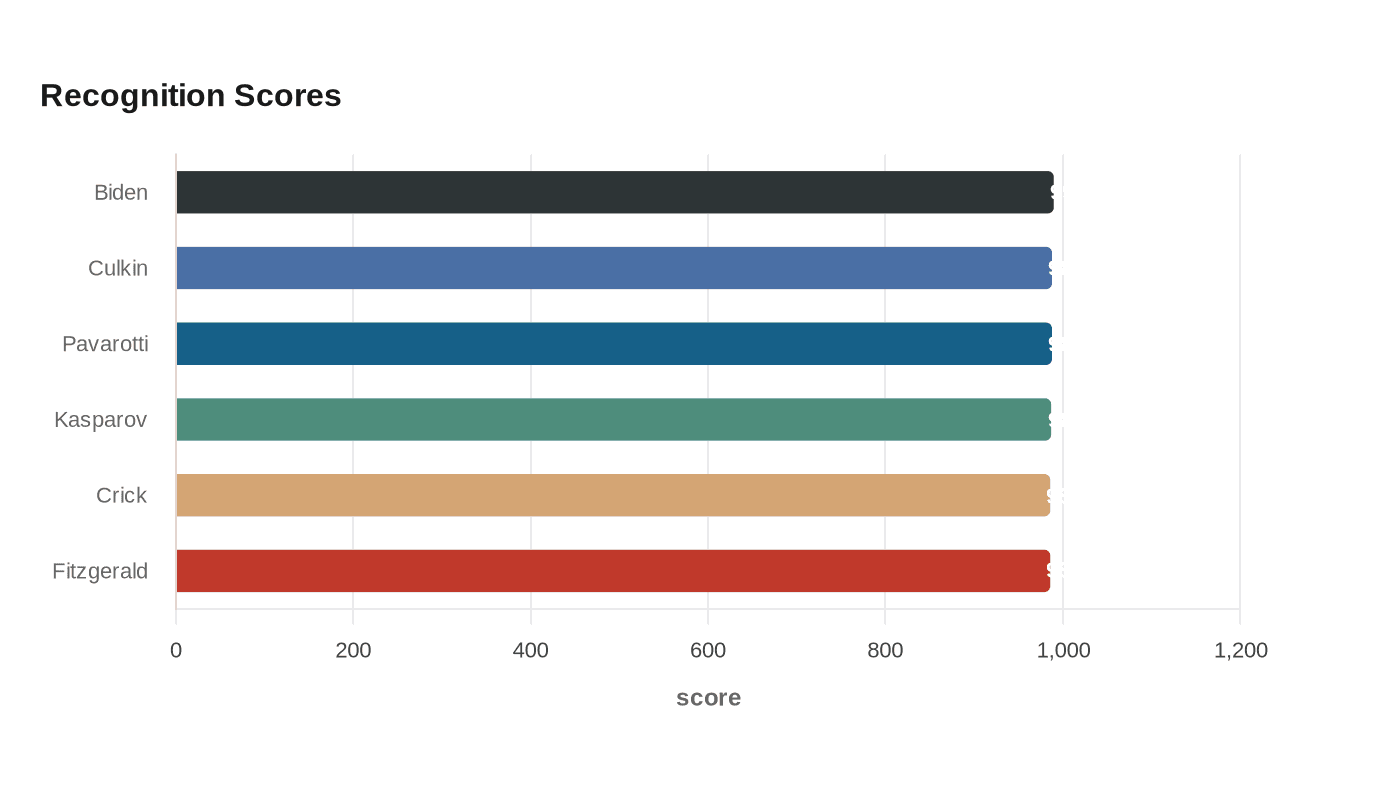
The site currently lists outputs from GPT-5.5, GPT-5.4 Mini, Opus 4.8, Haiku 4.5, Grok 4.20, Gemini 3.1 Lite, Kimi K2 0905, DeepSeek V4, Llama 3.3 70B, Llama 3.2 1B, GLM 4.7 Flash, Mistral 3.2 24B and Qwen3 8B. On its leaderboard, the “today’s heavyweights” list includes Joseph R. Biden Jr. at 990, Macaulay Culkin at 988, Luciano Pavarotti at 988, Garry Kasparov at 987, Francis Crick at 986 and Ella Fitzgerald at 986. TechCrunch said Culkin was at the top with a strength score of 988 while the story was being written.
The largest implication is not celebrity trivia. It is that AI systems are becoming part of how people are discovered, described and sorted, often without consent or correction. Dimson said he was thinking about how “Google vanity searches are the wrong objective in 2026 as more traffic moves to LLMs,” and that many lives are now encoded in “floating point numbers inside the AI brain.” In that world, reputation is no longer just what a search engine shows. It is what a model can reconstruct, misremember or distort.
This article was produced by Prism’s automated news system from verified source data, official records, and press releases, then run through automated quality and moderation checks before publishing. The system is built and supervised by the people who set the standards it runs under. Read our full AI policy.
Know something we missed? Have a correction or additional information?
Submit a Tip