NASA’s Swift telescope rescue mission clears key testing milestone
NASA’s LINK spacecraft passed a key test after two weeks at Goddard, moving the $30 million Swift rescue closer to a spring launch.
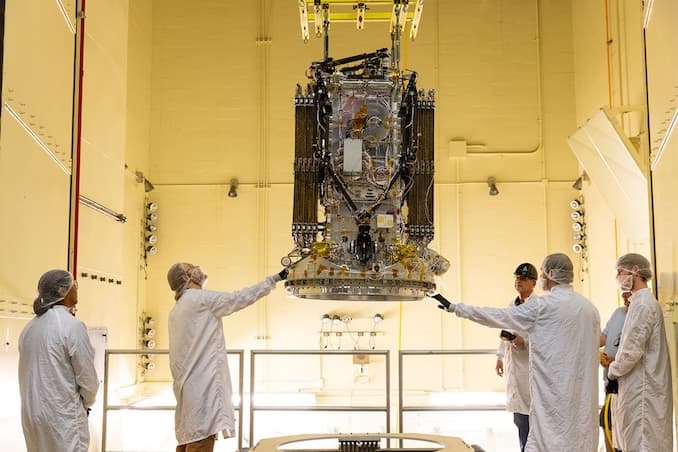
Taxpayers already paid for a telescope that cost about $500 million, and NASA is betting that a repair-orbit mission is worth the risk rather than letting the asset burn up. The agency said Katalyst Space Technologies’ LINK robotic servicing spacecraft cleared environmental testing on May 4, a milestone that keeps alive the plan to boost the 21-year-old Neil Gehrels Swift Observatory before orbital decay takes over.
Engineers from Katalyst arrived at NASA’s Goddard Space Flight Center in Greenbelt, Maryland, on April 14 and spent the next stretch putting LINK through environmental tests inside Goddard’s Space Environment Simulator. After completing that work, the spacecraft returned to Katalyst’s facilities in Broomfield, Colorado, for additional prelaunch testing. NASA has targeted the boost for spring 2026, while Katalyst says launch could come as soon as June 2026.
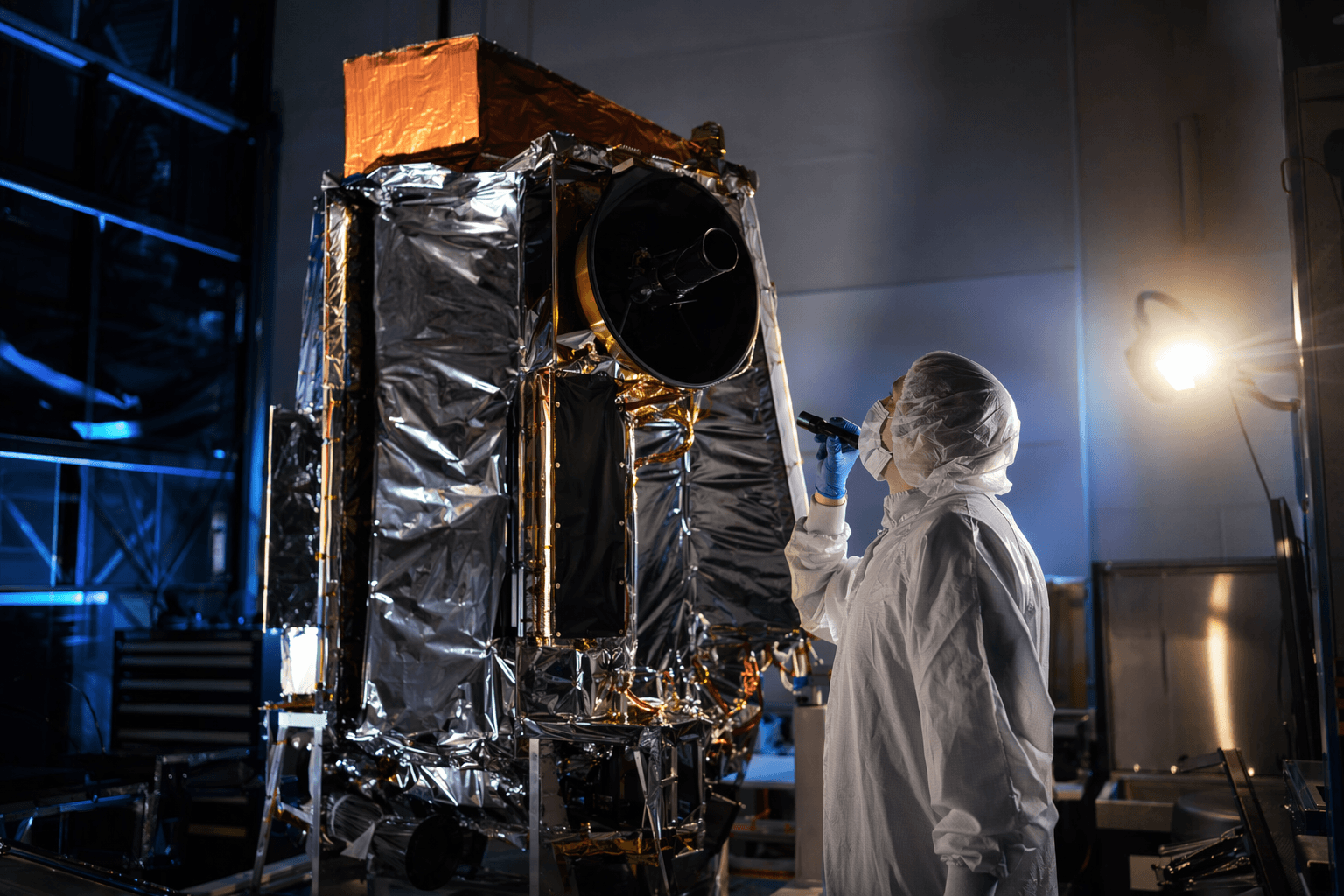
The mission exists because Swift’s orbit has entered a phase of rapid decay. NASA temporarily suspended most science operations in February to reduce atmospheric drag and slow the spacecraft’s fall, buying time for the rescue attempt. Swift, launched on November 20, 2004, was designed for a two-year mission. Instead, it has spent two decades studying gamma-ray bursts, the most powerful explosions in the universe, using three telescopes that observe visible, ultraviolet, X-ray and gamma-ray light.
The testing milestone matters because it does not just prove that LINK can survive the ground environment and hardware checks before launch. It also pushes the mission closer to the harder part: rendezvous, capture and orbit-raising. NASA has said the plan would be the first time a commercial robotic spacecraft captures a government satellite that is uncrewed and was not originally designed to be serviced in space. That makes the mission a technical test, but also a policy statement about whether aging science hardware can be treated as salvageable infrastructure instead of expendable hardware.
NASA awarded Katalyst, based in Flagstaff, Arizona, a $30 million Small Business Innovation Research Phase 3 contract on September 24, 2025, to raise Swift’s orbit. Earlier NASA-funded studies had already examined the concept. If LINK succeeds, the agency will not only extend Swift’s science lifetime, it will also establish a template for servicing other aging spacecraft that still have useful work left to do.
This article was produced by Prism’s automated news system from verified source data, official records, and press releases, then run through automated quality and moderation checks before publishing. The system is built and supervised by the people who set the standards it runs under. Read our full AI policy.
Did this article answer your question?