Nationwide Strikes Paralyze Italian Transport, Dozens of Flights Cancelled
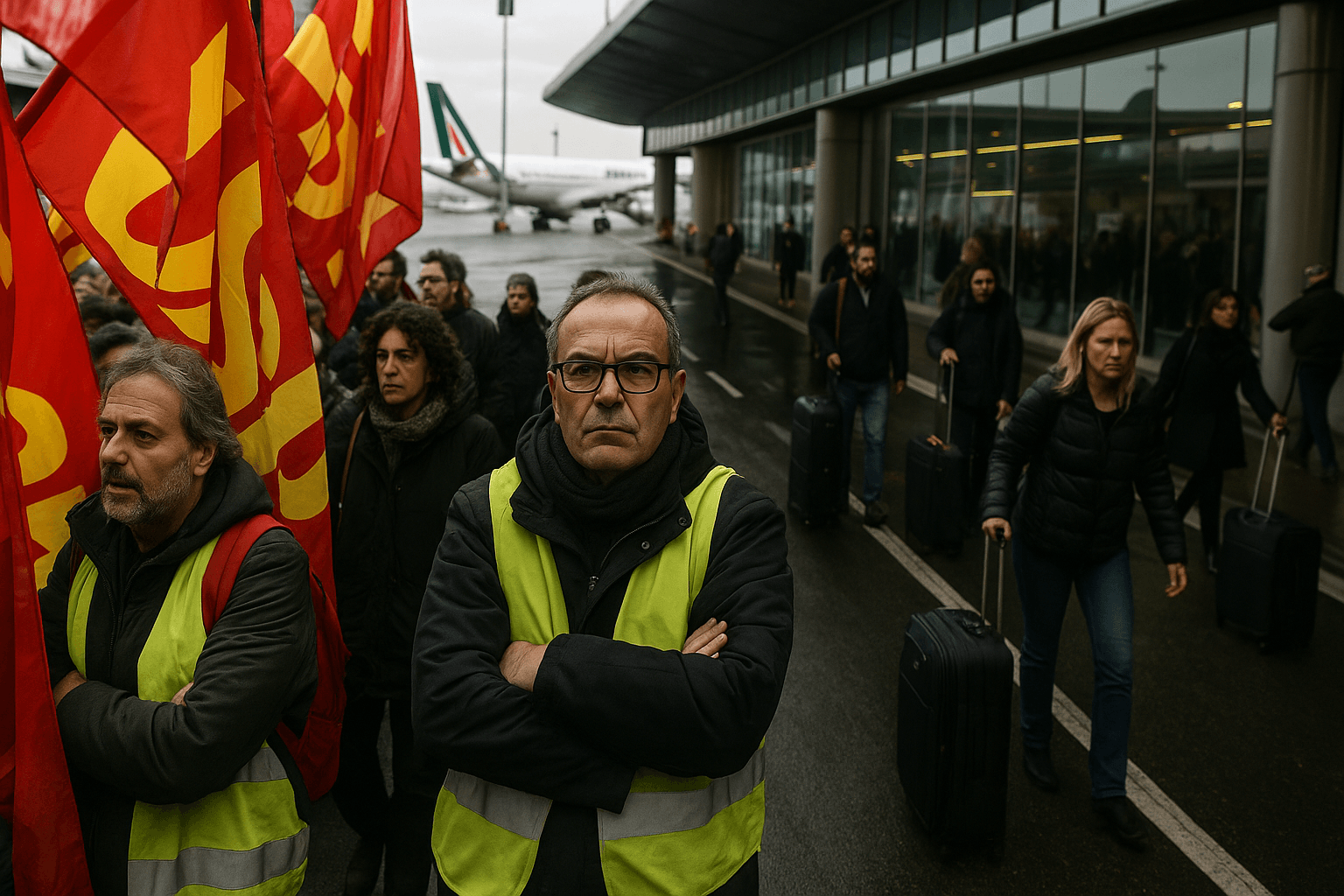
Widespread strikes on November 28 disrupted airports, mainline rail services and urban transit across Italy, forcing dozens of flight cancellations and leaving commuters stranded. The actions, driven by hardline and smaller unions protesting a 2026 budget that boosts military spending, signal mounting labour unrest that could deepen economic and political strains ahead of a nationwide strike on December 12.

Nationwide strikes called by the USB union and smaller labour groups on November 28 disrupted transport across Italy, cancelling dozens of flights and forcing interruptions on major rail corridors. Milan’s Malpensa airport cancelled at least 27 flights and Bologna scrapped 17, while ITA Airways said it cancelled 26 domestic flights. Mainline stations in Rome, Turin, Milan and Genoa experienced cancellations and delays, and urban public transport in several cities was affected.
The protests were explicitly directed at Prime Minister Giorgia Meloni’s government and its proposed 2026 budget, which increases military spending and has prompted critics to argue that defence priorities are being elevated over funding for health, education and welfare. Demonstrations also included pro Palestinian marches in Turin and Genoa, and activists briefly blocked access to the offices of defence group Leonardo in Venice before police dispersed them. The USB announced additional nationwide protest actions and Italy’s largest confederation, CGIL, has scheduled a nationwide strike for December 12, raising the prospect of renewed, broader disruption.
The immediate economic impact was concentrated in transport and services. Airports reported cancellations that affected both leisure and business travellers during a key pre holiday period, while train disruptions hit major commuter and freight corridors linking industrial north Italian hubs. For firms that rely on just in time delivery and frequent business travel, even a single day of widespread stoppages can ripple through supply chains and scheduling. Rail and air operators face direct revenue losses and potential customer compensation costs, while local economies near affected airports and stations may see reduced footfall and spending.
Beyond the direct operational costs, the strikes feed into a wider policy and market narrative. The confrontation highlights a growing political cleavage over fiscal priorities as the Meloni government reallocates budgetary resources toward defence. That debate is likely to shape market expectations about future public spending patterns, tax policy and social investment, and may influence investor assessments of political risk in Italy as labour action escalates. With CGIL planning a more comprehensive strike on December 12, businesses and officials face a narrowing window to negotiate or mitigate fallout.
The events also sit within a longer term trend of intensified labour activism in Europe, where rising living costs and post pandemic supply chain stresses have sharpened disputes over public spending and labour conditions. For policymakers the strikes present a dilemma, balancing electoral and strategic commitments to national defence against mounting pressure from unions and civic groups for stronger social protections.
As demonstrations continue and union calendars fill, the immediate challenge for Italy will be restoring transport reliability while managing a politically charged budget debate that could determine the depth and duration of industrial unrest. Authorities, employers and unions now face a test in finding compromises that limit economic damage while addressing the grievances behind the protests.
This article was produced by Prism’s automated news system from verified source data, official records, and press releases, then run through automated quality and moderation checks before publishing. The system is built and supervised by the people who set the standards it runs under. Read our full AI policy.
Did this article answer your question?