Navy funds Senvol project to standardize AM sensor fusion data
The U.S. Navy awarded Senvol funding to apply sensor fusion and machine learning to metal DED in-situ data, aiming to speed part acceptance and cut qualification costs. This could broaden supplier access and influence NAVSEA policy.
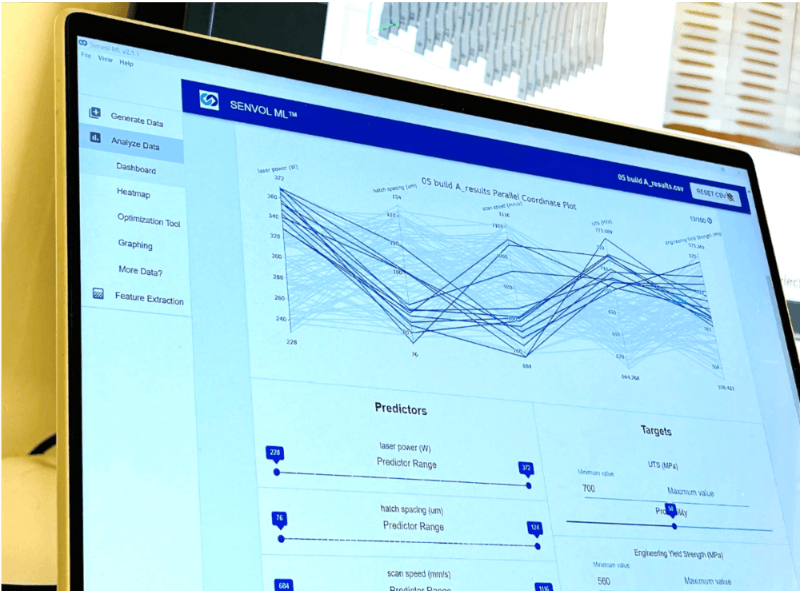
The U.S. Navy awarded funding to Senvol for a project titled Additive Manufacturing Sensor Fusion Technologies for Process Monitoring and Control, a multi-year effort that began in July 2025 and runs through July 2027. The project will apply Senvol ML to multi-sensor in-situ data collected from metal wire directed energy deposition (DED) to predict mechanical performance and help standardize data-driven part acceptance protocols.
Senvol will fuse signals from multiple sensor streams gathered during DED builds to produce models that correlate process signatures with part-level properties. The primary objective is to reduce expensive, time-consuming qualification tests by demonstrating that sensor fusion plus machine learning can provide sufficient evidence of part performance for installation decisions. Project results are intended to inform NAVSEA policy and expand the Navy’s ability to accept qualified additive manufacturing parts from a broader supplier base.
For the printing community this matters in concrete ways. Successful demonstration could shift some acceptance activity from destructive testing and long qualification campaigns to validated in-situ monitoring records and predictive analytics. That has implications for lead time, scrap rates, and the economics of running metal DED shops that want to supply defense contracts. Shops that already deploy melt pool cameras, pyrometers, acoustic sensors, or fringe-based monitoring should prioritize synchronized timestamps, robust metadata, and retention policies so in-situ records can support traceability and downstream ML workflows.
The technical challenge is nontrivial: sensor fusion demands high-quality, time-aligned data, consistent calibration, and reproducible build parameters across machines and suppliers. Senvol ML’s role will be to ingest multi-sensor streams and produce performance predictions that NAVSEA and inspectors can rely on. Standardizing data formats, reporting practices, and acceptance thresholds will be central to turning sensor evidence into policy-ready proof.

For community labs and small shops the project signals an opening: prepare by documenting current monitoring capabilities, validating sensor calibration, and archiving build logs in machine-readable formats. Suppliers who cannot immediately match full sensor suites may still benefit as the project explores what minimum sensor combinations and analytics produce acceptable confidence.
Senvol’s work now sets a two-year runway for concrete outcomes. If the effort succeeds, expect new guidance from NAVSEA and wider acceptance of data-driven part acceptance that could lower barriers for qualified suppliers and speed the march from prototype to installed part.
Sources:
Know something we missed? Have a correction or additional information?
Submit a Tip