Near-50°C readings approach records in rural Victoria heat wave
Preliminary highs near 48.9°C struck Hopetoun and Walpeup; confirmation is pending as the heat threatens health, agriculture and fire risk.
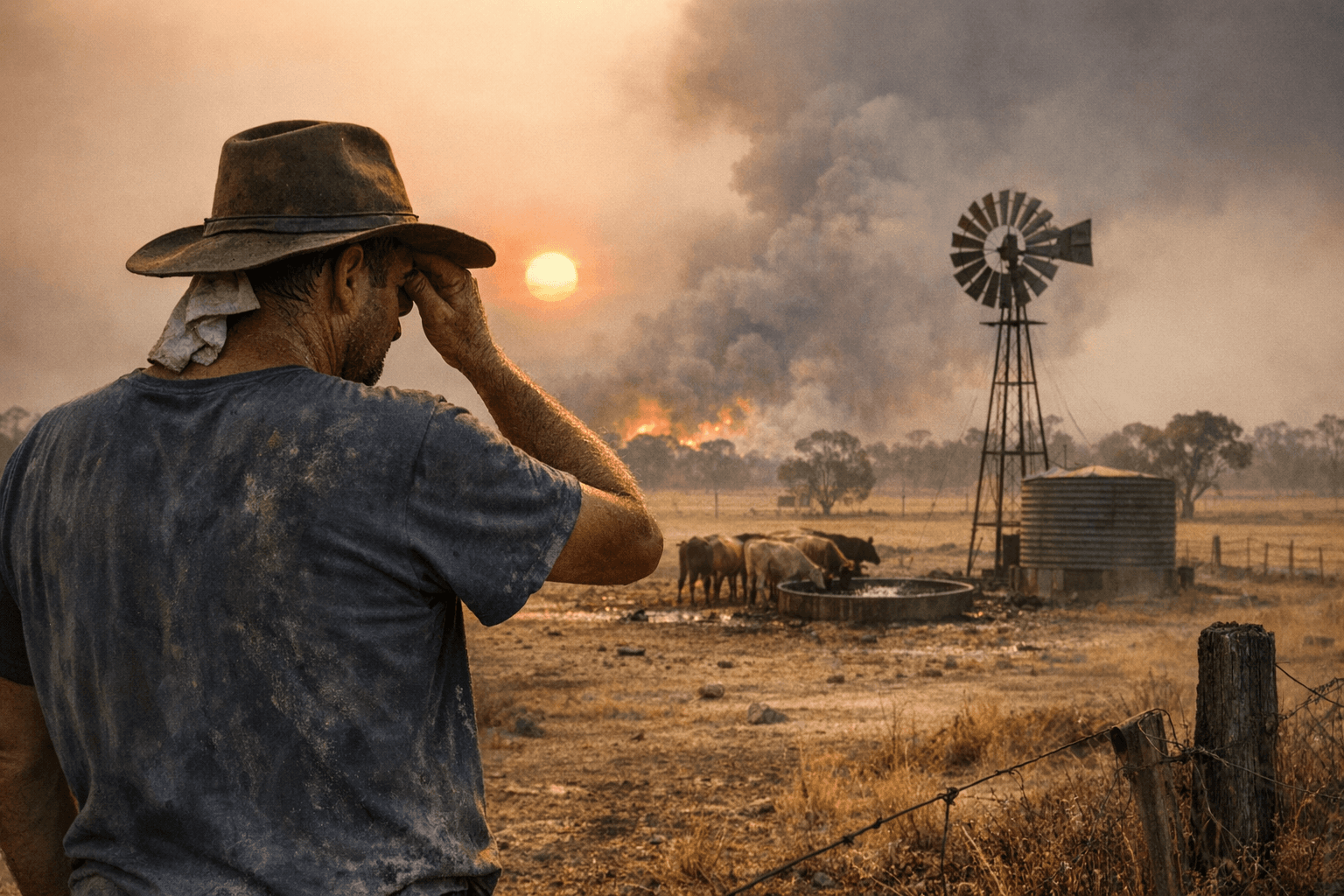
A prolonged and intense heat wave is slamming parts of Australia, with preliminary daytime highs near 48.9°C (about 120°F) reported in rural Victorian towns including Hopetoun and Walpeup. Those readings, if confirmed by the Bureau of Meteorology, would rank among the highest experienced in the region and underline an exceptional spike in summer heat across southeastern Australia.
The extreme temperatures are concentrated over agricultural districts that are vulnerable to heat stress, drought and bushfire. Local authorities and emergency services have been mobilizing heat-health responses for remote and aging communities, where access to cooling and medical care can be limited. Farmers and pastoralists face immediate threats to livestock and crops as daytime temperatures push animals into dangerous heat loads and reduce the window for productive fieldwork.
State health departments routinely warn that prolonged exposure to these sorts of temperatures increases the risk of heat stroke, cardiac events and dehydration, particularly for older adults, very young children, outdoor workers and people with chronic illness. In regional centres, community cooling hubs and emergency clinics typically prepare for increased demand during heat waves; officials in affected districts are urging residents to check on neighbours and limit strenuous activity during peak afternoon heat.
The heat surge also raises acute bushfire concerns. Vegetation dried by weeks of high temperatures and below-average rainfall becomes more combustible, and even a single ignition can quickly exploit hot, dry and windy conditions. Rural firefighting services are on alert and monitoring conditions that could accelerate fire development; local authorities have been advising residents in high-risk areas to review their bushfire readiness plans.
Beyond immediate impacts, the heat event feeds into a broader climate pattern experienced across Australia and globally. Climate scientists have warned that rising average temperatures are increasing the frequency and intensity of extreme heat events, with cascading effects on public health, agriculture and infrastructure. For regional economies dependent on seasonal rainfall and pasture, a single prolonged heat wave can compound the effects of other stressors and heighten vulnerability.
Confirmation from the Bureau of Meteorology is awaited to validate the preliminary measurements and to determine whether they constitute new local or regional records. Meteorological agencies typically subject extreme observations to rigorous checks before updating official records, including instrument calibration and cross-checks with nearby stations.
As authorities await verification, the operational focus remains on mitigating immediate harm: ensuring vulnerable populations have access to cooling, protecting water supplies and maintaining readiness for fire responses. For rural communities across Victoria, the heat wave is a sharp reminder of both the immediate dangers of extreme weather and the longer-term challenge of adapting agricultural and health systems to a hotter, more variable climate.
This article was produced by Prism’s automated news system from verified source data, official records, and press releases, then run through automated quality and moderation checks before publishing. The system is built and supervised by the people who set the standards it runs under. Read our full AI policy.
Did this article answer your question?


