Nearly Half of U.S. Children Live in Areas With Dangerous Air Pollution
33.5 million U.S. children, nearly half, lived in counties with failing air-quality grades, with more than 7 million exposed to all three major pollutants.
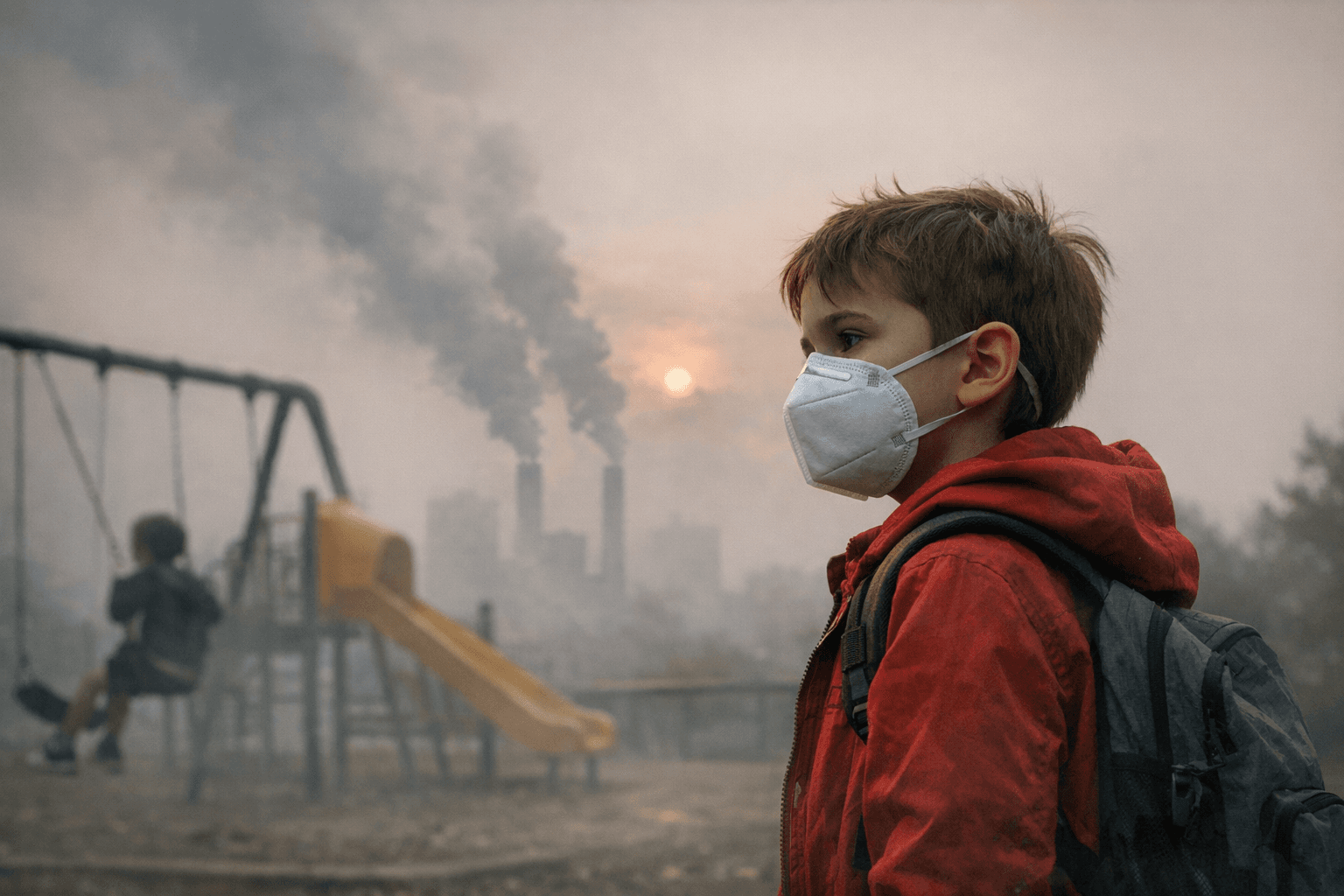
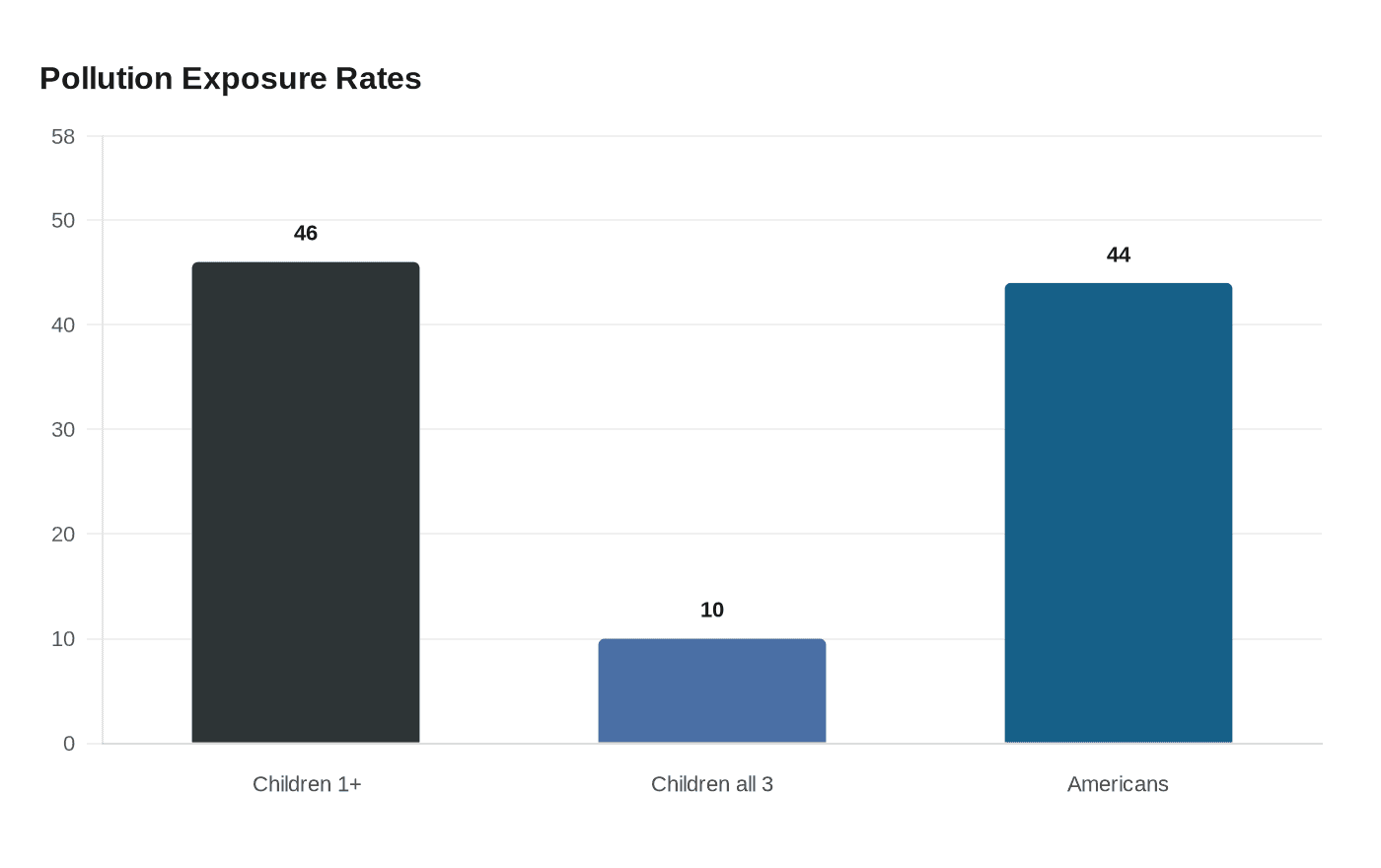
Children across the United States are growing up under air that can stunt lungs, trigger asthma and raise the risk of lifelong disease. The American Lung Association said 33.5 million children, or 46% of people under 18, lived in counties that received a failing grade for at least one measure of air pollution, a national exposure crisis that is hitting some communities far harder than others.
The burden was severe in the worst-hit places. More than 7 million children, about 10% of all U.S. kids, lived in counties that failed all three major pollution measures. Overall, 152.3 million people, or 44% of Americans, lived in places with unhealthy ozone or particle pollution. More than 129 million people lived in counties with failing grades for ozone, and about 62 million lived in counties with failing grades for daily particle pollution spikes.

The findings drew on quality-assured air-quality data from 2022 through 2024 and grade counties on ground-level ozone, year-round particle pollution and short-term particle pollution. The picture points to two overlapping threats: ozone, which forms in hot weather and can make breathing painful, and particle pollution, which can surge during smoke events, industrial emissions and other burning. The report said ozone pollution is worsening in reach, even as particle pollution has improved somewhat from its decade-long worsening trend.
That matters most for children because their lungs are still developing, they breathe more air for their body size than adults and they spend more time outdoors. The Lung Association said exposure can reduce lung growth, bring on new asthma cases, raise the risk of respiratory disease and impair cognitive functioning later in life. It also said particle pollution can cause lung cancer, while ozone and particle pollution are linked to premature death, asthma attacks, heart attacks, strokes and preterm births.
The pattern was not evenly spread. People of color were more than twice as likely to live in areas that failed all major pollution measures, and the heaviest burdens often fell in communities with fewer socioeconomic resources. American Lung Association President and CEO Harold Wimmer said decades of progress under the Clean Air Act, which has driven pollution reductions for more than 55 years, were now at risk as extreme heat and wildfires intensified under climate change and as EPA policy changes and rollbacks threatened clean-air protections. For parents, schools and local leaders, the near-term stakes are blunt: fewer polluted days outdoors, stronger protections against smoke and ozone, and faster action in the neighborhoods where children are breathing the dirtiest air.
This article was produced by Prism’s automated news system from verified source data, official records, and press releases, then run through automated quality and moderation checks before publishing. The system is built and supervised by the people who set the standards it runs under. Read our full AI policy.
Did this article answer your question?