Netanyahu Contradicts Pakistan's Claim That Lebanon Included in Deal
Netanyahu directly contradicted Pakistan's claim that the US-Iran ceasefire covers Lebanon, while Israeli strikes killed at least 10 people there hours after the deal was announced.
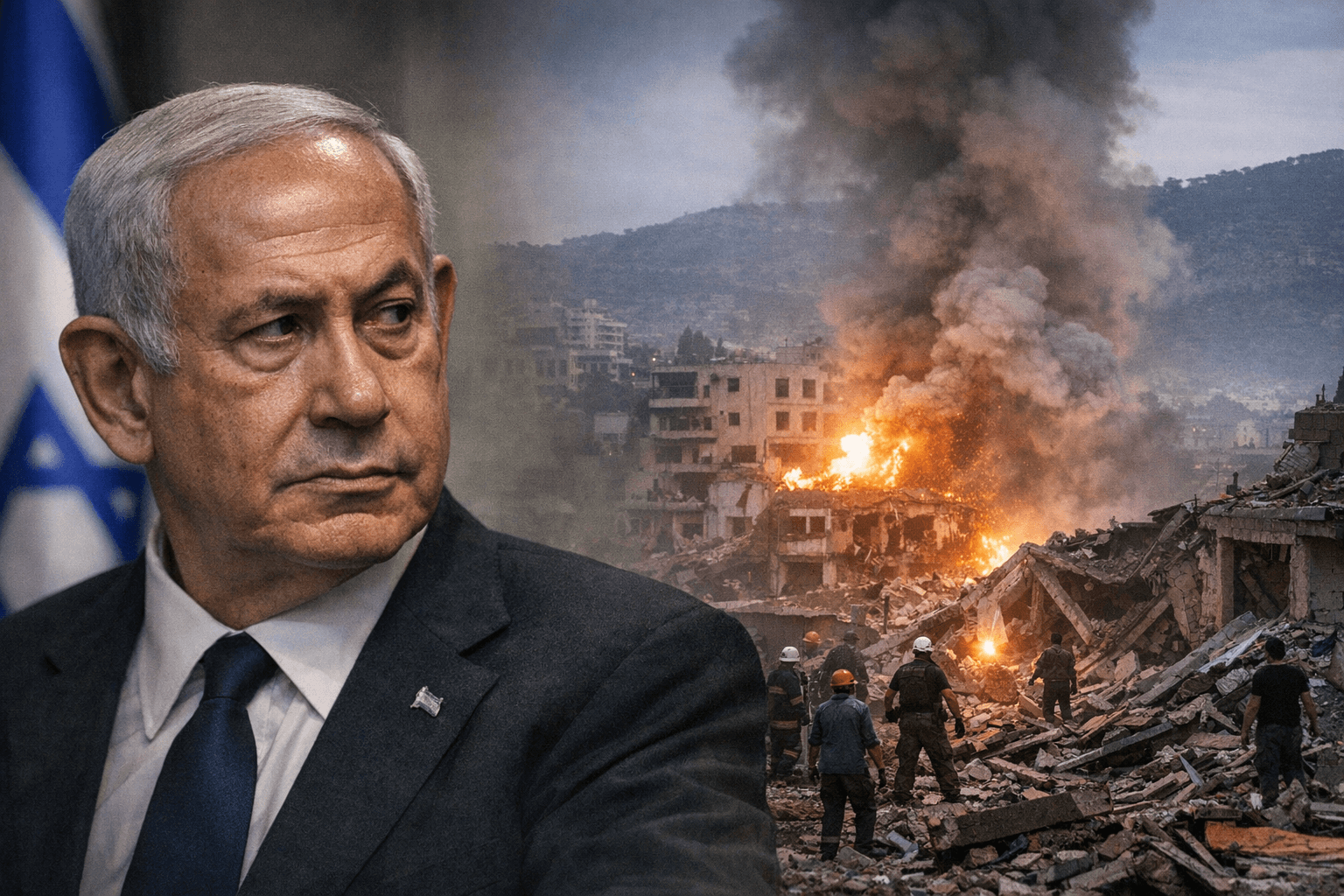
Within hours of a breakthrough U.S.-Iran ceasefire being announced Wednesday, a dangerous ambiguity emerged over its geographic scope: Israeli Prime Minister Benjamin Netanyahu flatly declared Lebanon was not covered by the deal, directly contradicting Pakistan's prime minister, who had brokered the truce and told the world it applied "everywhere."
Pakistani Prime Minister Shehbaz Sharif posted on X that the United States, Iran and their allies had agreed to "an immediate ceasefire everywhere including Lebanon and elsewhere, EFFECTIVE IMMEDIATELY." The declaration came after weeks of Sharif's government serving as intermediary between Washington and Tehran, culminating in an agreement struck less than two hours before President Donald Trump's deadline for Iran to reopen the Strait of Hormuz.
Netanyahu's office moved swiftly to draw a line through Sharif's claim. In a statement posted on X, Netanyahu said Israel supported Trump's decision to suspend strikes against Iran but was explicit: the two-week ceasefire "does not include Lebanon." The Israel Defense Forces confirmed the position in operational terms, stating it was "continuing to conduct targeted ground operations against the Hezbollah terrorist organization" in the south of the country.
The divergence was not merely rhetorical. Israeli strikes killed at least 10 people in Lebanon after the ceasefire announcement, and the military issued fresh evacuation orders for residents in the city of Tyre, located more than 40 kilometers inside Lebanon. Lebanese state news reported continued artillery shelling and a dawn air strike on a building near a hospital that killed four people. A senior Lebanese official told Reuters that Beirut had received no information confirming its inclusion in the ceasefire and had not been consulted on the matter.
The confusion exposed the structural fault line in the deal: a bilateral U.S.-Iran truce cannot automatically extinguish a separate Israeli military campaign against Hezbollah, even though Hezbollah's involvement directly derives from the broader Iran conflict. Lebanon was drawn into the war on March 2 when Hezbollah fired rockets into northern Israel following Iran's Supreme Leader Ayatollah Ali Khamenei's killing on February 28. That escalation triggered a new Israeli ground and air offensive that has since killed at least 1,500 people and displaced 1.2 million across Lebanon.
Iran reportedly insisted that Lebanon's inclusion was a condition of any deal, and Reuters reported that U.S. officials did not issue an immediate public contradiction of Pakistan's framing when the announcement dropped. That silence created a window during which Sharif's version stood as the operative description of the agreement, setting off confusion among Lebanese civilians and officials alike before Netanyahu's counter-statement narrowed its terms.
Even within Israel, the picture was not clean. Ynet reported that some senior security sources initially treated Lebanon as falling within the ceasefire understanding, a reading Netanyahu's office quickly moved to shut down.
The diplomatic path most likely to hold the Lebanon front back from unraveling the broader deal runs through Islamabad. Sharif invited delegations from both the U.S. and Iran to the Pakistani capital on April 10 for follow-on negotiations. Whether those talks produce a written, unambiguous geographic definition of the ceasefire's coverage will determine whether the Lebanese arena remains an uncontrolled variable capable of triggering the retaliatory cycle the two-week pause was designed to interrupt.
This article was produced by Prism’s automated news system from verified source data, official records, and press releases, then run through automated quality and moderation checks before publishing. The system is built and supervised by the people who set the standards it runs under. Read our full AI policy.
Did this article answer your question?


