Netanyahu Pledges Full Access for Latin Patriarch to Holy Site After Police Blockade
For the first time in centuries, Israel's top Catholic leader was barred from celebrating Palm Sunday Mass at the Holy Sepulchre before Netanyahu reversed the blockade hours later.
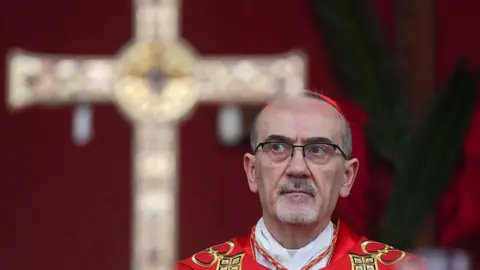
Cardinal Pierbattista Pizzaballa arrived at the Church of the Holy Sepulchre on Palm Sunday without a procession, having already accepted the cancellation of the traditional march from the Mount of Olives. He and Father Francesco Ielpo, the official guardian of the church, were attempting to hold a private Mass. Israeli police turned them away at the door.
The Catholic Church called it the first time in centuries that church hierarchs had been banned from celebrating Palm Sunday Mass at the site. Hours later, Prime Minister Benjamin Netanyahu reversed the decision. "I have instructed the relevant authorities that Cardinal Pierbattista Pizzaballa, the Latin Patriarch, be granted full and immediate access to the Church of the Holy Sepulchre in Jerusalem," he wrote on X late Sunday night, adding that the cardinal should be allowed to hold services "as he wishes."
Netanyahu framed the initial blockade as a protective measure, not a policy choice. "In one strike, missile fragments crashed meters from the Church of the Holy Sepulchre," he wrote, explaining that Iran had "repeatedly targeted the holy sites" of all three monotheistic religions in recent days. His office posted separately on X: "Today, for security reasons, the Jerusalem police did not allow Pizzaballa to enter the Church of the Holy Sepulchre for morning Mass. Again, there was no malicious intent, only concern for his safety." Jerusalem's major holy sites had been closed to worshippers since Feb. 28, when the US-Israel conflict with Iran began, and police said they had already rejected the patriarchate's formal request for a Palm Sunday exemption.
That explanation drew immediate international condemnation. U.S. Ambassador Mike Huckabee, a devout evangelical Christian, called the police action "an unfortunate overreach" and noted that the two clergymen had sought to enter privately, with no procession, and that their gathering would have been well below the existing 50-person limit that churches, synagogues and mosques across Jerusalem had been observing. "For the Patriarch to be barred from entry to the Church on Palm Sunday for a private ceremony is difficult to understand or justify," he wrote. Italian Prime Minister Giorgia Meloni described the episode as "an offense to the faithful," and Italy's foreign minister summoned Israel's ambassador to Rome. Canadian Prime Minister Mark Carney said he was "disappointed" and wrote on X that "these actions further violate the longstanding status quo of Jerusalem's Holy Sites."
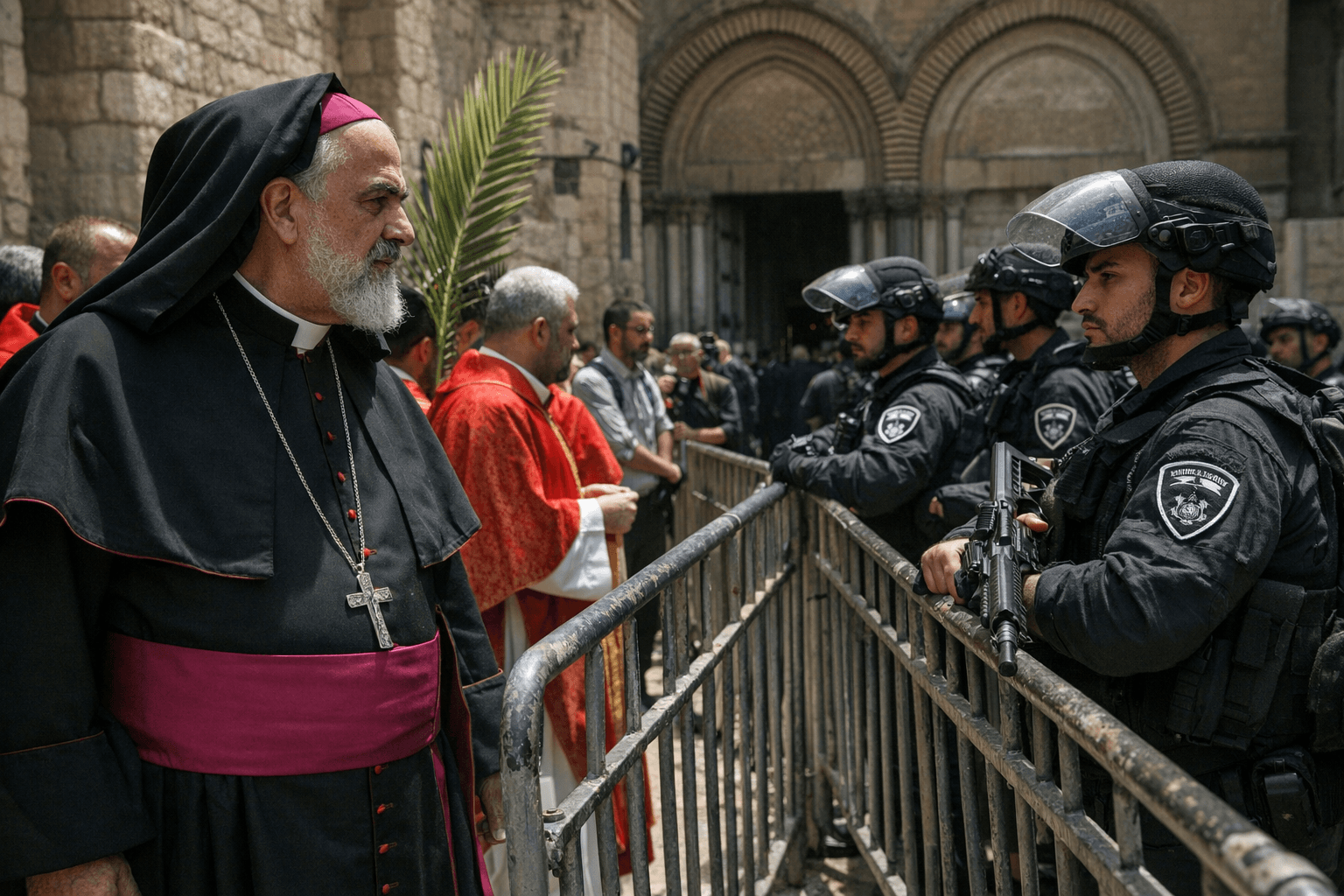
Israeli police subsequently confirmed they had approved a limited prayer arrangement at the Church of the Holy Sepulchre, coordinated with a representative of the Latin Patriarch following a situational assessment led by Jerusalem District Commander Deputy Commissioner Avshalom Peled. Netanyahu promised a broader plan was being developed: "Given the holiness of the week leading up to Easter for the world's Christians, Israel's security arms are putting together a plan to enable church leaders to worship at the holy site in the coming days." His office said that arrangement would extend to believers of all faiths by the following week.
Pizzaballa, speaking to Italian Catholic broadcaster TG2000 after leading an alternative prayer service, described the standoff with Israeli authorities as polite but real. The Church of the Holy Sepulchre, venerated as the site of Christ's crucifixion and resurrection, remained at the center of a dispute that exposed mounting tension between wartime security measures and the centuries-old religious arrangements governing Jerusalem's Old City.
Know something we missed? Have a correction or additional information?
Submit a Tip