Netanyahu’s 2026 budget heads to Knesset amid coalition fractures
Israel's draft 2026 budget arrives in the Knesset while coalition divisions threaten approval. Read the fiscal numbers, legal deadlines, and the political stakes for voters.
1. Draft delivered to Knesset
The Finance Ministry formally handed the draft 2026 state budget to the Knesset ahead of a preliminary first reading scheduled for the coming Wednesday, concluding weeks of delay tied to internal political infighting. The submission restarts a legally prescribed legislative sequence but does not guarantee passage, given the present coalition instability and the compressed calendar described by parliamentary advisers.
2. Total spending envelope
The draft sets total state spending at 662 billion shekels, a figure that excludes debt‑servicing costs and frames the government’s fiscal commitments for the year. That envelope will be the baseline for committee negotiations and line‑item bargaining, meaning ministries and coalition partners will seek adjustments that can reshape both programmatic priorities and the deficit outcome.
3. Defence allocation increase
Defence outlays were raised to 112 billion shekels from an initial 90 billion, reflecting sustained security spending pressures; using the shekel‑to‑dollar rate cited in reporting ($1 = 3.1591 shekels), this defence figure is roughly $35.45 billion. The larger defence allocation is a primary driver of the budget’s trajectory and a key bargaining chip in coalition negotiations, keeping fiscal and security policy tightly linked.
4. Deficit ceiling and central bank concern
The government set a deficit ceiling at 3.9% of GDP for 2026, a target the Bank of Israel has criticized as too high because it would not allow a reduction in the public debt burden. That institutional critique signals tension between short‑term political accommodation, particularly on defence, and medium‑term macroeconomic objectives of debt stabilization and monetary policy credibility.
5. Legislative timetable and route
If the Knesset approves the first reading, the bill will move to the Knesset Finance Committee for deliberation, potential amendments, and then return to the plenum for two final votes. The statutory sequencing builds in at least two months between the first and second readings, a procedural requirement that both constrains and pressures the legislative calendar.
6. Legal adviser’s timing warning
Knesset Legal Adviser Sagit Afik informed lawmakers that the first reading must take place by next week because at least two months must elapse between the first and second readings; Afik warned that any further delay would mean missing the statutory end‑of‑March approval deadline. Missing that deadline would automatically trigger new elections, elevating the first reading into a decisive procedural test with direct electoral consequences.
7. Recent deficit trends and context
The budget comes after deficits that narrowed to 4.7% of GDP in 2025 from 6.8% in 2023, with the earlier enlargement driven largely by a post‑Gaza war spike in defence spending. While a ceasefire has halted most fighting, intermittent violations and unresolved security dynamics keep defence spending politically salient and fiscally persistent.
8. Coalition fractures over conscription
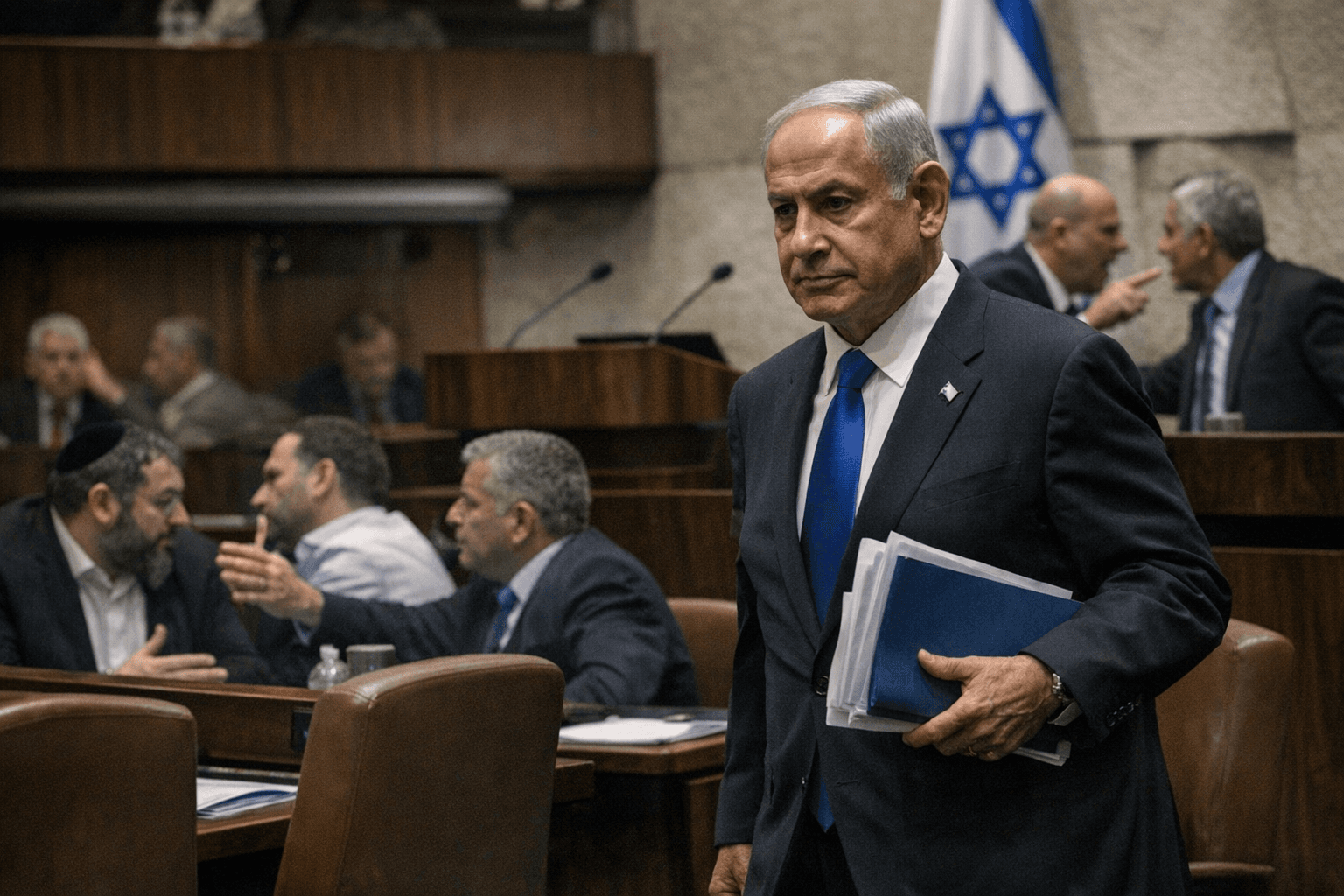
The budget’s path is jeopardized by long‑running fractures within the ruling coalition, especially over conscription rules and haredi demands for yeshiva student exemptions from military service. Key ultra‑Orthodox parties involved in the dispute include Shas, United Torah Judaism and Degel HaTorah; their negotiating stance, ranging from formal departure to threats to withhold votes, directly affects the coalition’s ability to assemble a Knesset majority for the budget.
9. Political bargaining and election scenarios
Finance Minister Bezalel Smotrich told reporters the government was “determined to pass it [the state budget] on first reading.” Prime Minister Netanyahu has been engaged in placating haredi leaders, named figures include Aryeh Deri and Moshe Gafni, and has signaled a preference to delay snap elections until September while also asking aides to prepare for the possibility of early elections as soon as June if disputes cannot be contained. Those choices show how budget approval is being used as leverage in broader coalition bargaining and electoral timing calculations.
10. Domestic policy measures included
Beyond defence, the draft includes targeted domestic measures such as a proposed loosening of tariffs on dairy imports and a new NIS 30 tax on e‑cigarettes (reported as roughly $10). These relatively modest revenue and consumer policy items reflect a balancing act: the government must show domestic responsiveness while accommodating large security expenditures.
11. Fiscal implications and governance risks
Analysts and the Bank of Israel warn that the proposed 3.9% deficit ceiling may not permit a sustained reduction of public debt, raising concerns about long‑term fiscal sustainability. At the same time, the compressed legislative timeline and coalition leverage points heighten the chance that political impasse, rather than technical budget tradeoffs, will determine final outcomes, creating governance risks for public services, investor confidence, and citizen perceptions of accountability.
12. Reporting discrepancies and transparency needs
Reporting on whether ultra‑Orthodox parties formally left the coalition or are remaining while withholding support has varied across outlets, producing competing narratives about the government’s parliamentary stability. This divergence underscores the need for transparent, publicly accessible timelines, explicit vote tracking in the Knesset and clear disclosure of side agreements so voters and institutional actors can assess how policy and political deals shape fiscal choices.
This article was produced by Prism’s automated news system from verified source data, official records, and press releases, then run through automated quality and moderation checks before publishing. The system is built and supervised by the people who set the standards it runs under. Read our full AI policy.
Did this article answer your question?

