New adhesives could make paper labels easier to recycle
Paper labels still create sticky contamination in recycling mills, but new wash-off adhesives are being engineered to separate cleanly instead of lowering fiber quality.
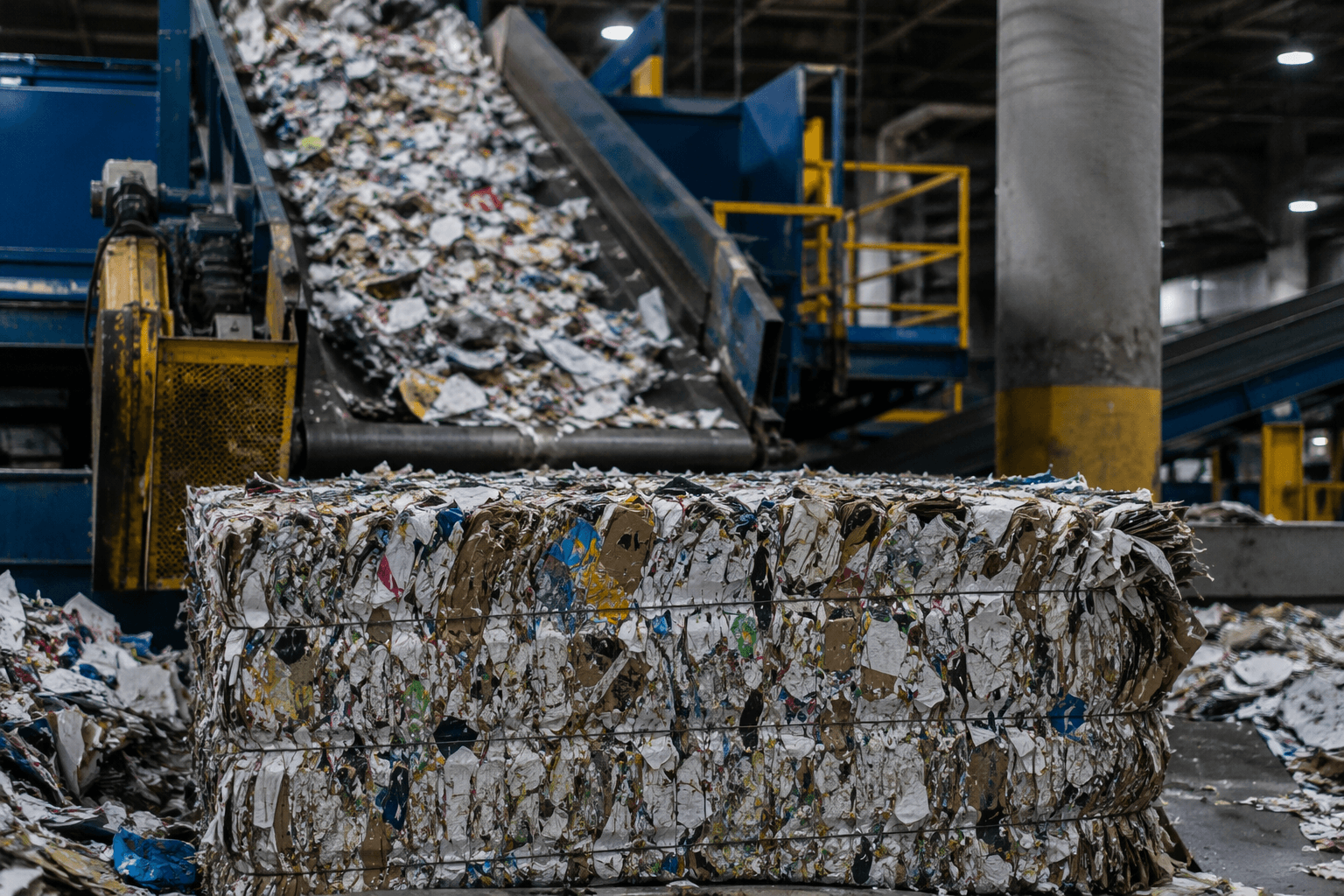
In October 2024, the Association of Plastic Recyclers published PET-EE-01, a laboratory procedure for testing how label adhesives affect PET recycling. Avery Dennison followed in 2025 with new paper label adhesives that it said expanded its wash-off portfolio, part of a broader push to make labels come away more cleanly in the recycling stream.
The pressure to change is rooted in a long-running systems problem. A 1994 study on packaging adhesives and wastepaper recycling found that adhesives present when wastepaper is recycled can form stickies, the gummy contaminants that interfere with sorting, pulping and paper quality. The U.S. Forest Service has also studied the effect of release liner materials on adhesive contaminants, paper recycling and recycled paper properties, underscoring that the issue reaches beyond the label itself to the backing materials and coatings that move through mills.
Industry guidance shows how widely adhesives are embedded in packaging. FEICA says they are used in corrugated cardboard production, box formation, box closing, labelling, lidding, sealing, lamination, multipack bonding, adhesive tape production and self-adhesive label production. That makes the design choice harder than simply picking a better sticker: packaging converters, label makers and brand owners all have to change materials at the same time if the adhesive is meant to wash off instead of fragmenting into residue.
The scale of the recycling market explains why that matters. A 2024 Commission for Environmental Cooperation study on paper waste management in the United States and Canada used information available through December 2023, while Europe has spent years pushing paper recovery as policy. The European Declaration on Paper Recycling set a target of 74% paper recycling by 2020, and CEPI said 73.9% of all paper and board consumed in Europe was recycled that year. Even with those rates, contamination still cuts into how much recovered fiber can be turned back into usable paper.
The remaining challenge is that recycling instructions are not uniform. Some consumer guidance says labels do not need to be removed from certain cans, glass jars or bottles before recycling, which means the right answer depends on the material and the local system. That makes adhesive chemistry only one part of the fix: manufacturers have to specify the right label, recyclers have to accept it, and municipalities have to align their rules if wash-off designs are going to matter at scale.
This article was produced by Prism’s automated news system from verified source data, official records, and press releases, then run through automated quality and moderation checks before publishing. The system is built and supervised by the people who set the standards it runs under. Read our full AI policy.
Did this article answer your question?