New guidelines aim to cut postpartum hemorrhage deaths worldwide
New global guidance says postpartum hemorrhage should be treated sooner, at 300 mL of blood loss with abnormal vital signs, not after women have already lost 500 mL.

Postpartum hemorrhage remains one of the clearest failures in maternal care: a condition that affects about 27 million women a year, kills nearly 43,000 mothers, and should be far more preventable than it is. A new series of reports and updated global guidance are pressing hospitals to stop waiting for women to deteriorate and to act in the first hours after birth, when rapid diagnosis and treatment can still save lives.
The scale of the problem is stark. Every 12 minutes, somewhere in the world, a woman dies from excessive bleeding after childbirth. The World Health Organization says postpartum hemorrhage is the leading cause of maternal mortality worldwide, and the burden is not only measured in lives lost. The Lancet estimates the condition carries about $10.4 billion in annual global costs, including $3.6 billion in short-term direct economic losses alone.
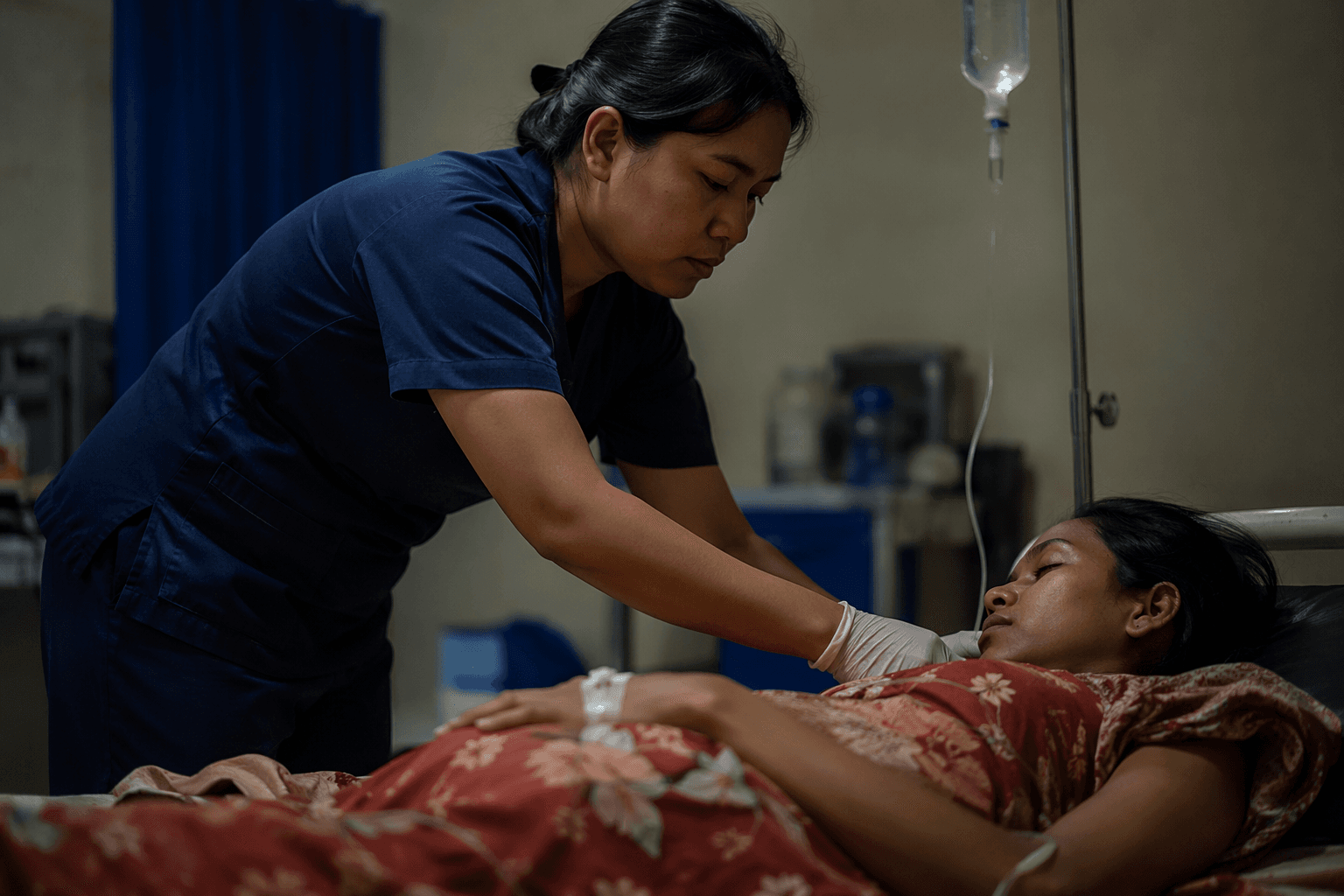
The new recommendations from WHO, the International Federation of Gynecology and Obstetrics, and the International Confederation of Midwives, issued on October 5, 2025, aim to close the gap between what clinicians know works and what many new mothers actually receive. For decades, diagnosis often began only after a woman lost 500 mL of blood. The updated guidance says treatment should start earlier, once blood loss reaches 300 mL if abnormal vital signs are present. Visual estimation alone, the guidance says, misses about half of cases.
The core response is a bundled protocol known as MOTIVE: uterine massage, an oxytocic drug, tranexamic acid, intravenous fluids, examination for the source of bleeding, and escalation of care. WHO says that first-response bundle can reduce progression to life-threatening hemorrhage by up to 60%. That matters because many cases emerge without obvious risk factors, and delays in diagnosis, escalation, blood products, and treatment often decide whether a woman survives.
Survivors can be left with major organ damage, hysterectomy, anxiety, trauma, and lifelong reproductive disability. The warning extends beyond the delivery room, too. Preventing anemia during pregnancy, addressing unmet contraception needs, avoiding medically unnecessary cesarean sections, and ensuring every woman receives effective uterotonic medicine after birth are all low-cost interventions that can lower risk before bleeding starts.
The United States has not escaped the pattern. CDC data released in 2026 showed 649 maternal deaths in 2024, a maternal mortality rate of 17.9 deaths per 100,000 live births. A CDC surveillance analysis found postpartum hemorrhage accounted for 21.2% of hemorrhage-related pregnancy deaths from 2012 to 2019, and earlier U.S. research found hemorrhage-related maternal mortality had remained stagnant for decades. The message from the new guidance is direct: the tools exist, the protocols are known, and the cost of failing to use them is still being paid by mothers.
This article was produced by Prism’s automated news system from verified source data, official records, and press releases, then run through automated quality and moderation checks before publishing. The system is built and supervised by the people who set the standards it runs under. Read our full AI policy.
Know something we missed? Have a correction or additional information?
Submit a Tip