New Jersey teens place second in World Series of Birding
A trio of New Jersey high school birders finished second after 24 hours of counting species statewide, extending a run built on years of practice.

The Pete Dunnelins spent a full day chasing birds across New Jersey, and came away with a second-place finish that underscored how youth birding is becoming a pipeline into conservation work and field science.
The three-teen team, Otys Train, 16, Jack Trojan, 17, and Zade Pacetti, 16, competed in the 43rd annual World Series of Birding on Saturday, May 9, 2026. The contest runs from midnight to midnight, and the goal is simple but demanding: identify as many bird species in New Jersey as possible by sight and sound before the clock runs out.
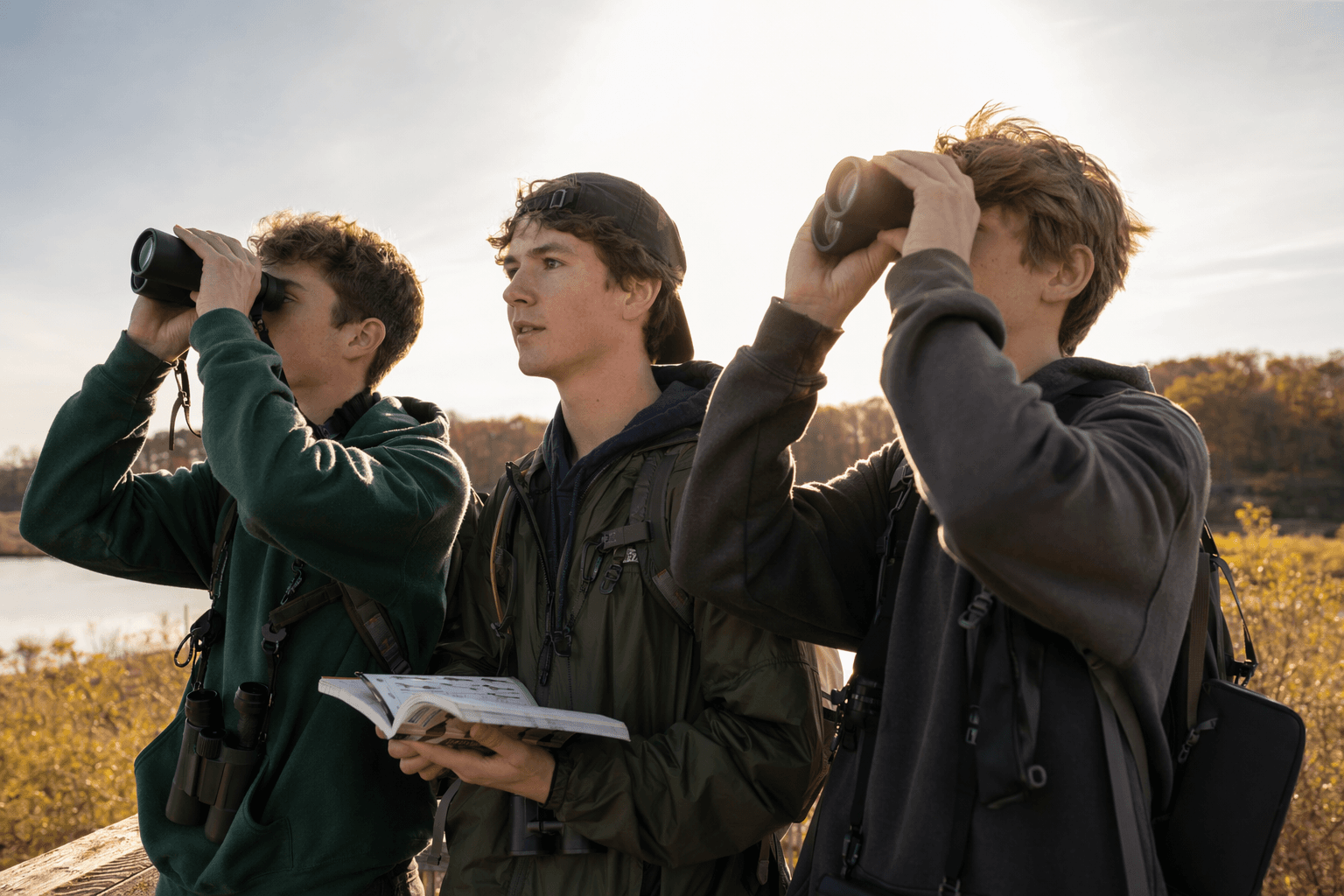
Their fathers, Mark Trojan, Chris Pacetti and Jeff Train, drove for them and handled the kind of support work that keeps an all-night field effort moving, including logistics, food and water. The teens have spent years practicing bird calls and learning to recognize species quickly, the kind of training that turns a competition into a working lesson in ecology, habitat awareness and observation.
The team name itself reflects that mix of place and tradition. The Pete Dunnelins combines dunlins, a shorebird associated with the New Jersey coast, and Pete Dunne, the birding figure who founded the World Series of Birding in 1984. That lineage matters because the event is not just a scorecard; New Jersey Audubon describes it as its most important fundraiser of the year and ties it directly to conservation.
In 2026, New Jersey Audubon said close to 100 teams entered the competition. NPR reported 87 teams across several age divisions. The organization’s fundraising page listed a goal of $275,000 and showed $195,430.73 raised at the time the page was updated. That money helps connect a weekend competition to year-round work protecting habitat and supporting birdlife across the state.
For The Pete Dunnelins, the result also marked a shift in position, not in ambition. The team had placed first in the previous two years before finishing second in 2026, evidence of how a high school birding team can develop into a disciplined group with real field expertise. In an era of accelerating biodiversity loss, that kind of early training matters. It builds the next generation of observers, record-keepers and conservation advocates one species at a time.
This article was produced by Prism’s automated news system from verified source data, official records, and press releases, then run through automated quality and moderation checks before publishing. The system is built and supervised by the people who set the standards it runs under. Read our full AI policy.
Did this article answer your question?

