White House plans deep Colorado River cuts as drought worsens
Arizona, California and Nevada face the first, steepest cuts as the Colorado River nears crisis, with Lake Powell slipping toward hydropower risk.

Arizona, California and Nevada would bear the first and deepest hit under the White House’s new Colorado River plan, a squeeze that could ripple through farm districts, growing cities, hydropower at Glen Canyon Dam and tribal communities across the West. The river supplies seven states and Mexico, and about 35 million to 40 million people rely on it for some or all of their municipal water. Agriculture uses roughly 70% of the river’s flow, making every cut a direct threat to food production as well as taps and reservoirs.
Federal planners are moving amid a basin-wide drought that has lasted since about 2000 and has now driven Colorado River system storage to about 36% of capacity. Lake Powell’s minimum probable inflow for water year 2026 is forecast at just 2.78 million acre-feet, or 29% of the historical average, and Reclamation says the reservoir could fall below 3,490 feet by August 2026 without major intervention. That level would put pressure on hydropower production and on the broader operating system that links Lake Powell to Lake Mead.
The Bureau of Reclamation’s April plan calls for releasing 660,000 acre-feet to 1 million acre-feet from Flaming Gorge Reservoir between April 2026 and April 2027, while reducing annual releases from Lake Powell to Lake Mead by 1.48 million acre-feet, from 7.48 million acre-feet to 6.0 million acre-feet through September 2026. The 2026 Drought Response Operations Plan covers May 1, 2026 through April 30, 2027, but officials say releases could begin as soon as April 23 because spring runoff has been so poor. Reclamation has also said the first rounds of federal action are meant to protect Lake Powell, Glen Canyon Dam hydropower and downstream deliveries while the basin waits for a longer-term agreement.
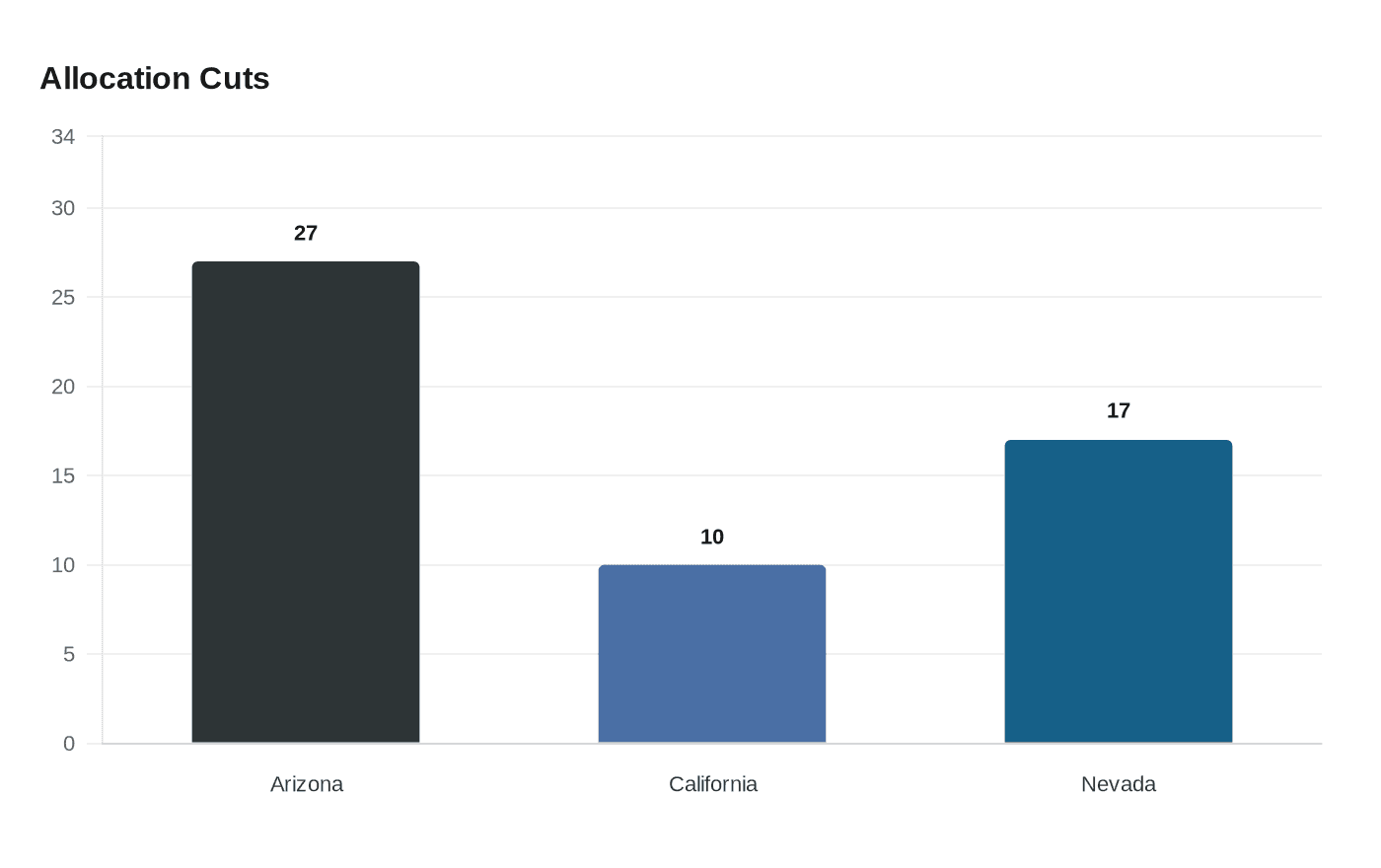
The political fight has become as urgent as the hydrology. California, Arizona and Nevada said on February 13 that the federal deadline for a consensus post-2026 deal had passed for a second time, and they argued that all seven basin states must share conservation. Arizona has offered a 27% reduction in its allocation, California 10% and Nevada nearly 17%, while the Lower Basin has separately proposed a temporary plan that could save up to 1 million acre-feet through 2028. The 2007 Interim Guidelines, the 2019 Drought Contingency Plans and related U.S.-Mexico agreements are set to expire at the end of 2026, turning Washington’s 10-year scarcity plan into a test of whether the West can finally live within a river that has been oversubscribed for generations.
This article was produced by Prism’s automated news system from verified source data, official records, and press releases, then run through automated quality and moderation checks before publishing. The system is built and supervised by the people who set the standards it runs under. Read our full AI policy.
Did this article answer your question?