New Measures, 8 Percent Surcharge Aim to Avert Looming Financial Crisis
USPS suspended $400M in monthly pension payments and won approval for an 8% shipping surcharge as the agency warned it could run dry by February 2027.
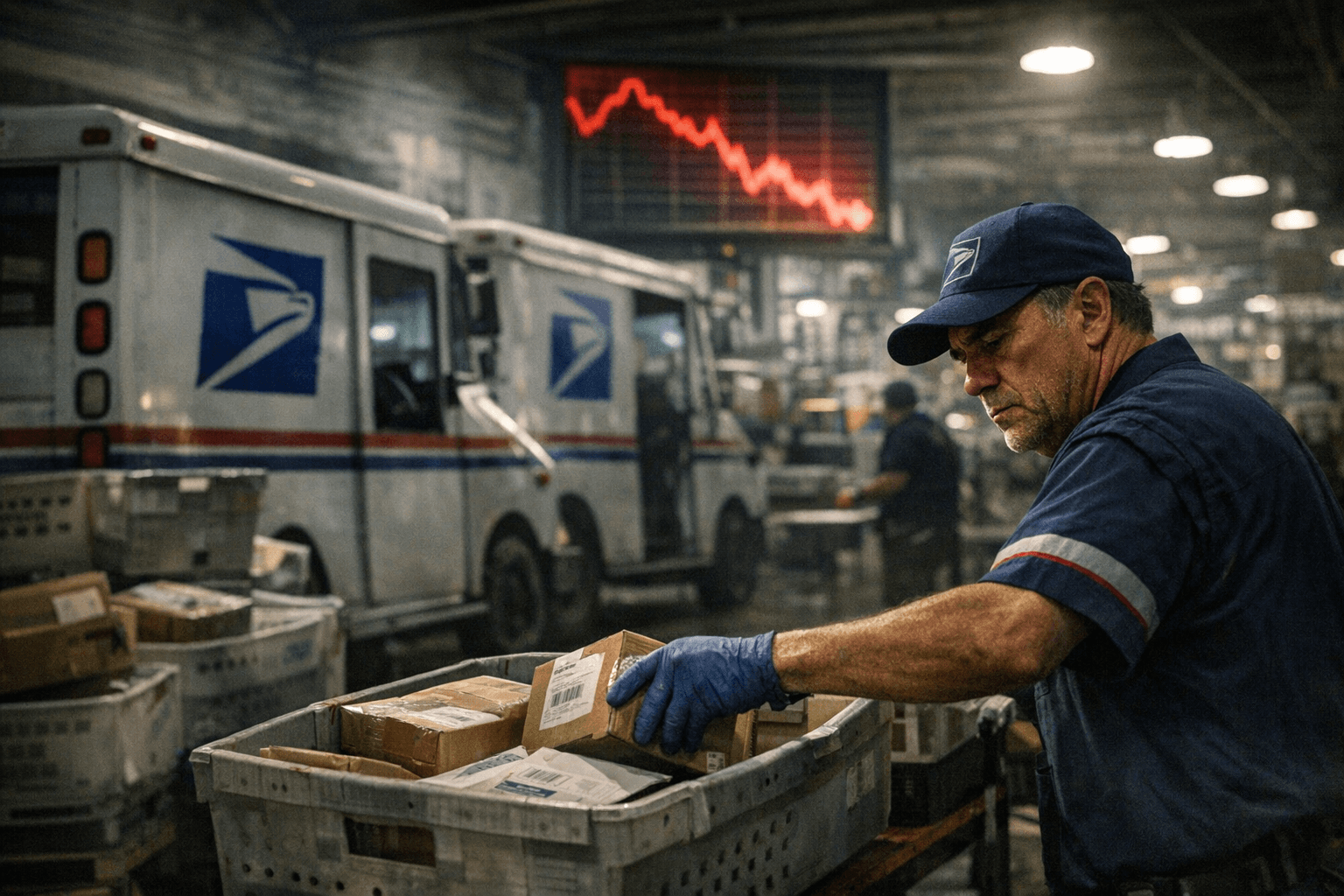
The U.S. Postal Service launched a two-pronged financial rescue on Thursday, suspending its employer contributions to the federal pension system and winning regulatory approval for an 8 percent surcharge on package deliveries, as Postmaster General David Steiner warned lawmakers the agency could exhaust its cash reserves as early as February 2027.
The pension move, effective April 10, halts USPS's bi-weekly $200 million payments to the Office of Personnel Management for the Federal Employees Retirement System. The suspension is the agency's latest drastic cost-saving measure as it manages what officials described as an existential financial crisis. USPS Chief Financial Officer Luke Grossmann said there will be "no immediate detrimental impact to our current or future retirees if normal FERS cost payments are temporarily withheld." The Postal Service said it will continue to transmit worker contributions to the retirement plan, as well as employer automatic and matching contributions and employee contributions to the Thrift Savings Plan.
The 8 percent surcharge, which the Postal Regulatory Commission approved earlier this week, takes effect April 26 and applies to Priority Mail Express, Priority Mail, USPS Ground Advantage, and Parcel Select, running through January 17, 2027. The increase touches nearly every household and business that depends on USPS for package delivery: the surcharge is expected to have the greatest impact on small and mid-sized ecommerce sellers and distributors. Rural communities face particular exposure, underscoring how much Americans still rely on USPS for essentials, including prescription medications. In announcing the surcharge, USPS said it "has steadfastly avoided surcharges" and that the new fee "is less than one-third of what our competitors charge for fuel alone," arguing the agency continues to offer "some of the lowest rates in the industrialized world."
For independent sellers, the cumulative hit is steep. The 8 percent surcharge follows a general rate increase of up to 7.8 percent that already hit in January 2026, creating a cumulative year-over-year cost spike of nearly 16 percent on shipping costs for businesses that built their pricing models around USPS's historically low rates.
The financial deterioration driving these moves has been building for years. Mail volume has plummeted from about 220 billion pieces in 2006 to about 110 billion today as more people shifted to digital communications and private carriers. A 10-year turnaround plan put in place in 2021 by Steiner's predecessor has failed to reverse the losses. Steiner has pushed Congress to allow first-class stamp prices to rise from the current 78 cents to as high as 95 cents or $1. Stamp prices are already up 46 percent since early 2019, when they were 50 cents, but Steiner has argued they remain far lower than in other countries.
The 2022 Postal Service Reform Act gave partial relief, eliminating a requirement that the agency prefund its retiree health benefits, but it left other constraints intact, including a mandate to maintain six-day delivery for both mail and packages. Without help from Congress, Steiner has warned USPS may have to consider cutting delivery days or closing post offices, proposals that have faced intense public opposition in the past.
Consumer and business advocacy group Keep Us Posted has urged Congress to ensure any rate increases are limited to once a year, that six-day-a-week mail service is preserved, and that USPS regulators retain greater control over any service changes. Without broader legislative action on borrowing authority, pricing flexibility, and the pension funding formula, the surcharge and pension suspension amount to a short-term bridge, buying months rather than a lasting fix for the oldest federal service in the country.
This article was produced by Prism’s automated news system from verified source data, official records, and press releases, then run through automated quality and moderation checks before publishing. The system is built and supervised by the people who set the standards it runs under. Read our full AI policy.
Did this article answer your question?

