New study urges IP reforms to unlock upcycling, resale and circular fashion
A policy study published 2 March 2026 calls for clearer trademark, design rights, moral rights and exhaustion-doctrine rules to remove legal barriers to upcycling, resale and circular fashion.

A policy-oriented study published on 2 March 2026 argues that current intellectual property frameworks create uncertainty for upcycling, resale and circular business models, and recommends targeted legal reforms and clarifications to unlock those markets. The paper frames trademark, design rights, moral rights and the exhaustion doctrine as the four IP areas where lack of clarity is holding back second-life uses of garments and material reuse.
The study examines trademark law and its effect on resale platforms and label-altered garments, design rights and how they apply when a garment is remade, moral rights that can affect alteration of creative works, and the exhaustion doctrine that governs whether IP holders can control downstream sales. By placing those four specific doctrines at the center of the analysis, the authors map legal frictions that touch both small-scale upcyclers and larger circular-business experiments.
Authors explicitly recommend reforms and clarifications across trademark, design rights, moral rights and exhaustion rules to reduce legal friction for resale shops, repair services, and upcycling ateliers. Published on 2 March 2026, the paper does not simply diagnose problems; it sets out a policy agenda focused on making existing IP law work with circular practices rather than against them.
For brands and resale platforms, the study’s implications are practical: clearer rules on design rights would affect how legacy styles can be remixed, and moral-rights clarification would determine when visual alteration qualifies as protected expression rather than permissible modification. The paper treats the exhaustion doctrine as a gateway issue for cross-border resale and for business models that repurpose authenticated goods.
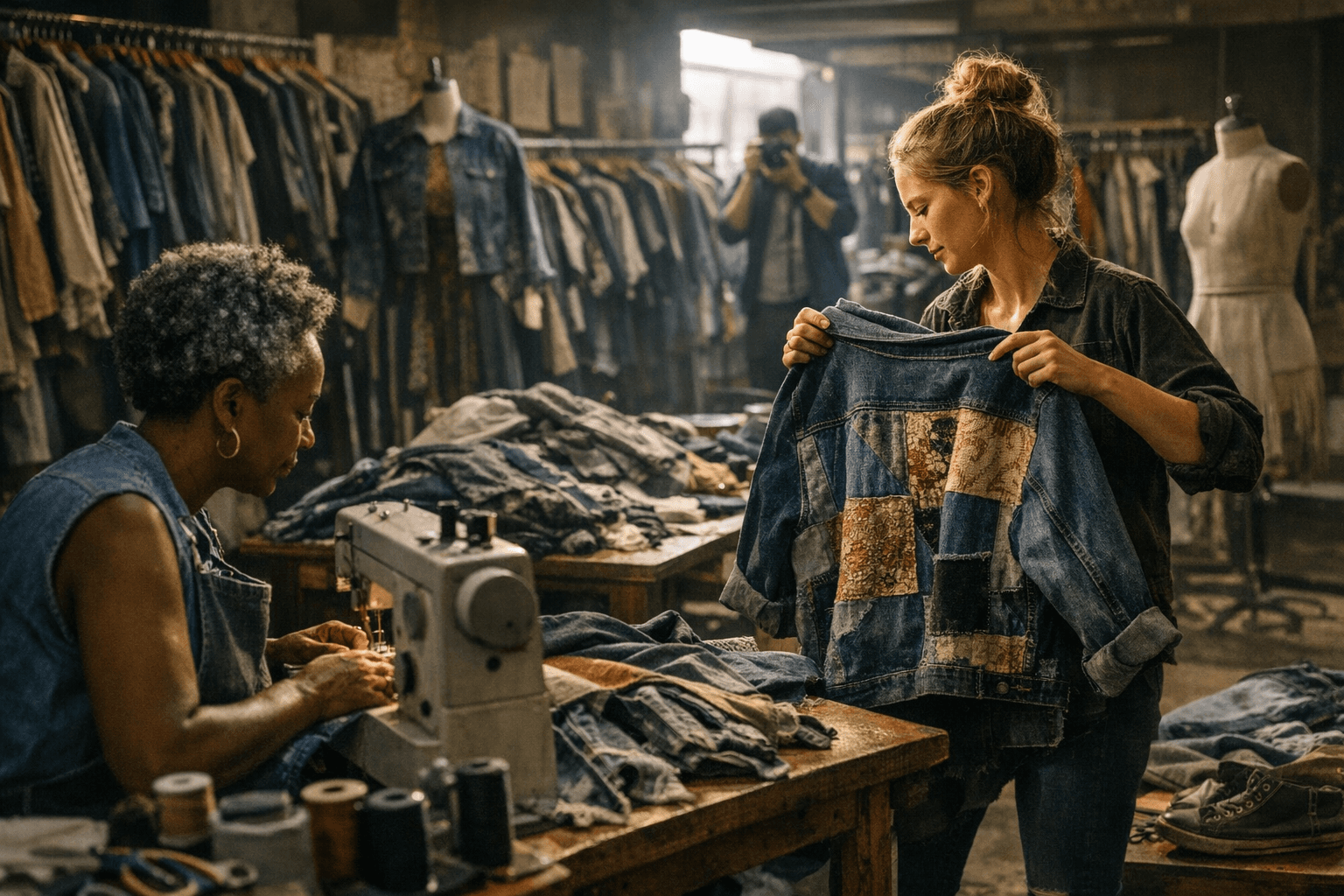
The recommendation package aims to realign IP incentives with circular-economy goals so that repair, redistribution and creative reuse can scale without routine legal risk. With a publication date of 2 March 2026, the study delivers a concise roadmap for lawmakers and industry counsel to consider statutory or regulatory adjustments that address trademark policing, the scope of design protection, moral-rights waivers or limits, and exhaustion rules for garments.
If policymakers adopt the study’s prescriptions, the result would be a clearer legal environment for resale marketplaces, upcycling studios and circular-fashion ventures. For anyone running a repair shop, operating a pre-loved platform or designing with reclaimed textiles, the paper places these four named IP doctrines at the heart of the next policy conversations.
Know something we missed? Have a correction or additional information?
Submit a Tip