New York Times documents reveal Supreme Court shadow docket origins
Sixteen pages of secret Supreme Court memos trace how the justices built a fast-track process that now shapes presidential power with little public explanation.
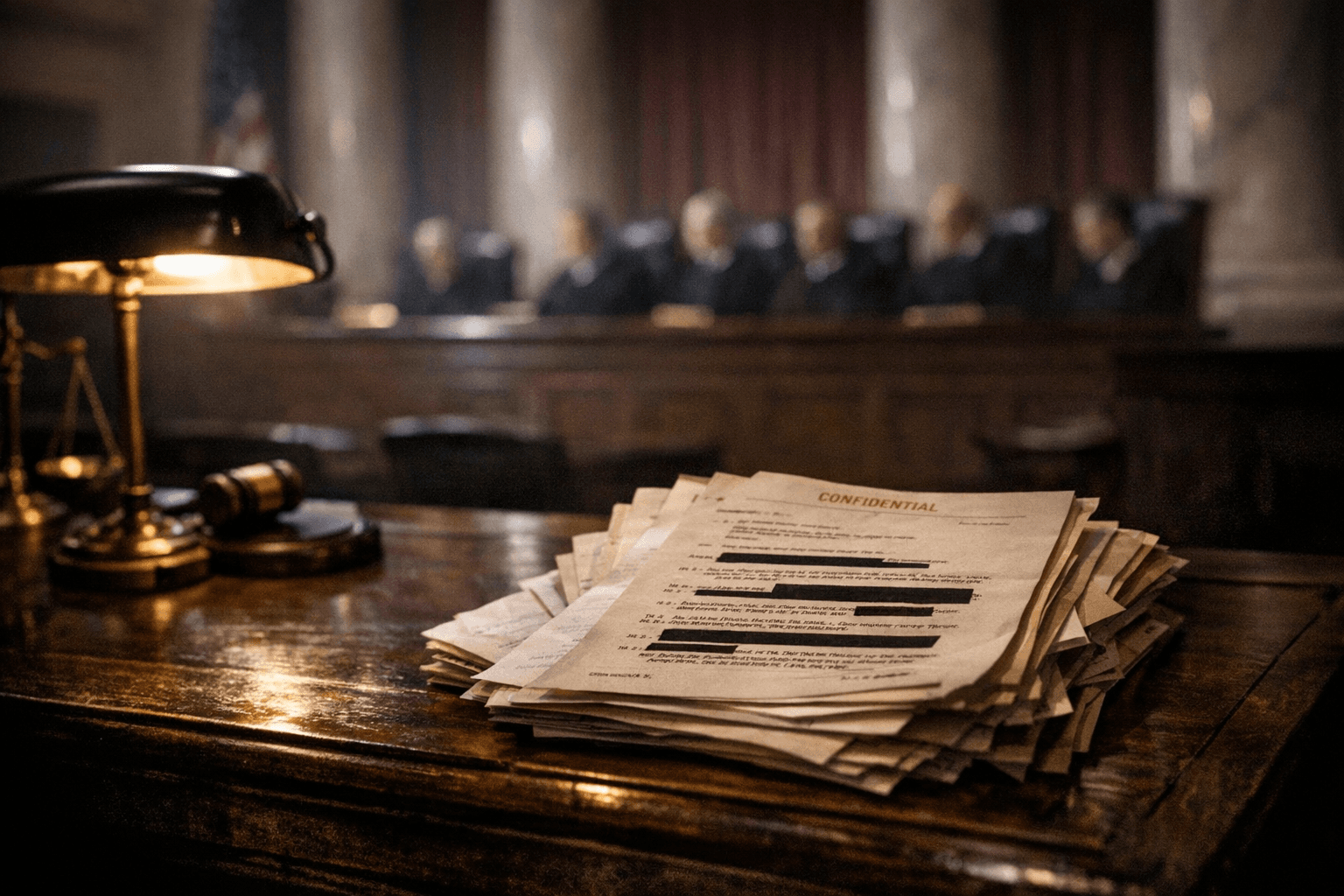
Sixteen pages of internal Supreme Court deliberations expose how the justices built a secretive track for some of the most consequential decisions in the country. The documents show the early machinery behind what is now known as the shadow docket, a system that lets the court move quickly on urgent requests while keeping much of its reasoning out of public view.
The shadow docket, also called the emergency docket or interim relief docket, handles applications that seek immediate action from the Supreme Court of the United States. Those cases are typically decided with limited briefing, usually without oral argument, and often end in unsigned orders that offer little or no explanation. That speed gives the court power to act quickly; the secrecy gives those rulings an outsized effect on law and policy before the country fully understands the rules being set.
The stakes have grown as the court has used the process in disputes involving presidential power, immigration, foreign aid and other high-pressure fights. A docket system maintained by the Supreme Court says its records cover cases filed since the beginning of the 2001 term, underscoring how modern the court’s digital case tracking remains compared with the far older institution it documents. Yet the use of emergency orders has expanded sharply in recent years, giving the court a parallel decision-making channel that operates outside the normal merits process.
That expansion has intensified criticism from inside and outside the court. On April 15, 2026, Justice Ketanji Brown Jackson called the emergency docket “corrosive,” arguing that rulings affecting millions of people are being issued with too little explanation to sustain institutional trust. Her warning lands at a moment when secrecy at the court is already under renewed scrutiny after the 2022 leak of the Dobbs draft opinion.
The broader backlash is not just about one docket or one administration. A Brennan Center for Justice tracker updated April 16, 2026 said the court has dramatically expanded its use of the shadow docket over the past few years. Ballotpedia said that as of March 17, 2026, the court had issued 35 emergency orders in cases tied to the second Trump administration, with four applications pending and three withdrawn; the Trump administration had filed 29 of those applications.
The fight over secrecy at the court reaches back to the Pentagon Papers case, New York Times Co. v. United States, a landmark clash over press freedom and government secrecy. These new memos revive the same core question: how much of the making of national law should happen in public, and how much can be decided in the dark before the consequences become visible to everyone else.
Sources:
Know something we missed? Have a correction or additional information?
Submit a Tip