New Zealand Labour backs India trade deal, clearing path through parliament
Labour’s backing gave the India trade deal the votes it needed, turning a coalition fight into a cross-party push. The pact targets NZ$3.68 billion in annual two-way trade.
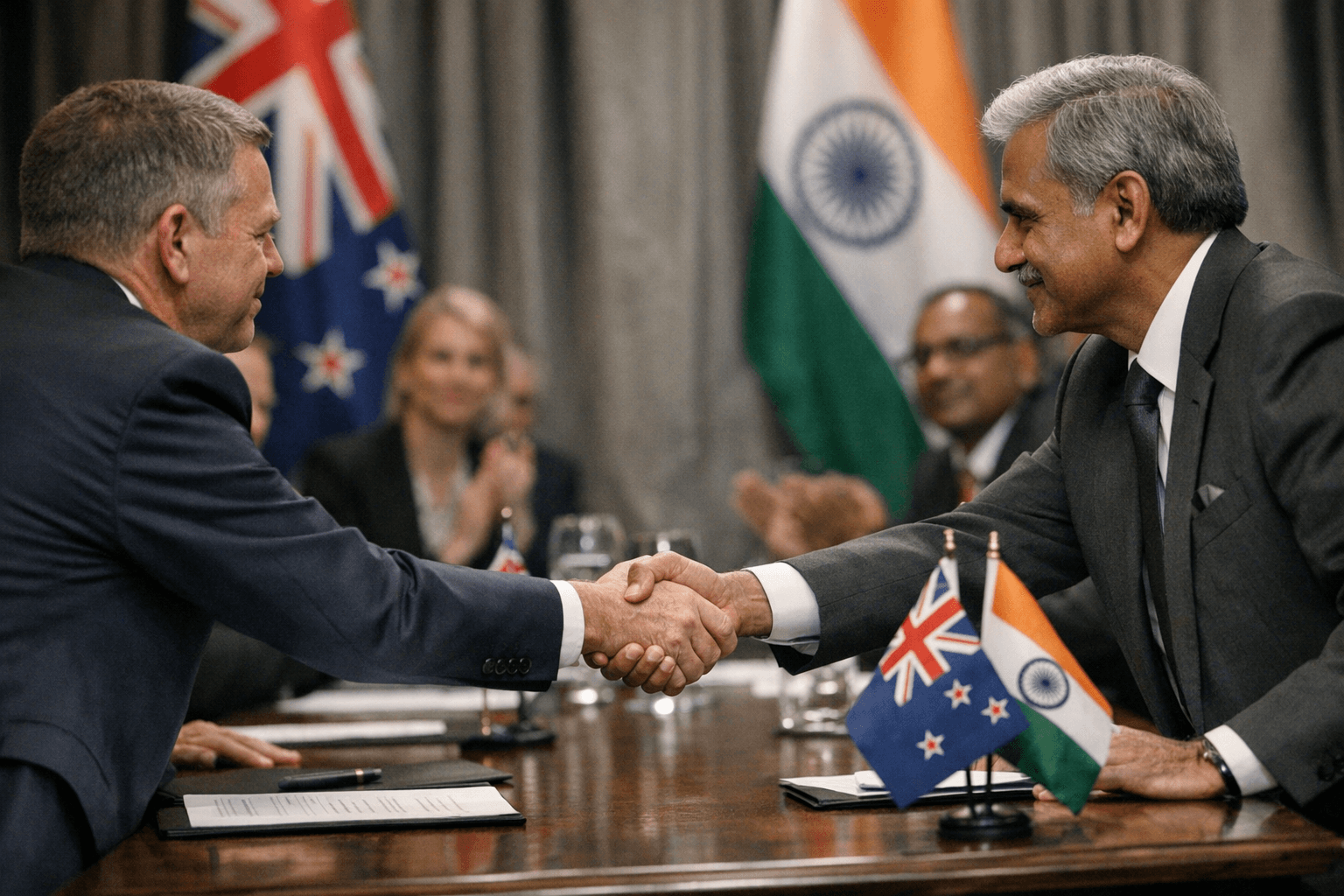
Labour’s decision to back New Zealand’s India free trade deal gave the government the numbers it needed to push the agreement through parliament, turning a fragile coalition dispute into a wider political statement about where Wellington wants to place its economic bets.
The move matters well beyond parliamentary arithmetic. New Zealand and India concluded the pact in December after five formal negotiation rounds that began on March 16, 2025, and Trade and Investment Minister Todd McClay is scheduled to travel to New Delhi for the signing on April 27. Labour leader Chris Hipkins said his party would support the deal even though it was not the agreement Labour would have negotiated, arguing that New Zealand values its relationship with India and the contribution of Indian communities at home.
That bipartisan backing is significant in a country trying to widen its commercial base. New Zealand officials say the deal supports a goal of doubling export value in 10 years, and the numbers explain why. India was New Zealand’s 21st largest goods export market and fifth largest services export market in the year ended June 2025, with two-way trade at NZ$3.68 billion and New Zealand exports to India at NZ$1.79 billion. India’s official figures put bilateral merchandise trade at about US$1.3 billion in FY 2024-25, up nearly 49% from a year earlier.
For New Zealand, the biggest gains should fall to exporters that can use the new tariff treatment in India. Officials say 95% of current exports will be either tariff-free or face reduced tariffs, with likely winners including forestry, horticulture, industrial products, wool and services such as travel. The agreement also gives New Zealand a stronger foothold in Asian supply chains at a time when many economies are trying to reduce dependence on a single market.
The biggest limits are just as clear. India has excluded sensitive products including dairy, coffee, milk and milk products, sugar, spices, edible oils, rubber and onions, which means New Zealand’s dairy sector, long a political pressure point in trade talks, will not get the broad access some exporters wanted. That is why New Zealand First, led by Winston Peters, had already said it would oppose the enabling legislation, calling the pact “neither free nor fair” and arguing it did not give enough back to New Zealand.
Labour’s support changed the calculation. RNZ reported that the backing gave National and ACT the votes needed to enact the deal, showing how a divided parliament can still produce a pragmatic outcome when commercial interests cut across party lines. For India, the agreement is another sign that it can deepen ties with advanced Western Pacific economies even as global trade tensions rise, and for both sides it marks a step away from overreliance on China-centric trade patterns.
This article was produced by Prism’s automated news system from verified source data, official records, and press releases, then run through automated quality and moderation checks before publishing. The system is built and supervised by the people who set the standards it runs under. Read our full AI policy.
Did this article answer your question?

