Nigeria jails former power minister for 75 years in money-laundering case
Nigeria sentenced former power minister Saleh Mamman to 75 years after convicting him on all 12 counts in a 33.8 billion naira laundering case tied to power projects.
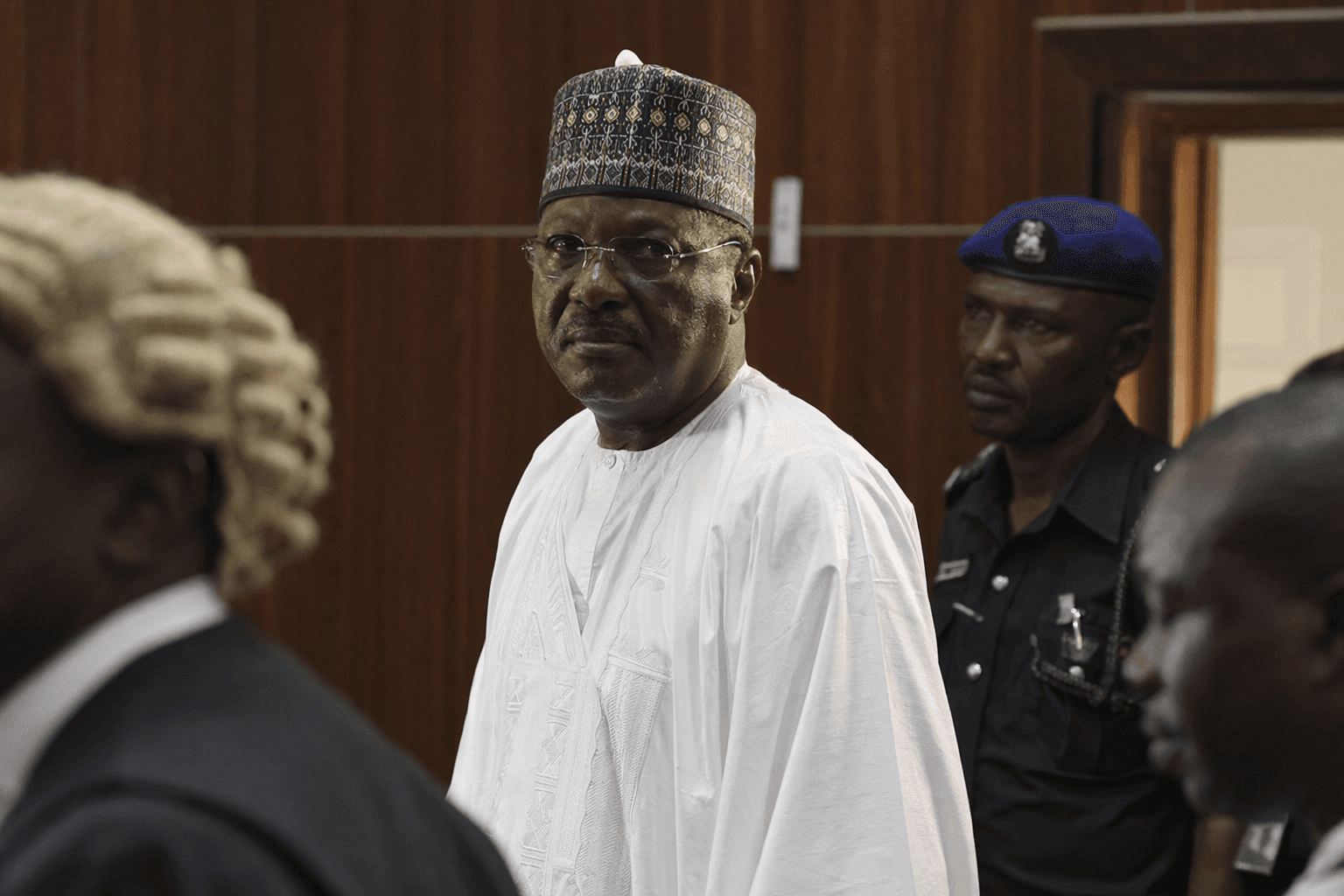
Nigeria on Wednesday imposed a 75-year prison term on former Power Minister Saleh Mamman, a rare conviction that puts the country’s anti-corruption drive in one of its most politically sensitive sectors under sharper scrutiny.
Justice James Omotosho of the Federal High Court in Abuja convicted Mamman on all 12 counts brought by the Economic and Financial Crimes Commission, which said the case involved 33.8 billion naira, about $24.71 million, moved through private companies. Mamman served as minister of power under former President Muhammadu Buhari, and the ruling marked a major legal blow to a figure who once sat at the center of Nigeria’s electricity policy.
The money at issue was linked to government-financed hydroelectric projects, including Mambilla and Zungeru, both long associated with delay, controversy and public frustration. Mambilla is widely described as a 3,050-megawatt scheme in Taraba State, envisioned as a flagship piece of Nigeria’s energy future. Zungeru, in Niger State, is a 700-megawatt hydropower project that began construction in May 2013 and was completed in 2023 at a cost of about $1.3 billion.
That backdrop gives the conviction broader significance than the prison term alone. Nigeria has spent years battling public anger over chronic electricity shortages, stalled projects and allegations that funds meant for infrastructure were siphoned off before they could translate into power on the grid. The court’s decision sends a signal that prosecutors can still reach high-level officials, but it also underscores the scale of the losses the country has already absorbed.
Reuters described the case as a rare conviction against corrupt officials in Nigeria, where high-profile anti-graft cases have often struggled to produce convictions that stick. For a government trying to persuade citizens that public money can be protected and infrastructure can be built without leakage, the Mamman ruling is both a test and a benchmark. It shows the legal system can punish abuse at the top, but the harder question remains whether that accountability will be matched by real progress in electricity supply and public trust.
This article was produced by Prism’s automated news system from verified source data, official records, and press releases, then run through automated quality and moderation checks before publishing. The system is built and supervised by the people who set the standards it runs under. Read our full AI policy.
Did this article answer your question?