Trump arrives in Beijing for high-stakes summit with Xi Jinping
Trump landed in Beijing with Musk, Rubio, Hegseth and Jensen Huang, signaling a summit split between trade, chips and security.
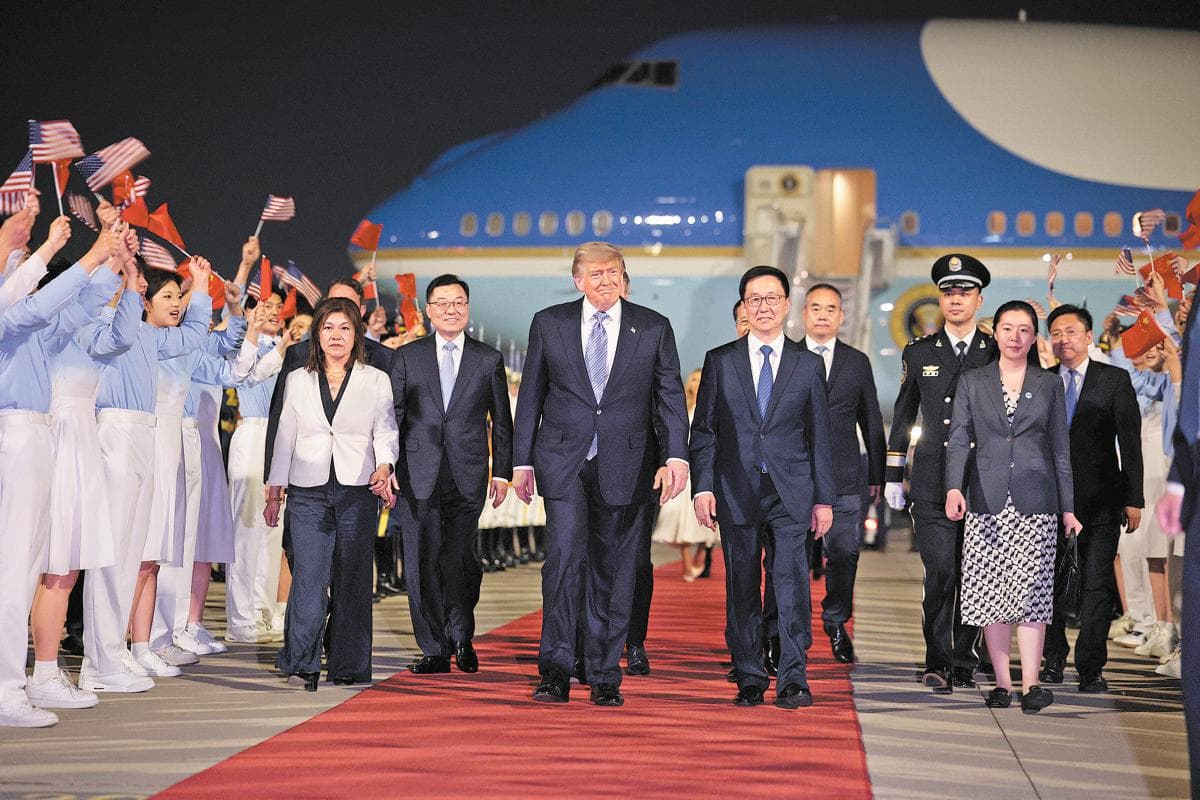
Donald Trump stepped onto Beijing tarmac to a red-carpet welcome and an unusually broad traveling party that said as much about the summit as the speeches will. Chinese Vice President Han Zheng greeted Trump at Beijing Capital International Airport on May 13, 2026, as a military honor guard, a band and about 300 Chinese youths waving American and Chinese flags lined the arrival ceremony.
The visit marked Trump’s first trip to China as a sitting U.S. president in nearly a decade, after his 2017 visit, and it opened a multi-day stretch of meetings with Xi Jinping that the White House cast as central to tariffs, rare earths, artificial intelligence, the Iran war and Taiwan. Trump traveled with Elon Musk, Secretary of State Marco Rubio, Defense Secretary Pete Hegseth, Nvidia chief Jensen Huang and other business executives, a roster that highlighted how closely trade, technology and security are now intertwined in U.S.-China diplomacy.

That mix also revealed who has Trump’s ear in Beijing. Musk and Huang, two of the world’s most consequential figures in electric vehicles and chips, signaled that market access and technology policy were not side issues but core bargaining chips. Rubio and Hegseth gave the trip a harder geopolitical edge, suggesting the administration was also preparing to press Beijing on Taiwan and broader security concerns. Treasury Secretary Scott Bessent was expected to join later after talks with Chinese Vice Premier He Lifeng in South Korea, keeping the tariff channel active alongside the presidential summit.
The White House schedule packed the day with pageantry and negotiation: a welcome ceremony, bilateral talks at the Great Hall of the People, a state banquet, tea and a working lunch. Trump said he planned to ask Xi to “open up” China to American firms, and possible dealmaking was already being watched closely around Boeing aircraft, soybeans and beef. For Washington, even incremental purchases would be a sign that Beijing is willing to use trade to ease political pressure.
The stakes extended beyond commerce. China remains a major buyer of Iranian oil, giving Beijing leverage over Tehran at a moment when the war involving Iran continues to reverberate across the region and global markets. Chinese officials have framed the summit as a test of “equality, respect and mutual benefit,” language that points to a broader contest over whether the world’s two largest economies can stabilize ties without conceding ground on tariffs, technology or Taiwan.
This article was produced by Prism’s automated news system from verified source data, official records, and press releases, then run through automated quality and moderation checks before publishing. The system is built and supervised by the people who set the standards it runs under. Read our full AI policy.
Did this article answer your question?