Nigeria warns of widespread 2026 flooding risk across 33 states
Nigeria has flagged 14,118 communities in 33 states and Abuja for high flood risk, with the danger set to peak from July to September.
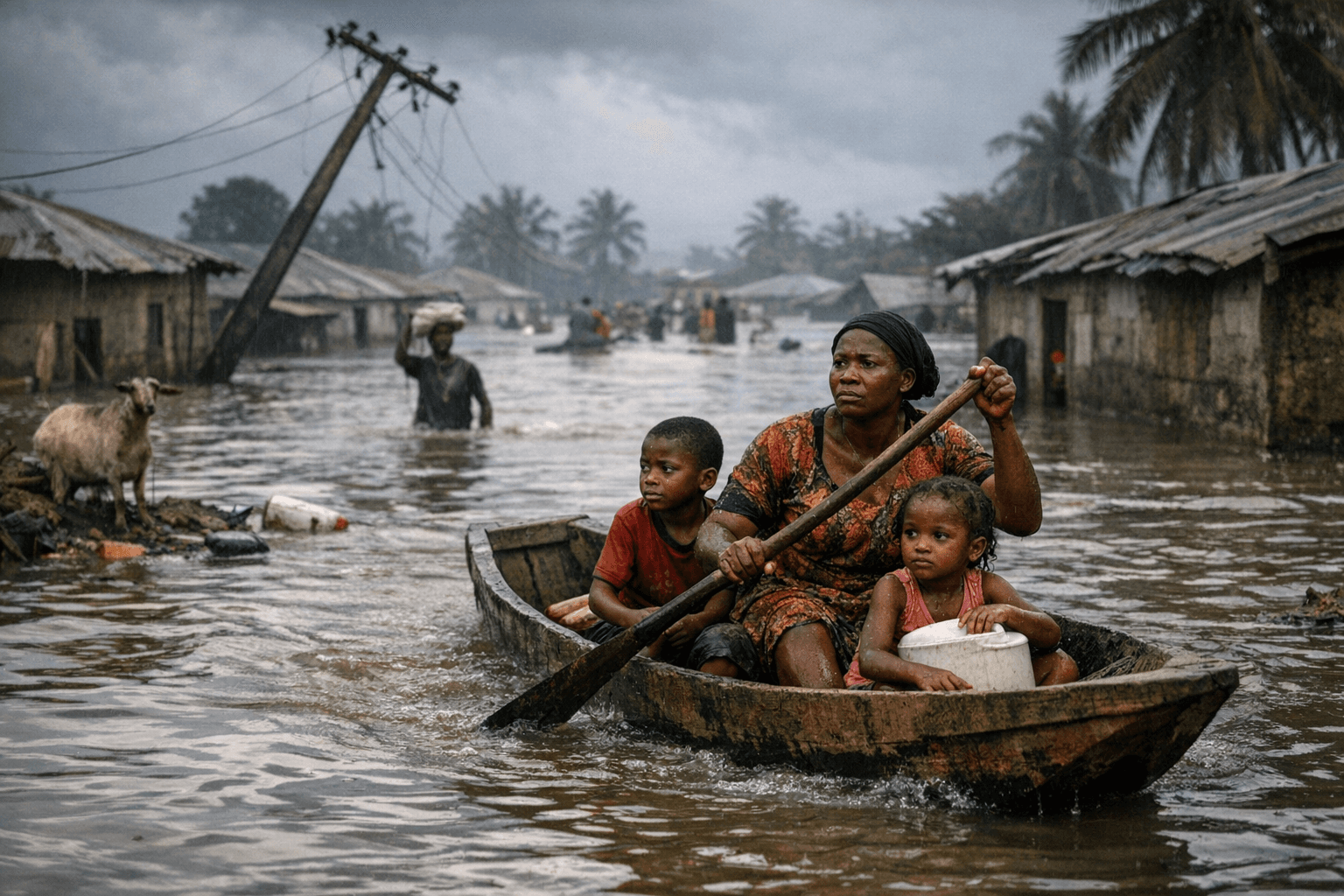
Nigeria’s 2026 flood outlook placed 14,118 communities in 266 local government areas across 33 states and the Federal Capital Territory at high risk, a warning that turns the coming rainy season into a test of state capacity rather than a routine weather forecast.
The assessment, presented in Abuja on April 15, said another 15,597 communities in 405 LGAs faced moderate risk, while 923 communities in 77 LGAs were classified as low-impact areas. The danger is expected to peak between July and September, when rainfall reaches its height, and the most exposed places include Abuja, Lagos and Port Harcourt, along with coastal and riverine states such as Bayelsa, Delta, Rivers and Lagos, where river overflow and tidal flooding can collide with poor drainage.
The Nigeria Hydrological Services Agency said its Flood Forecast Dashboard is meant to provide real-time monitoring and early warning support. That gives federal, state and local authorities a narrow but meaningful window to act now: clear blocked drains, inspect dams and spillways, map evacuation routes, stage relief supplies and protect roads, schools, markets and health facilities before floodwater cuts them off. The Ministry of Water Resources and Sanitation said it wanted to strengthen flood preparedness and food security, a link that matters in a country where flooding quickly becomes a food-price shock as well as a displacement crisis.
President Bola Ahmed Tinubu was represented at the presentation by Environment Minister Balarabe Abbas Lawal, who framed the outlook as part of resilience-building. The political question is whether that commitment reaches flood-prone communities before the rivers rise. Nigeria has repeatedly seen the cost of delay. In 2022, floods affected more than 3.2 million people, killed over 600 and displaced more than 1.4 million, while more than 569,000 hectares of farmland were damaged or destroyed and more than 340,000 houses were lost. By November that year, humanitarian data put farmland losses above 650,000 hectares.
The pattern repeated in 2024, when floods killed more than 300 people, affected 1.2 million and displaced 641,598 by mid-October. By November, the toll had climbed to more than 320 dead and 1.3 million affected in 34 states. In Niger State, late-May flooding in 2025 killed more than 150 people, with some reports later placing the death toll above 200.
That record leaves little room for complacency. If authorities treat the 2026 outlook as an operational order, not a press-event ritual, they can still reduce deaths, limit displacement and keep roads and farmland from turning another rainy season into a national emergency.
This article was produced by Prism’s automated news system from verified source data, official records, and press releases, then run through automated quality and moderation checks before publishing. The system is built and supervised by the people who set the standards it runs under. Read our full AI policy.
Did this article answer your question?