Pickaxe Mountain may show why force cannot stop Iran's nuclear ambitions
Pickaxe Mountain shows how airstrikes can damage Iran’s nuclear network without ending it, forcing attention back to inspections and diplomacy.
A buried site that reshapes the debate
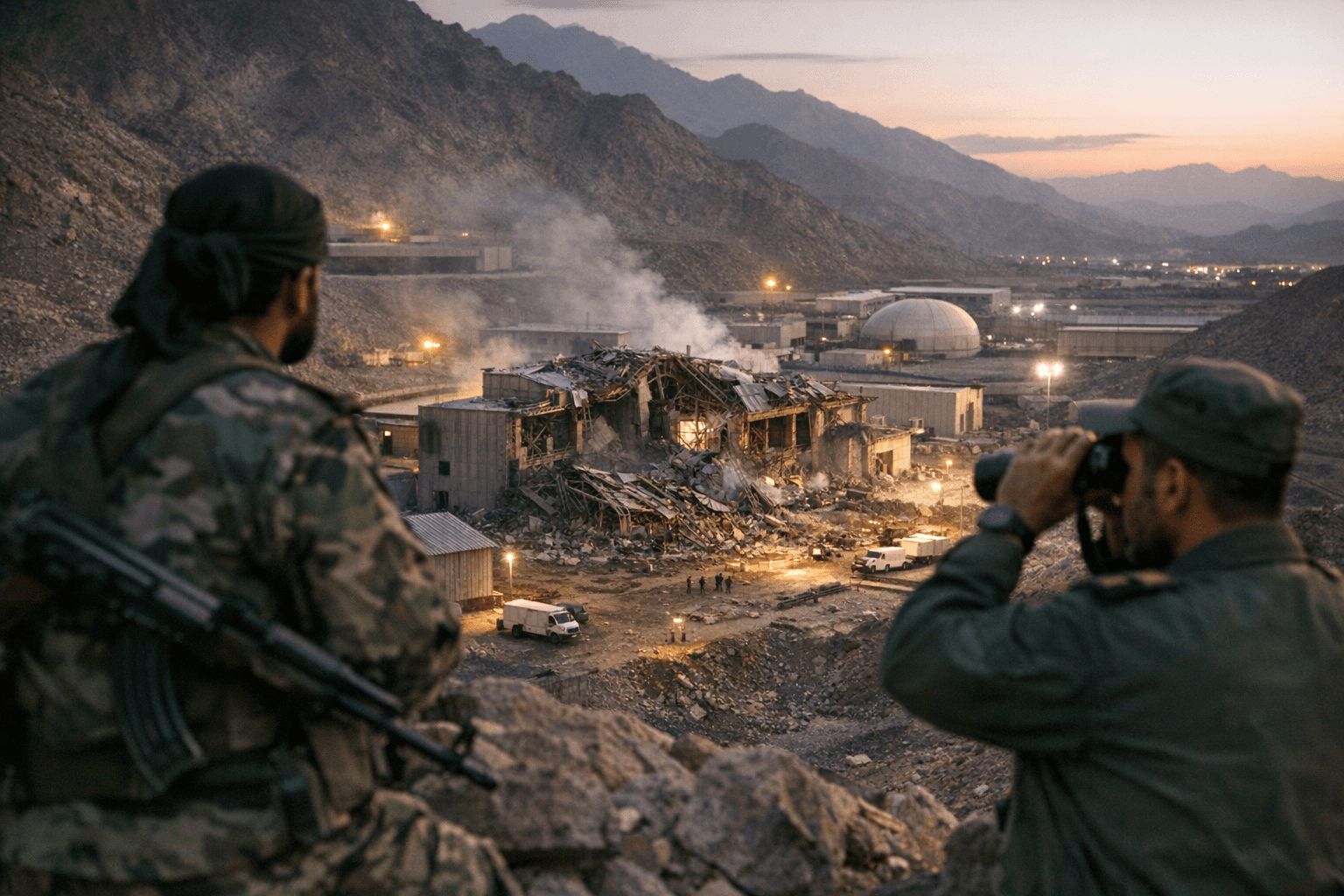
Pickaxe Mountain is a warning carved into the Zagros Mountains, just 1.6 kilometers south of Natanz. The informal name, tied to the official Kūh-e Kolang Gaz Lā site, has drawn attention because it sits at the center of a harder question than whether the United States can hit Iran’s nuclear infrastructure: whether force can ever stop a program that can be hidden, hardened, and rebuilt.
Little is publicly known about the site itself, and that lack of visibility is part of the problem. Analysts say it has never been accessed by international nuclear inspectors, and some assessments suggest it may be buried deep enough to sit beyond the reach of U.S. bunker-buster bombs. That possibility has made the mountain far more than a local construction project. It is now a test case for deterrence, allied planning, and the limits of airpower.
What the satellite images suggest
The Institute for Science and International Security has tracked construction at Pickaxe Mountain since late 2020. By September 2025, its analysts said visible activity pointed to late-stage construction, including a completed security perimeter wall and fence around the mountain base, along with hardened entrances that suggested a serious underground project rather than a routine industrial site.
The site was not assessed as operational in June 2025, but the physical footprint already looked designed for endurance. That matters because underground facilities are not judged only by what they do today. They are judged by how they can survive pressure tomorrow, whether from sanctions, sabotage, or bombing. At Pickaxe Mountain, the infrastructure points to permanence, concealment, and strategic patience.
Why the June strikes did not end the story
The United States struck Fordow, Natanz, and Isfahan on June 22, 2025 in Operation Midnight Hammer. Those attacks were meant to demonstrate reach and raise the cost of Iran’s nuclear work. Instead, satellite imagery after the strikes showed increased activity at Pickaxe Mountain, including growing spoil piles, heavy equipment, construction vehicles, and two tunnel entrances covered with dirt and rock.
That sequence is central to understanding the site’s significance. If one of the goals of the bombing campaign was to freeze Iran’s program, the evidence at Pickaxe Mountain suggests the opposite may have happened. Experts quoted in subsequent reporting said the June strikes may have pushed Iran’s nuclear work further underground rather than ending it, and reporting later in the year said construction at the mountain had stepped up, with tunneling still ongoing.
A separate Frontline investigation concluded that the site is believed to be buried deeper than the facilities bombed in June. That distinction matters. A site that survives a strike can still become more insulated afterward, with greater attention to concealment, deeper tunneling, and stronger defenses against a second attack.
The stockpile problem behind the mountain
Pickaxe Mountain is not just about concrete and rock. It sits inside a broader nuclear uncertainty that includes Iran’s stockpile. Reporting in June 2025 said nearly 400 kilograms of uranium enriched to 60 percent purity remained unaccounted for, fueling concern that material or equipment may have been moved before the strikes.
That unresolved stockpile raises the stakes around every hardened site. If material has already been dispersed, or if machinery has been relocated, then bombing a known facility becomes only one part of a far larger challenge. It also means the real question is not whether a site can be damaged, but whether the underlying capability can be tracked, constrained, and verified before it disappears into a deeper network.
The expiration of the 2015 nuclear deal in October 2025 made that task harder. With the accord gone, the international oversight tied to it also ended, leaving fewer formal mechanisms to monitor what Iran is doing and where. In that environment, strategic opacity becomes an asset, especially for a government that has resisted outside scrutiny and denied seeking a nuclear weapon.
What the site means for deterrence and diplomacy
President Trump has said the June attacks had “obliterated” Iran’s nuclear facilities and has renewed demands for Tehran to make a deal or face additional strikes. That language underscores a central assumption behind military pressure: that enough force can reset the problem. Pickaxe Mountain challenges that assumption.
The mountain suggests a different dynamic. Airstrikes can destroy equipment, crater tunnels, and signal resolve, but they do not automatically erase knowledge, stockpiles, or alternate construction sites. If anything, a strike can accelerate hardening, deepen secrecy, and push work into locations that are harder to find and harder to reach. The result is not necessarily surrender. It may be dispersion, reconstruction, and a more opaque program.
That is why the strategic value of Pickaxe Mountain extends beyond Iran. For U.S. planners and allies, the site is a reminder that deterrence cannot rest on the promise of a single overwhelming blow. It requires intelligence collection, inspections, allied coordination, and a realistic assessment of what can and cannot be destroyed from the air. It also strengthens the argument for diplomacy, not as a gesture of goodwill, but as a practical tool for limiting what bombs cannot reliably eliminate.
Iranian officials continue to deny seeking a nuclear weapon, while resisting external scrutiny. That posture, combined with the mountain’s hardening profile and the uncertainty around the missing enriched uranium, leaves one conclusion difficult to avoid: military strikes may punish a program, but they may not stop it. Pickaxe Mountain shows how a nuclear challenge can move beneath the surface, where force becomes less decisive and diplomacy becomes harder to replace.
This article was produced by Prism’s automated news system from verified source data, official records, and press releases, then run through automated quality and moderation checks before publishing. The system is built and supervised by the people who set the standards it runs under. Read our full AI policy.
Did this article answer your question?