Nikkei tops 68,000 as investors chase AI-linked stocks
Japan’s benchmark surged past 68,000 as AI chip and memory names pulled the market higher, raising the question of how much of the rally rests on earnings.
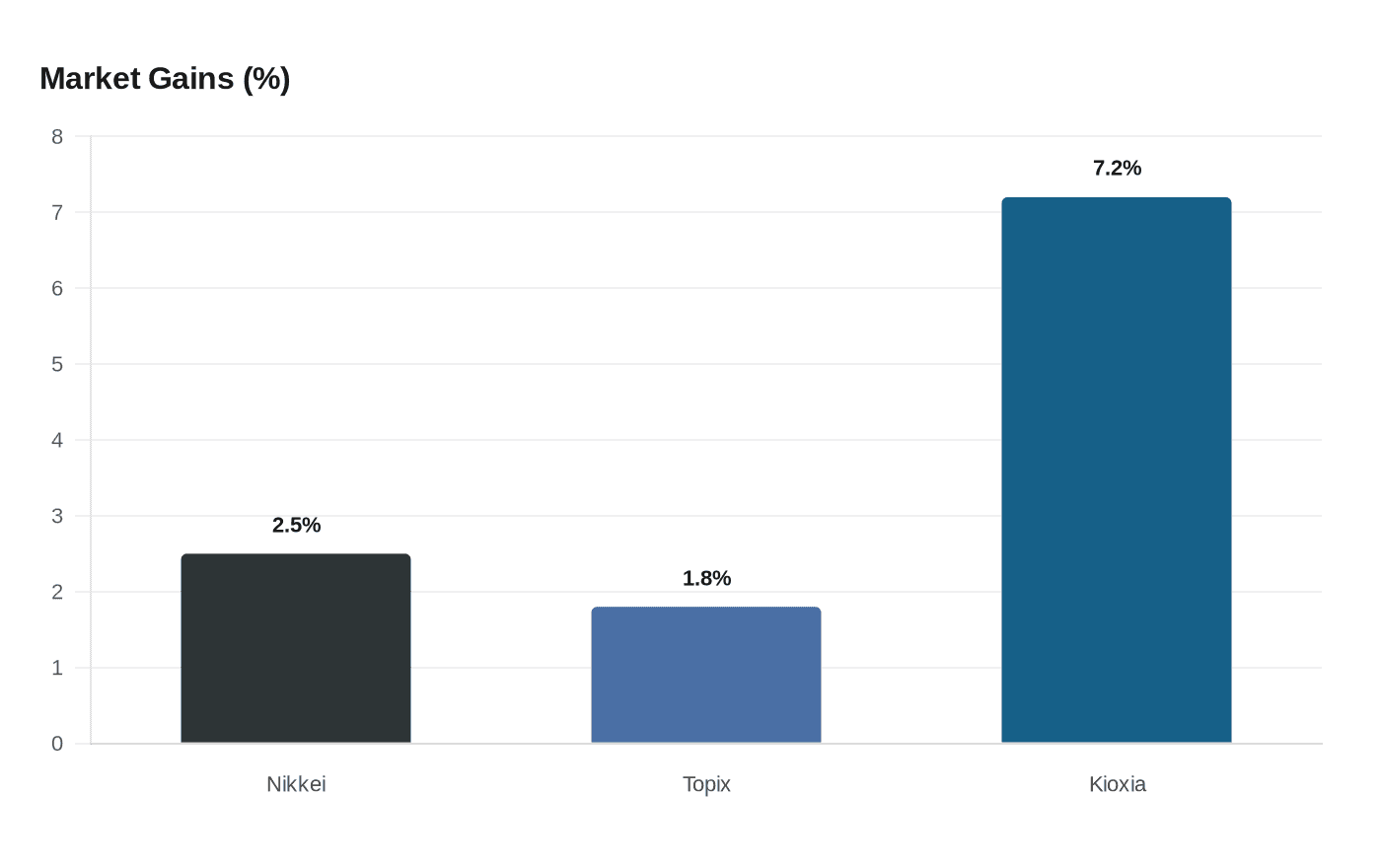
Investors pushed Japan’s Nikkei above 68,000 for the first time, with the index jumping 2.5% to 68,402.13 and setting another record just two days after it first broke 67,000. The Topix rose 1.8% to 3,996.2 and briefly moved above 4,000 for the first time, a sign that the rally is widening beyond a handful of marquee names even as it remains heavily concentrated in technology and semiconductor stocks.
The strongest evidence of the market’s current obsession came from Kioxia Holdings. The memory-chip maker climbed 7.2% and briefly became Japan’s second-most valuable listed company, overtaking Toyota Motor. Shares also rose above 80,000 yen for the first time after Kioxia said it would begin paying dividends from fiscal 2027, a shift that helped tie the AI trade to a more traditional investment case built on earnings growth and shareholder returns.

Kioxia’s rise has become a symbol of how deeply artificial intelligence is reshaping Japan’s equity market. The company held an investor day on June 2 under the theme “AI Inference,” and it said in late May that S&P Global Ratings and Fitch Ratings had upgraded it to investment grade BBB-. That combination of AI exposure, better credit quality and a new dividend commitment has drawn investors who are looking for more than momentum alone.
The rally was not limited to one stock. Tokyo Electron and Advantest were among the biggest contributors to the Nikkei’s advance, with market reports putting Tokyo Electron’s gain at roughly 10% to 13% and Advantest’s at about 4% to 6%. Their moves underline how much of the index’s strength is still tied to the semiconductor equipment supply chain, where investors are betting that AI demand will keep translating into orders and profit growth.
The market climbed despite lingering concern over tensions in the Middle East and a dollar that briefly touched 160 yen, a level that has often revived talk of intervention. The Bank of Japan’s policy rate remains around 0.75%, with its next monetary policy meeting scheduled for June 15 and 16, giving traders another reason to watch whether easier domestic financial conditions can keep supporting equities.
For now, the surge suggests investors are treating Japan’s AI winners as more than a short-term fad. But the durability of the rally will depend on whether earnings, dividends and capital spending continue to justify valuations that have already carried the Nikkei to the highest close in its record series.
This article was produced by Prism’s automated news system from verified source data, official records, and press releases, then run through automated quality and moderation checks before publishing. The system is built and supervised by the people who set the standards it runs under. Read our full AI policy.
Know something we missed? Have a correction or additional information?
Submit a Tip