No Kings Protesters Plan 3,000 Events Nationwide on March 28
Organizers claim Saturday's No Kings protests could shatter U.S. records, but the 3,000-event count bundles Manhattan marches with small-town vigils.
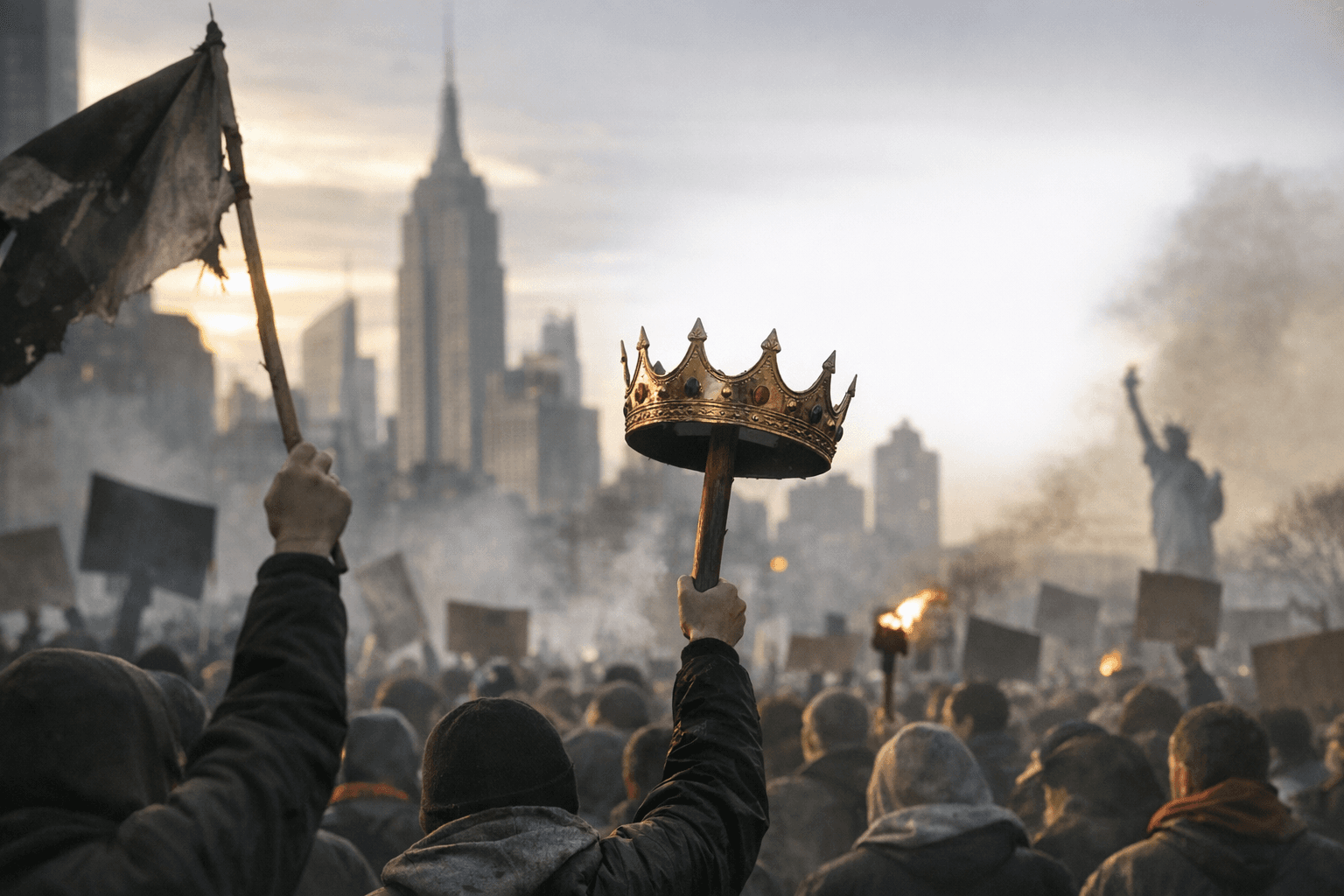
Standing at a podium in front of more than 3,000 mapped gatherings, Ezra Levin made a claim that carries real statistical weight: "We expect this to be the largest protest in American history." Whether Saturday's No Kings mobilization delivers on that requires understanding exactly what the numbers behind it mean.
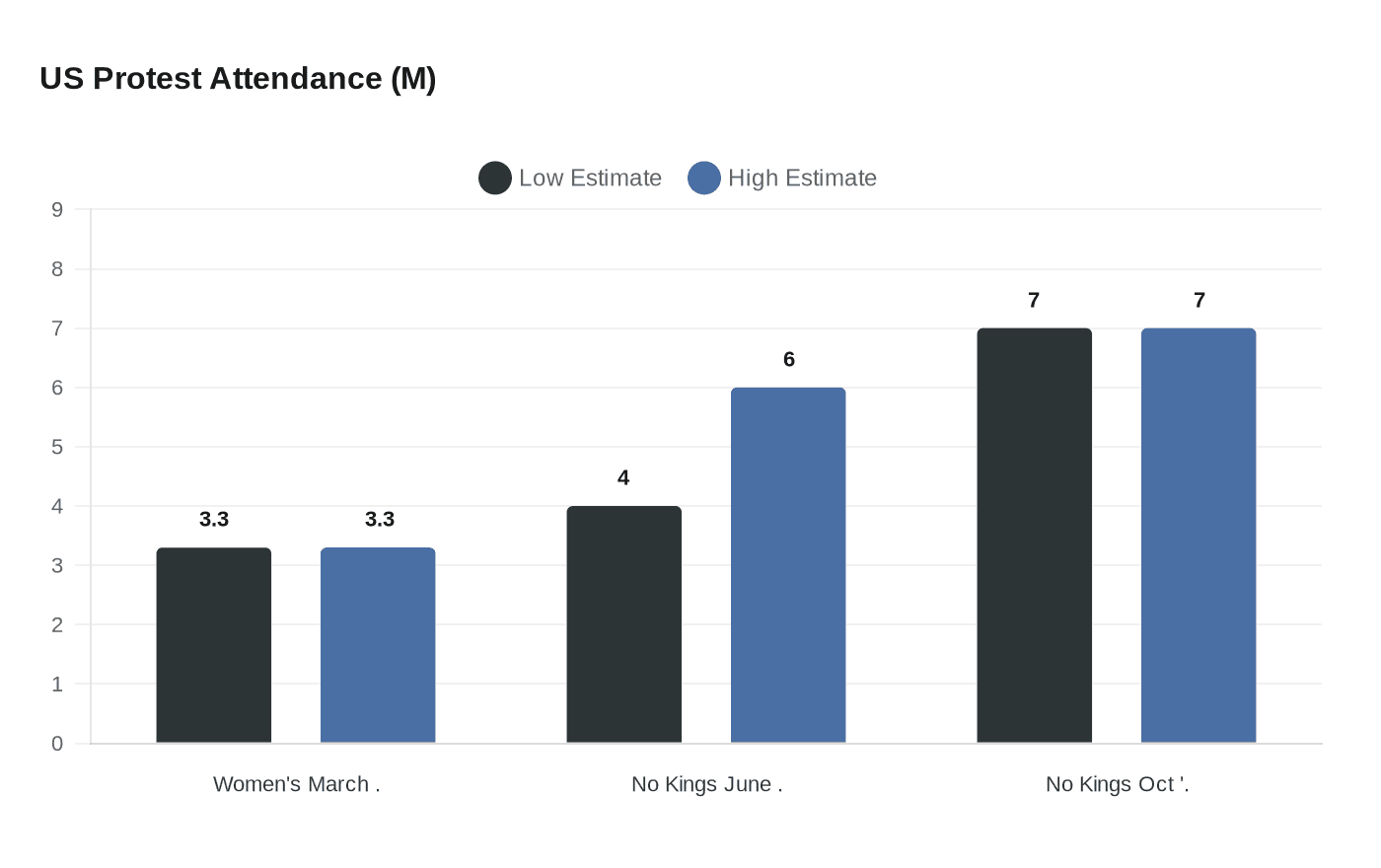
The 3,000-event figure comes from the movement's own tracking website, where any registered gathering qualifies, whether it is a 150,000-person march on the National Mall or a two-dozen-person candlelight vigil in rural Wyoming. That counting method is how organizers in June 2025 tallied the first No Kings round, which the ACLU estimated drew between four and six million participants nationwide, a figure that already dwarfed the 3.3 million counted at the 2017 Women's March, the previous benchmark for U.S. protest turnout. October's second No Kings day pushed that number to roughly seven million, with particularly large concentrations in New York, Washington, D.C., and Chicago. To break that record on Saturday, organizers need to sustain the momentum from October while adding the fuel of a new political flashpoint.
That flashpoint is Minneapolis. ICE agents fatally shot Renée Good and Alex Pretti during immigration enforcement operations earlier this year, deaths that galvanized activists and produced a general strike in Minnesota on January 23, a statewide action that expanded into a broader national strike on January 30. March 28 was chosen as the date for the third No Kings action in direct response to that escalation.
The geographic footprint has expanded significantly since June. Leah Greenberg, co-executive director of the Indivisible Project, said at a press conference Thursday that 66 percent of Saturday's planned events will take place outside major urban centers, and that nearly half will be held in a red or battleground state. "This is up nearly 40% from the first No Kings Day of Action last June," Greenberg said. The coalition behind March 28 includes Indivisible, the organizing network 50501, and the AFL-CIO, giving the day of action a deeper labor infrastructure than either previous round. Greenberg framed the scope in stark terms: "People are coming out in every state, in every county, collectively, and saying, 'Enough.' We are going to stand against illegal war abroad. We are going to stand against secret police at home."
The rallies arrive as the Trump administration's one-month-old military operation in Iran continues to draw bipartisan criticism in Congress over a lack of transparency and the prospect of ground troop deployments. Domestically, organizers cite aggressive ICE sweeps and what they describe as federal overreach on civil liberties as the twin engines driving turnout. Harvard University's Crowd Counting Consortium had previously found that the first three months of Trump's second term produced roughly three times as many protests as his entire first presidency, before the June and October No Kings days were even factored in.
City agencies in major metro areas announced traffic pattern changes, temporary street closures and expanded patrols for Saturday. Organizers coordinated with event marshals and legal observers in advance, and police departments in the largest hubs said they were prepared for significant crowds while hoping demonstrations would remain nonviolent.
The 3,000-event threshold itself is largely a floor, not a ceiling. One protest in St. Paul, just miles from where Good and Pretti were killed, is expected to draw some of the largest regional crowds. Whether the aggregate attendance ultimately exceeds seven million, verifying or undercutting Levin's history-making claim, will depend on independent crowd-counting methodologies rather than organizer tallies, and those counts rarely arrive before the week following a major mobilization. What is already clear is that No Kings 3 represents the broadest geographic footprint the movement has attempted, with the midterm elections seven months away and the organizers betting that the distance between a Boise sidewalk rally and a Chicago lakefront march no longer matters as much as the combined signal they send.
Know something we missed? Have a correction or additional information?
Submit a Tip