NOAA warns of fast start to 2026 Atlantic hurricane season
Warm Gulf, Caribbean and Atlantic waters are giving 2026 an early hurricane edge, forcing coastal leaders to prep before the first storm even forms.
Unusually warm ocean water across the Gulf of Mexico, the Caribbean Sea and parts of the tropical Atlantic has put coastal leaders on notice that the 2026 Atlantic hurricane season could move fast, leaving less time to prepare if the first systems organize early. Federal forecasters said the most urgent lesson is not the final storm count, but the shortened runway for emergency managers, utilities, insurers and residents to get ready before watches are issued.
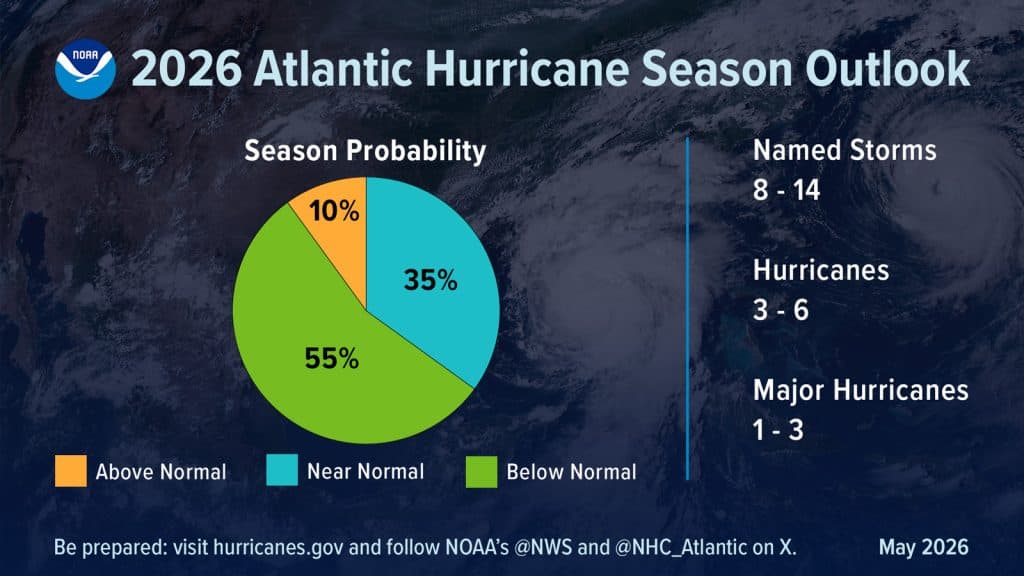
NOAA’s outlook, issued May 21, projected a 55% chance of a below-normal season, a 35% chance of near-normal activity and a 10% chance of an above-normal year. Even with that lean toward fewer storms, the agency forecast 8 to 14 named storms, 3 to 6 hurricanes and 1 to 3 major hurricanes. NOAA said the outlook carried a 70% confidence level and stressed that the Atlantic hurricane season officially runs from June 1 through November 30.

The agency also warned against reading the seasonal forecast as a map of where landfalls will occur. A below-normal season can still bring disaster, NOAA said, because it only takes one hurricane or tropical storm to cause severe damage. That message has particular weight for communities from Texas to Maine, where officials were already revisiting evacuation routes, flood-prone roads, generator safety, shelter plans and mutual-aid agreements.
Meteorologists said the setup favors quick changes once a disturbance starts to organize. NOAA expects El Niño to develop and intensify during the season, but also said Atlantic waters should remain slightly warmer than normal and trade winds likely weaker than average. That combination can help tropical waves spin up faster, giving local governments less time to move from monitoring to action. Flooding remains one of NOAA’s biggest concerns, along with storm surge, tornadoes and prolonged power outages even from storms that never reach major-hurricane strength.
The forecast also carries economic risk. A busier season can raise insurance costs, interrupt port traffic and slow refinery operations along the U.S. Gulf Coast, with spillover effects on fuel prices and supply chains. NOAA urged residents to use the early-season window to trim trees, check coverage and make sure medications and documents are ready before any warnings are posted.

The agency pointed to FEMA’s Ready.gov, the National Hurricane Center, the Small Business Administration and the American Red Cross as preparedness resources. NOAA’s average Atlantic season has 14 named storms, seven hurricanes and three major hurricanes, so the 2026 outlook sits below that benchmark even as it raises concern about how quickly the season could get moving. That is the readiness gap: not just how many storms form, but how little warning communities may get before the first one turns dangerous.
This article was produced by Prism’s automated news system from verified source data, official records, and press releases, then run through automated quality and moderation checks before publishing. The system is built and supervised by the people who set the standards it runs under. Read our full AI policy.
Did this article answer your question?

