NordSpace Teams with Fraunhofer ILT and SWMS for Multi‑Material 3D‑Printed Rocket Engines
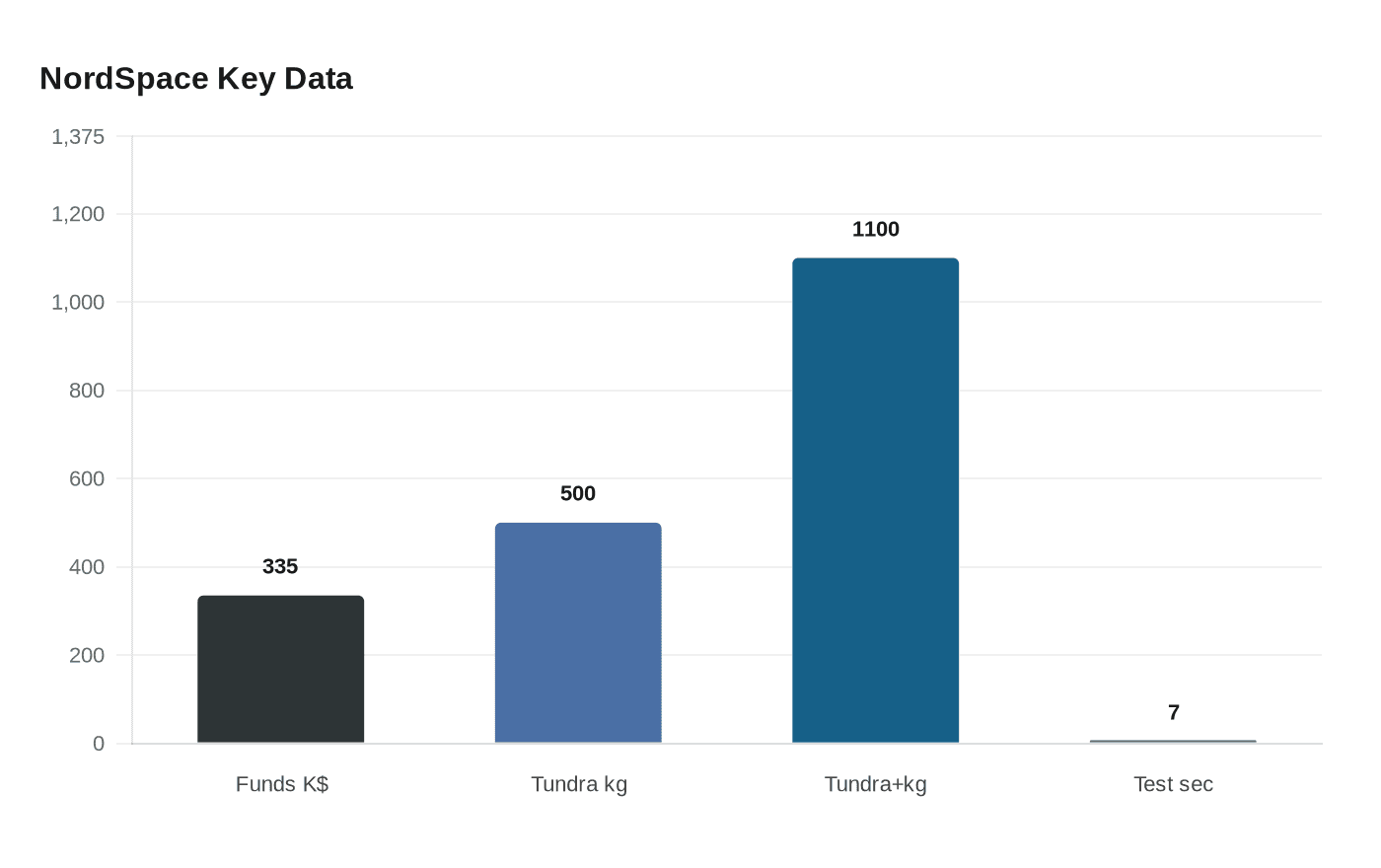
NordSpace secured NRC IRAP advisory services and up to $335,000 and has signed a Canada–Germany R&D pact with Fraunhofer ILT and SWMS to push large-format, multi-metal AM for medium-lift engines.
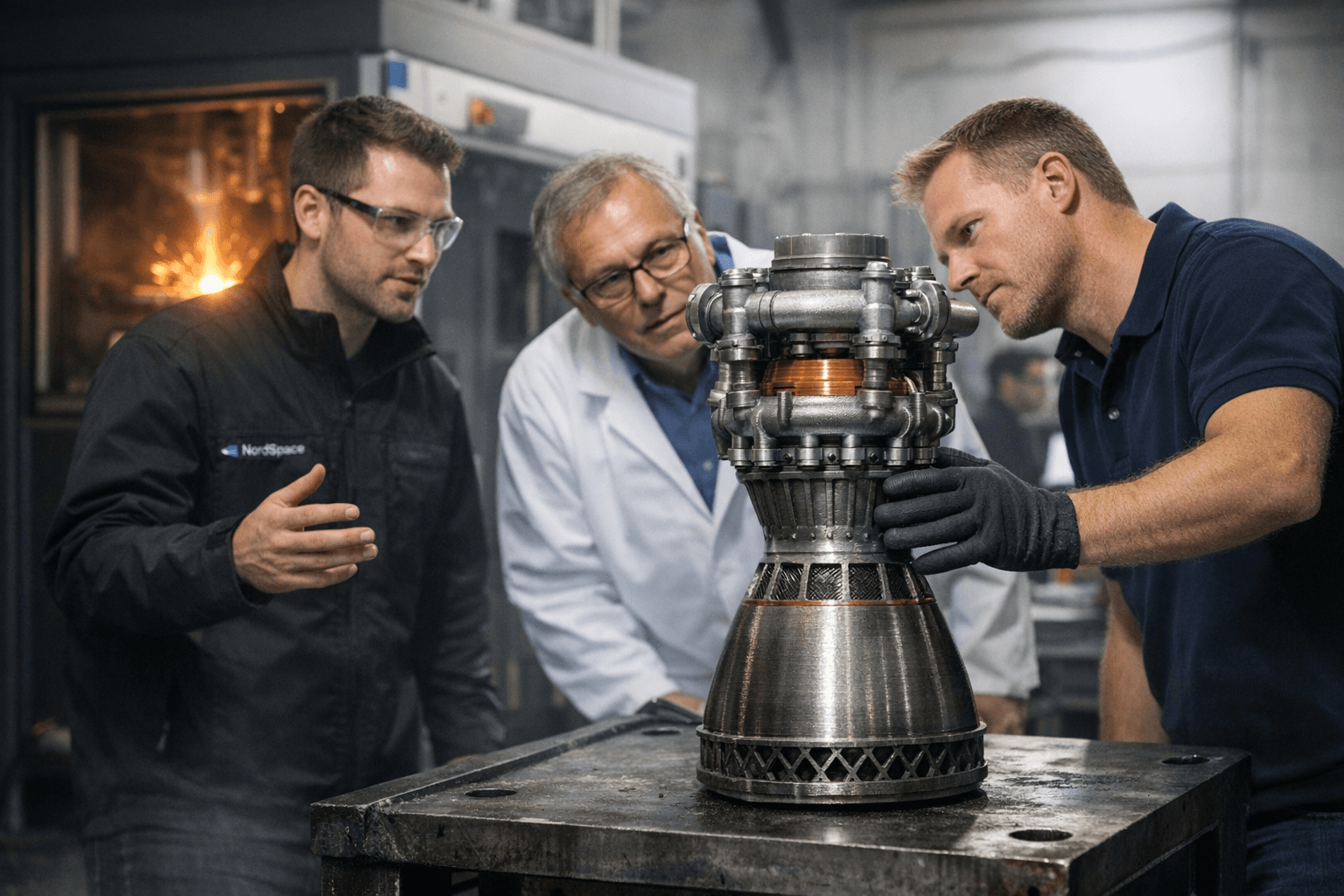
NordSpace Corp. announced Jan. 22, 2026 from Markham, Ontario that it has launched a Canada–Germany research and development collaboration with the Fraunhofer Institute for Laser Technology and SWMS, and that the National Research Council of Canada Industrial Research Assistance Program will provide advisory services and up to $335,000 to the effort. NordSpace said the funding will “support a research and development project that will advance its large format multi-material additive manufacturing capabilities for medium-lift rocket engines.”
The partnership pairs Fraunhofer ILT’s extreme high-speed laser deposition tech with SWMS’s CAESA software for AI-driven path planning. EINPresswire described Fraunhofer ILT as “the German research institute that has developed the world-leading EHLA laser-based high-speed additive manufacturing capability,” and sources characterize SWMS’s role as supplying “CAESA software for AI-powered advanced manufacturing path planning optimization” aimed at enabling “large volume, high-speed, high-resolution, multi-metal deposition.”
NordSpace brings recent in-house hardware and test experience to the collaboration. According to a NordSpace website post dated May 20, 2025, “At 3:45 PM EDT on Friday May 16th, 2025, NordSpace successfully tested both its new Darkhorse engine test cell and its third generation 3D printed Hadfield liquid rocket engine for the first time.” The company reported the test “ran for 7 seconds at NordSpace’s propulsion test range, a company-owned secure site in Northeastern Ontario, successfully delivering nominal thrust, active cooling, and impulse results,” and that long duration tests and mixture refinements were scheduled afterward.
The joint R&D effort is expressly aimed at regeneratively cooled liquid engines and staged hot-fire validation. EINPresswire and other distribution copies state the project will work on “developing next-generation, large-scale, regeneratively cooled liquid engines, validated through rigorous hot-fire test campaigns and positioned for flight qualification and commercial scale-up.” NordSpace has framed this work as part of a scaling strategy that includes its Hadfield engine family and the Tundra and Tundra+ light-lift vehicles, with stated payload capacities of 500 kg and 1,100 kg to LEO respectively, and an objective to scale from light to medium-lift vehicles by the 2030s.
Organizational context on the funding and lab infrastructure is explicit in company materials. NordSpace’s Advanced Manufacturing for Aerospace Lab, launched earlier in the year with Ontario Centre of Innovation support, and a prior advanced manufacturing project that received Canadian Space Agency funding are cited as antecedents for the current collaboration. NordSpace plans to provide an update at the Canadian Space Launch Conference in Ottawa on May 5, 2026, and lists its press contact as Team NordSpace, contact@nordspace.com.
Fraunhofer ILT’s historical role in additive manufacturing is also cited in distribution copy, noting ILT researchers “filed the foundational patent for what is now known as Laser Powder Bed Fusion, originally introduced as Selective Laser Melting,” and asserting more than 25 years of experience in LPBF and laser material deposition. The immediate next steps for the partnership are continued hot-fire test campaigns and AI‑driven process development combining EHLA deposition and CAESA path planning to move NordSpace’s 3D-printed Hadfield engines toward flight qualification and commercial scale-up.
Know something we missed? Have a correction or additional information?
Submit a Tip