Norovirus Cases Surge Across U.S., Test Positivity Nearly Doubles
Federal data and hospital records show rising norovirus activity nationwide, a development that could complicate holiday gatherings and strain frontline health services. The increase highlights gaps in workplace protections and community resources that make prevention harder for vulnerable populations.
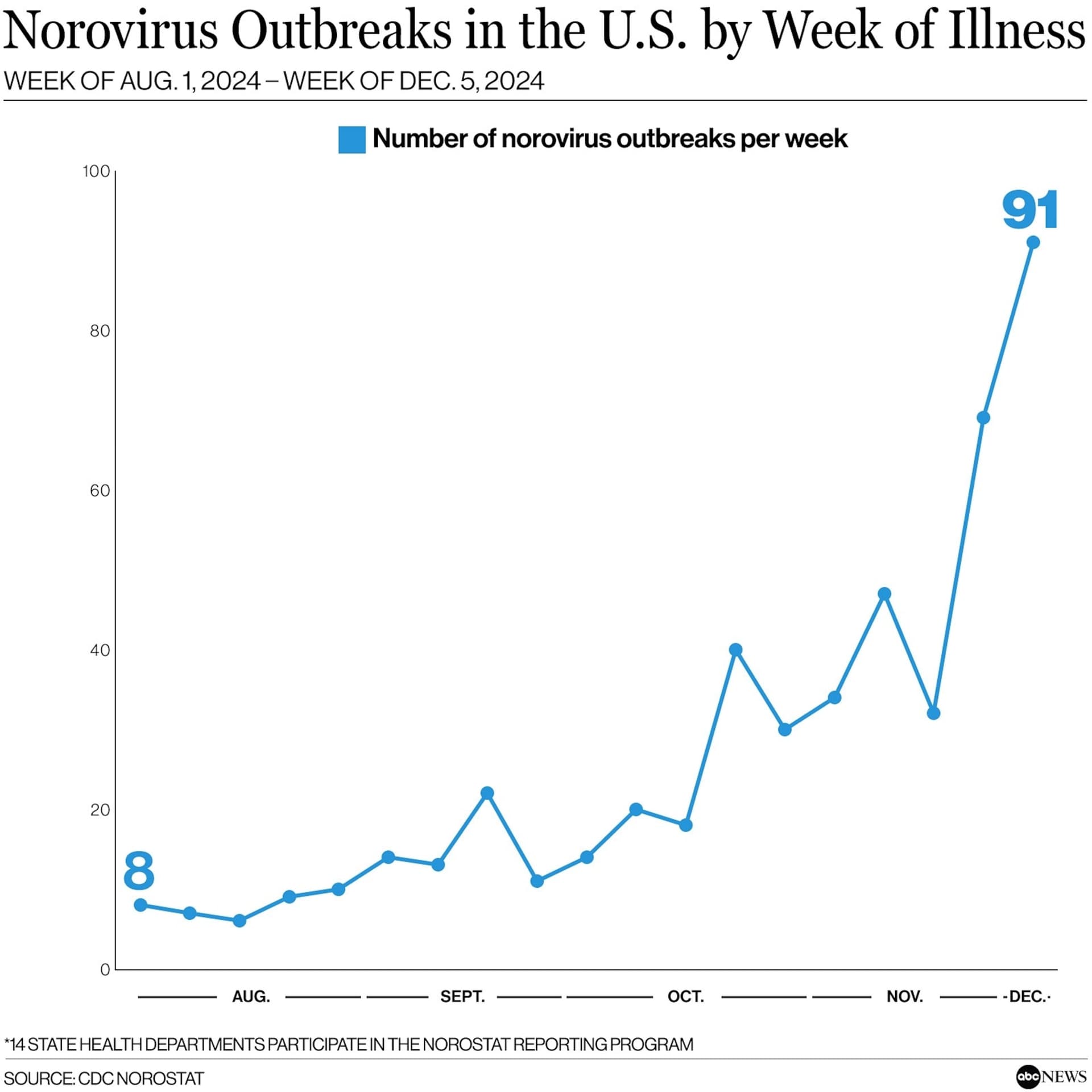
ABC News reported on November 25 that norovirus activity in the United States has been increasing, with Centers for Disease Control and Prevention data showing test positivity for norovirus nearly doubled to about 14 percent in the most recent week ending November 15 from roughly 7 percent three months earlier. Electronic health record analyses and emergency department visit patterns point to regional pockets of higher activity, with Alabama, Nebraska, Oklahoma, Texas and Wyoming among the states flagged for above average case counts.
Public health authorities classify norovirus as highly contagious and a leading cause of viral gastroenteritis, producing symptoms such as vomiting, diarrhea and stomach pain. The virus spreads easily in crowded settings and through contaminated food, surfaces and hands, making the late fall rise especially concerning as families, workplaces and community groups prepare for holiday gatherings.
Rising test positivity and localized surges are already evident in emergency departments and clinic visits, where gastroenteritis cases can translate into added workload for clinicians and support staff. For hospitals and clinics operating near capacity because of seasonal respiratory viruses and other demands, even a moderate rise in norovirus related visits can disrupt services. Long term care facilities and child care centers are particularly vulnerable because the virus transmits rapidly in congregate settings and can cause more severe complications among the very young and the elderly.
The pattern of increased activity across disparate states underscores persistent inequities in exposure and the ability to prevent spread. Workers in food service and other public facing roles are less likely to have paid sick leave and may feel pressure to work while symptomatic, increasing risk for outbreaks. Communities with limited access to clean water and handwashing infrastructure face additional barriers to following recommended prevention steps. Public health experts emphasize basic measures to limit transmission, including thorough handwashing with soap and water, routine surface disinfection and excluding symptomatic people from food handling and communal caregiving until they are symptom free.

The rise in norovirus cases arrives as public health agencies balance communications about multiple infectious threats. Local health departments must weigh targeted outreach to high risk settings, guidance for safe holiday practices, and support for facilities that care for vulnerable populations. Policy responses that expand paid sick leave, provide resources for sanitation in congregate settings, and bolster staffing for outbreak control could reduce both transmission and the burden on health care providers.
For most people, norovirus causes short but intense illness that resolves with supportive care, including fluid replacement and rest. But the recent trend in test positivity highlights how social and structural factors shape who bears the brunt of infectious disease spread. As families plan gatherings and employers manage staffing, attention to basic prevention and policies that enable people to stay home when ill will determine whether this seasonal uptick becomes a broader public health strain.
This article was produced by Prism’s automated news system from verified source data, official records, and press releases, then run through automated quality and moderation checks before publishing. The system is built and supervised by the people who set the standards it runs under. Read our full AI policy.
Did this article answer your question?