North Korea Fires Long Range Cruise Missiles, Kim Oversees Drill
North Korea test fired two long range strategic cruise missiles over the West Sea in an exercise state media described as a demonstration of combat readiness. South Korea confirmed the launch time and site, and the drills add to concerns about Pyongyang's expanding arsenal and its implications for regional stability.
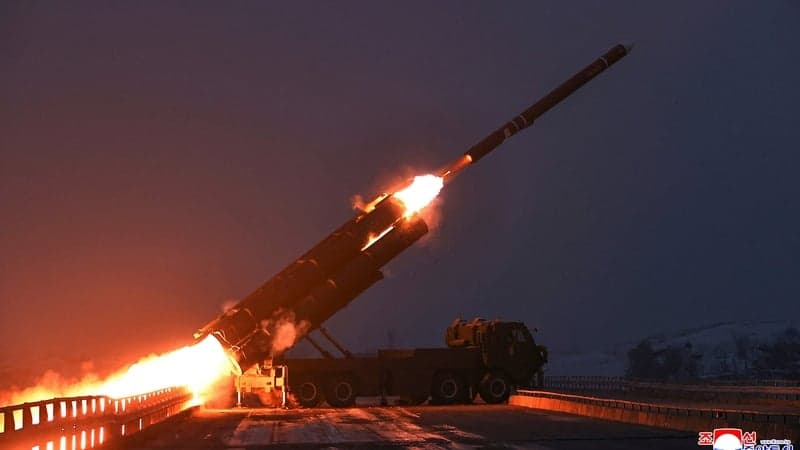
North Korea on Sunday launched two long range strategic cruise missiles from the Sunan area near Pyongyang, state media said, in a drill the regime characterized as a test of its nuclear deterrent and an exercise in "combat readiness". South Korea's Joint Chiefs of Staff confirmed the launches occurred at 08:00 local time and identified the Sunan area as the firing point.
North Korean state news agency KCNA reported the missiles flew along preset orbits over the sea west of the Korean Peninsula and flew for more than two hours before, it said, "accurately hit their targets." KCNA released photographs showing the missiles being fired and impacts at sea. Independent journalists were not granted access to the exercise and outside verification of strike effects was not available.
Leader Kim Jong Un personally oversaw the drill, KCNA said, expressing "great satisfaction" with the outcome and praising the weapons systems for their reliability and combat power. Kim called for the "unlimited and sustained" development of the state nuclear forces and described the checks as a "responsible" measure to verify the "reliability and rapid response capabilities" of components of its deterrent. North Korean accounts emphasized training of missile crews in maneuvering and fire mission procedures and testing counterattack readiness.
The drill comes amid a steady stream of weapons developments highlighted by Pyongyang. In recent days the regime disclosed images it said showed progress on a developmental nuclear powered submarine and reported tests of new anti air missiles. Together these moves are part of what North Korea presents as an effort to modernize and diversify its forces, particularly systems tied to a strategic posture.

Regional officials and analysts noted the launches will complicate security calculations in Seoul, Tokyo and Washington. Cruise missiles with long range capability can present different detection and interception challenges than ballistic missiles, and a flight lasting several hours suggests sustained guidance and navigation performance that could signal technical improvements. At the same time, the absence of independent on site verification makes precise assessment of the weapons and their warhead capabilities difficult.
The launches are likely to prompt stepped up surveillance and readiness measures among neighboring states. South Korea and allied militaries maintain monitoring and missile defense postures meant to respond to such tests, and the exercise will factor into diplomatic deliberations about how to deter further escalation while preserving channels for restraint.
International legal norms do not categorically bar missile tests in international waters, but recurring demonstrations of advanced strike capability increase the risk of miscalculation in a densely militarized zone and further erode prospects for near term diplomacy. For regional capitals, the immediate challenge will be balancing defensive preparations with efforts to avoid a spiral of provocation and counter provocation as the peninsula enters another year of heightened strategic competition.
This article was produced by Prism’s automated news system from verified source data, official records, and press releases, then run through automated quality and moderation checks before publishing. The system is built and supervised by the people who set the standards it runs under. Read our full AI policy.
Did this article answer your question?