North Korea Tests Cluster Bomb Missiles and Electromagnetic Weapons in Latest Spree
North Korea fired cluster-bomb-tipped ballistic missiles and tested electromagnetic weapons April 6-8, escalating a testing spree that rattled South Korea and Japan.
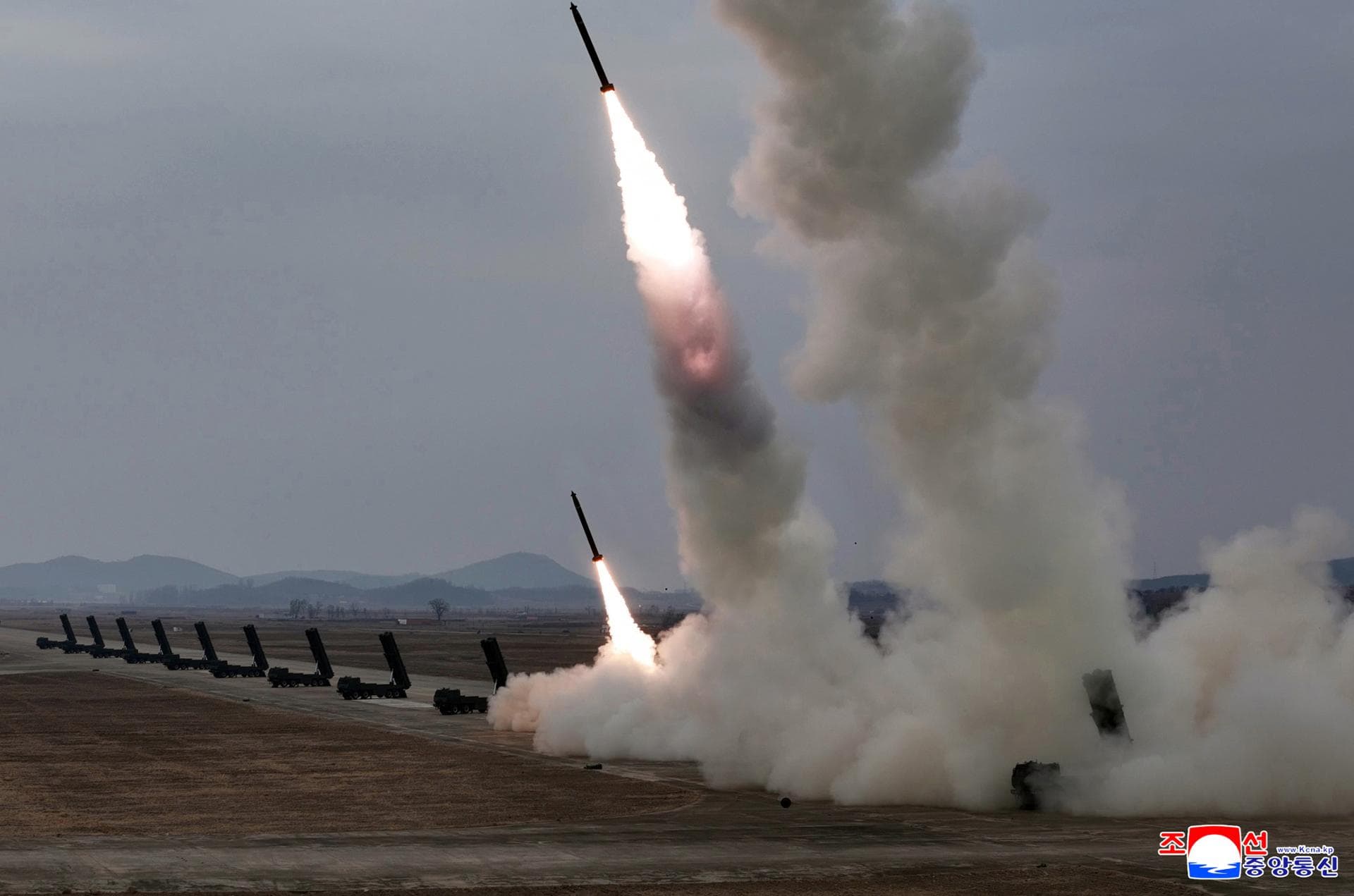
Pyongyang fired tactical ballistic missiles carrying cluster-bomb warheads and activated electromagnetic weapon systems in a three-day testing spree from April 6 to 8, North Korea's state news agency KCNA announced, marking one of the most provocative weapons displays the regime has staged in recent months.
South Korean and Japanese military authorities had detected multiple launches earlier in the week before KCNA confirmed the full scope of the systems tested. The official announcement described the trials as designed to expand the variety, precision and lethality of North Korea's conventional and strategic forces, a formulation analysts say reflects Pyongyang's deliberate effort to build area-denial capabilities alongside its nuclear deterrent.
The cluster warhead claim is the sharpest technical disclosure. According to KCNA, the tactical ballistic missile was tipped with cluster bomblets engineered to disperse submunitions across a wide area upon detonation, a design intended to saturate defensive positions or strike multiple targets rather than hit a single point. Analysts caution that North Korean state media descriptions are frequently propagandistic and independent verification of warhead types, yields and actual capability typically lags initial claims. Nevertheless, even aspirational cluster-munition technology mounted on a ballistic missile platform represents a meaningful escalation in Pyongyang's conventional strike toolkit.
The humanitarian dimension drew immediate international alarm. North Korea is not a signatory to the Convention on Cluster Munitions, the international treaty prohibiting the use, production, transfer and stockpiling of such weapons because of their indiscriminate effects on civilian populations. Cluster munitions scatter submunitions over large areas, and a significant proportion fail to detonate on impact, leaving unexploded ordnance capable of killing or maiming civilians years after a conflict ends.

Seoul, Tokyo and Washington condemned the launches as destabilizing and provocative. South Korea's military vowed to bolster surveillance and defensive readiness, while Japan lodged formal diplomatic protests and monitored trajectories for any risk to its territory. For U.S. defense planners, the tests intensify pressure to calibrate deterrence through missile defense systems, joint exercises and sanctions posture while simultaneously weighing diplomatic and contingency options.
The April 6-8 tests did not occur in isolation. North Korea has accelerated its testing tempo over recent months, conducting trials of solid-fuel engines, possible intercontinental ballistic missile components and precision-guided systems in what appears to be a systematic push to field a more diverse arsenal. Pyongyang consistently frames these trials as defensive and deterrence-driven; its neighbors read them as deliberate steps that raise the risk of miscalculation across the peninsula.
Military and policy experts say satellite imagery, signals intelligence and on-the-ground monitoring will be essential for governments attempting to verify the actual technical specifics of what was tested, as Washington, Seoul and Tokyo weigh their next diplomatic, economic and security responses in the days ahead.
This article was produced by Prism’s automated news system from verified source data, official records, and press releases, then run through automated quality and moderation checks before publishing. The system is built and supervised by the people who set the standards it runs under. Read our full AI policy.
Did this article answer your question?


