UK Foreign Secretary Demands Free Passage Through Closed Strait of Hormuz
Russia and China blocked UN action to reopen the Strait of Hormuz as Britain's Yvette Cooper demanded toll-free transit, with 2,000+ vessels stranded and Brent crude above $120.
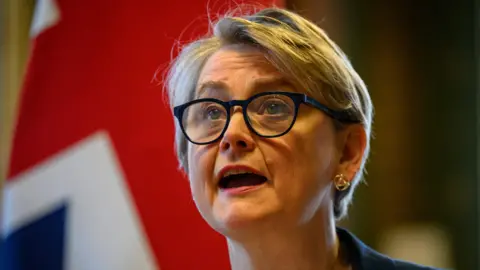
Britain's Foreign Secretary Yvette Cooper pressed her demand for full, unimpeded, toll-free passage through the Strait of Hormuz on Wednesday, escalating diplomatic pressure on Iran as more than 2,000 vessels remained stranded and Brent crude held above $120 per barrel.
Cooper's push built on a coalition summit she chaired on 2 April, when representatives from more than 40 countries and the International Maritime Organization convened virtually to confront what she described as Iran having "hijacked an international shipping route to hold the global economy hostage." The coalition's chair's statement demanded the "immediate and unconditional" reopening of the strait, rejected any imposition of tolls on transiting vessels, and called for coordinated economic and political measures, including potential sanctions, if the blockade persisted. EU High Representative Kaja Kallas called the restoration of "toll-free freedom of navigation" an urgent priority.
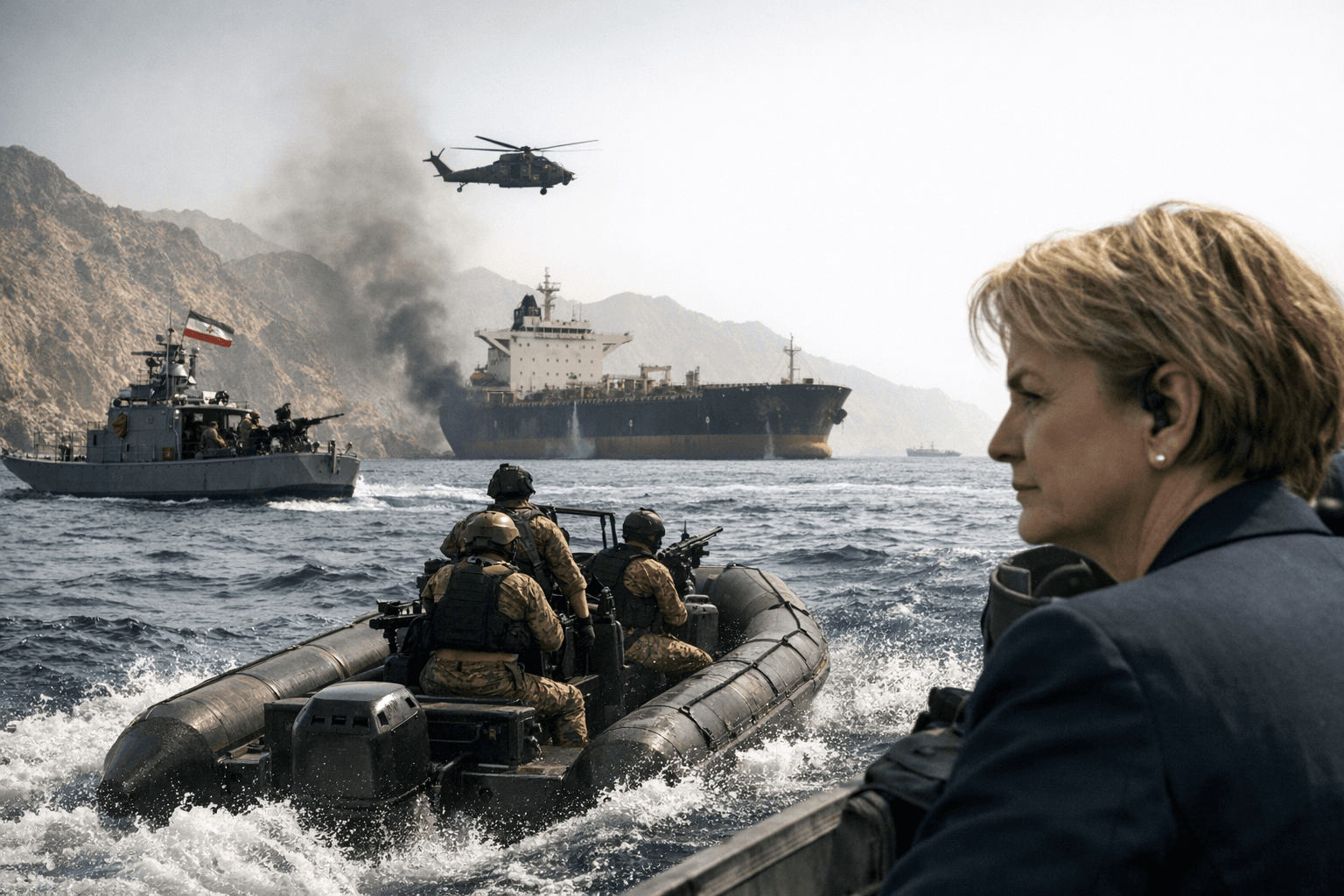
The crisis traces to 28 February 2026, when the United States and Israel launched joint military strikes on Iran that included the killing of Supreme Leader Ali Khamenei. Iran declared the strait closed on 4 March and carried out at least 21 confirmed attacks on merchant vessels by 12 March. Major carriers Maersk, CMA CGM, and Hapag-Lloyd suspended transits, and ships began diverting around Africa's Cape of Good Hope, adding weeks to journey times and compounding costs already surging across global markets.
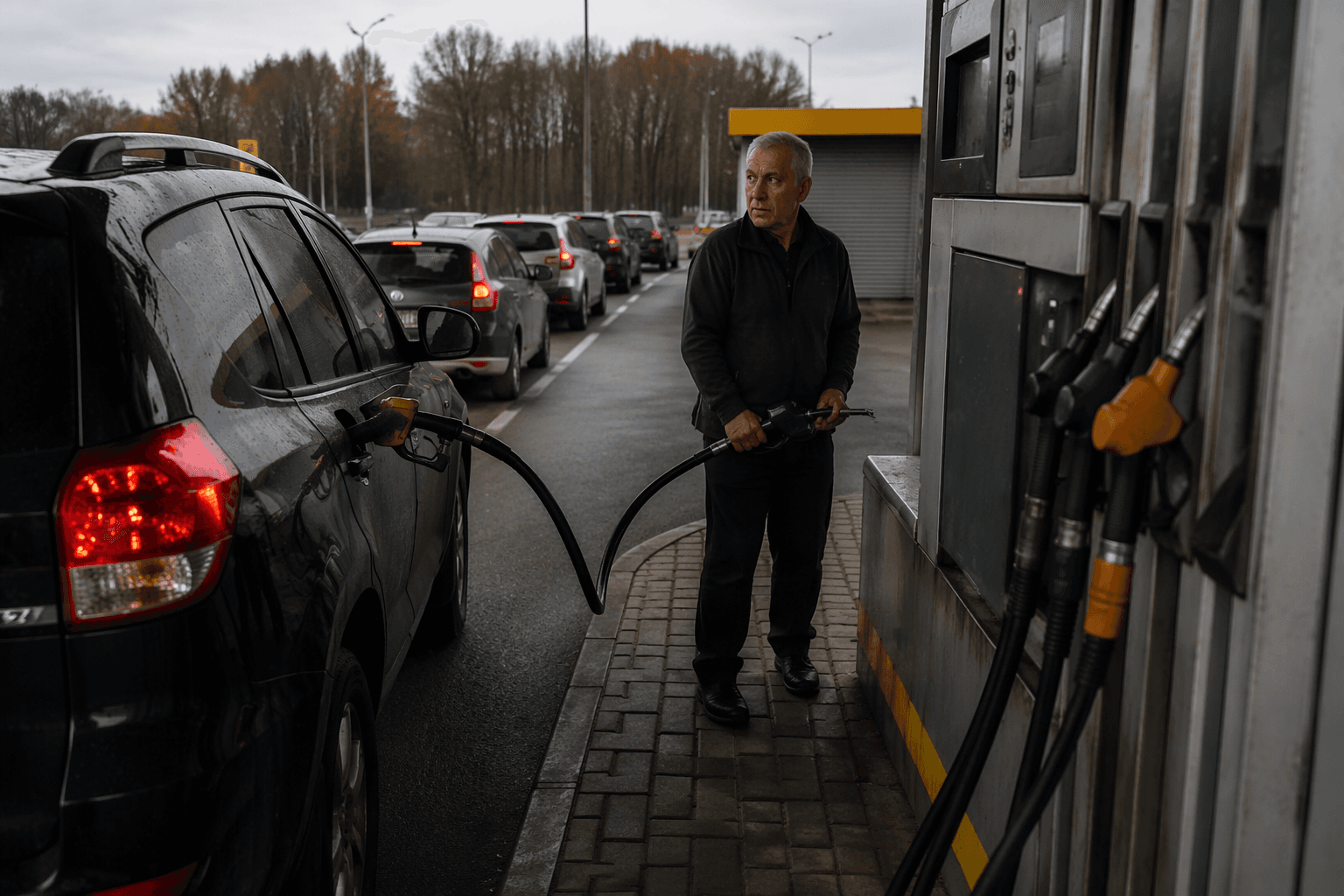
The economic stakes at the chokepoint are considerable. In 2024, the strait carried an average of 20 million barrels of oil per day, roughly 20% of global petroleum liquids consumption, along with all of Qatar's liquefied natural gas exports. With the closure, approximately 8 million barrels per day of non-Iranian oil from Iraq, Kuwait, Saudi Arabia, and the UAE sits locked out of global markets. One crisis tracker recorded Brent at $109.05 per barrel on 7 April, a 69% rise. Analysts have modeled GDP losses ranging from $590 billion to $3.5 trillion, the upper bound equivalent to 3.15% of world GDP, with comparisons to the 1970s oil shock widely circulating.
Iran's conduct has sharpened the political contours of the standoff. While blocking Western-aligned shipping, Tehran has continued allowing Russian and Chinese-linked vessels to transit freely, a selective enforcement that undercuts any claim of legitimate security necessity and draws an explicit parallel to the legal regime Turkey administers over the Bosphorus. Iran's UN Ambassador Amir Saeid Iravani warned that Iran would "take all necessary measures to defend its people," framing the closure as a sovereign right.
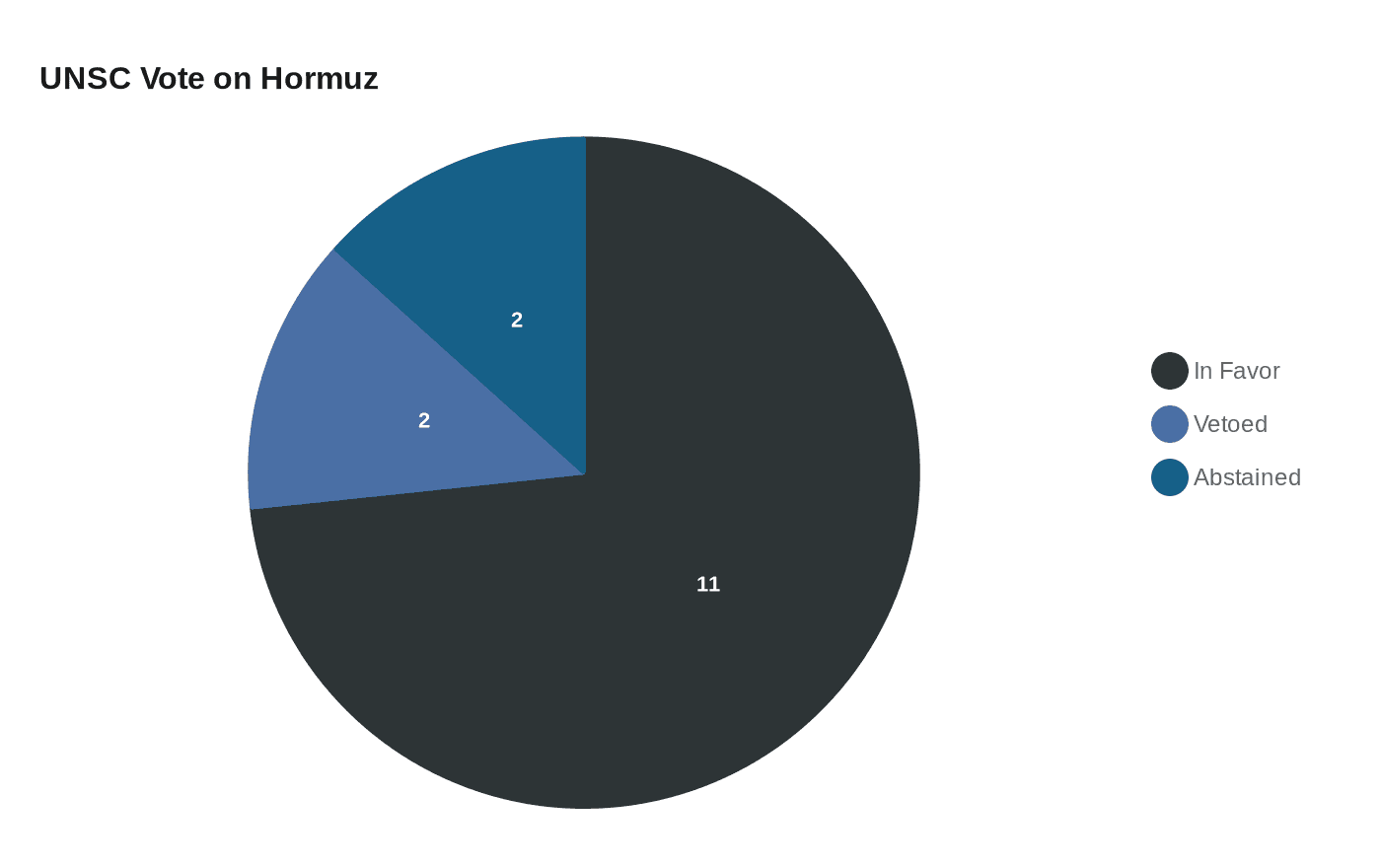
That argument failed to move the UN Security Council. A resolution drafted by Bahrain, originally authorizing states to use "all necessary means" to restore transit, was vetoed by Russia and China on 7 April despite winning eleven votes in favour, with Colombia and Pakistan abstaining. Bahrain's Foreign Minister Abdullatif bin Rashid Al Zayani said the failure to act sent "the wrong signal to the world." A separate earlier resolution condemning Iran's actions had passed 13-0, with Russia and China abstaining rather than blocking.
The White House aligned with Cooper's position, with Press Secretary Karoline Leavitt stating that the "immediate priority of the president is the reopening of the strait without any limitations, whether in the form of tolls or otherwise." Iran allowed 15 ships through in early April, suggesting limited negotiated passage remained possible. But the IRGC claimed shipping halted again on 8 April following what it described as an Israeli ceasefire violation in Lebanon. With the UN mechanism blocked and Russia and China shielding Iran from collective enforcement, Britain's coalition faces the central challenge of every international maritime dispute: a demand without a credible mechanism to enforce it.
This article was produced by Prism’s automated news system from verified source data, official records, and press releases, then run through automated quality and moderation checks before publishing. The system is built and supervised by the people who set the standards it runs under. Read our full AI policy.
Did this article answer your question?