Northern Lights Dazzle UK Skywatchers With Vivid, Stunning Colors
Scott Mellis watched the sky "erupting in colour" over a Scottish lighthouse as a G4 geomagnetic storm pushed the northern lights into UK skies and as far south as New Mexico's 32° latitude.
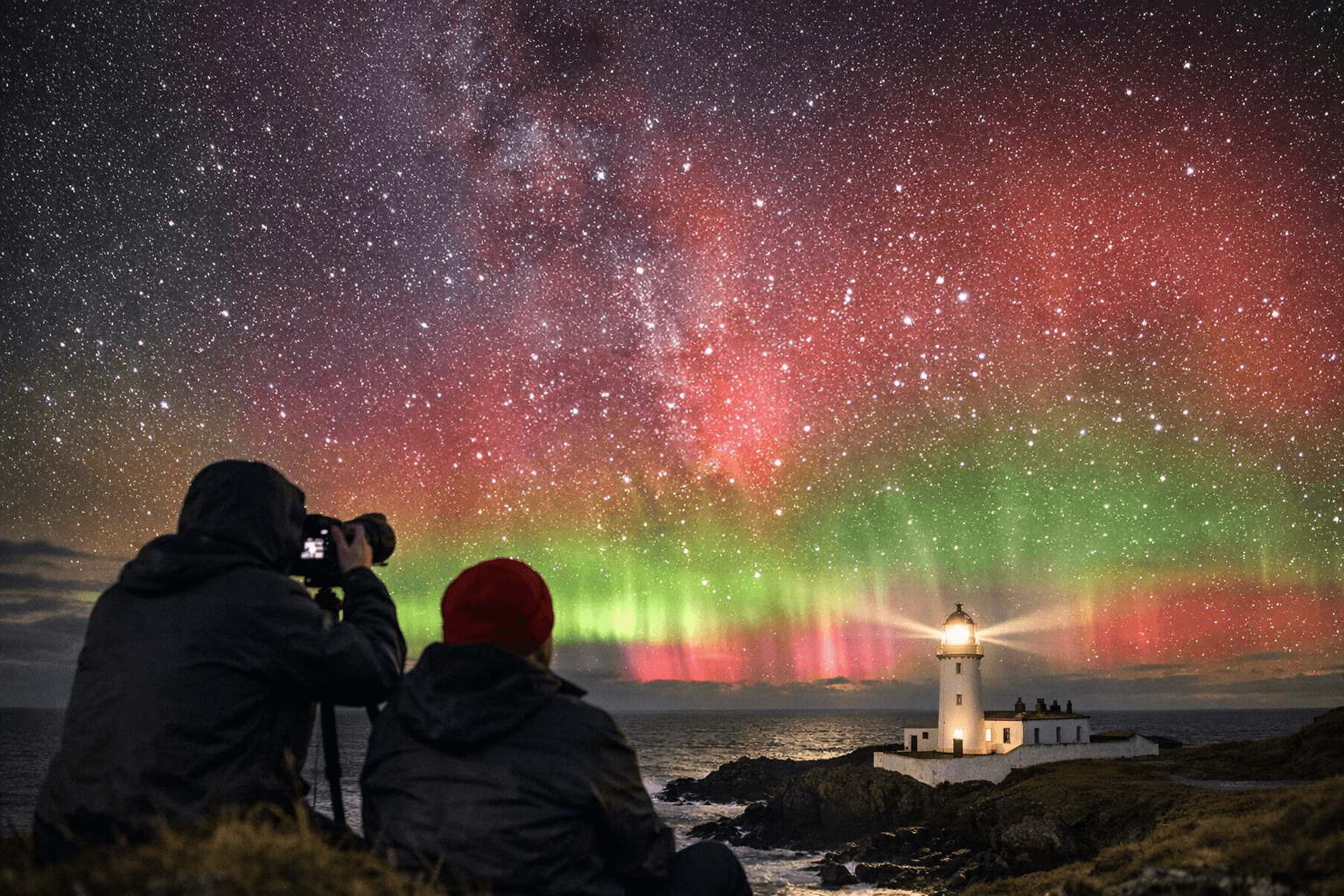
Scott Mellis stood at Covesea Lighthouse in Lossiemouth, Scotland, on the night of Jan. 19 and watched vivid green auroras erupt overhead with a striking patch of red behind the lighthouse tower. "Wow, what a night it was last night with the sky erupting in colour," he told Space.com by email. He was far from alone.
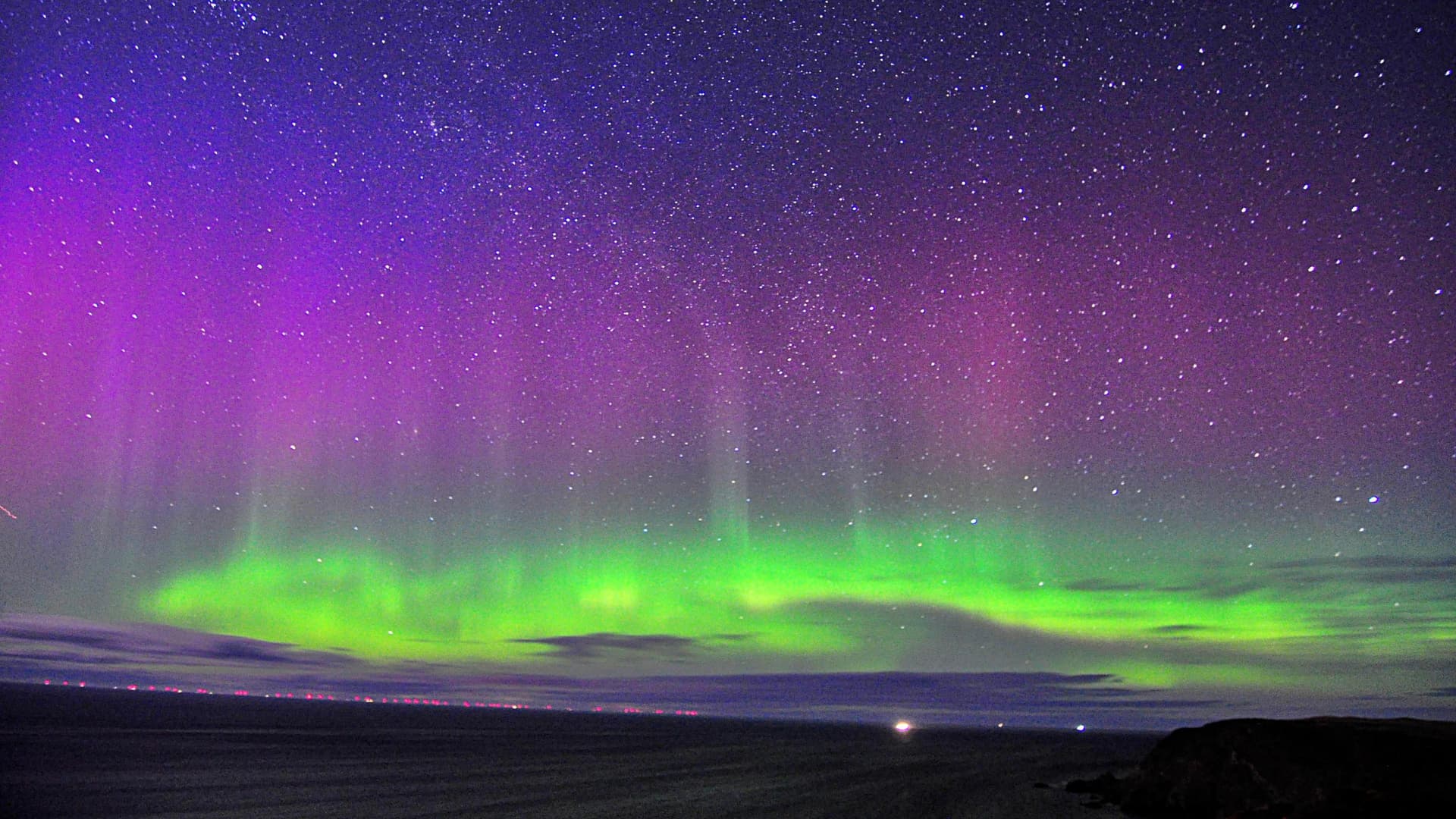
Monday night saw the sky illuminated by a powerful G4 geomagnetic storm that pushed the northern lights across the UK and well beyond its usual northern fringe. Displays of blue, pink and green were sighted in Wales, Scotland, Northern Ireland, the North West and even as far south as Devon. Skywatchers across Europe and North America scrambled for their cameras, and many posted their shots directly to X.
The images that emerged told the story of a rare, continent-spanning event. In western France, photographer Oscar Chuberre captured a vibrant red aurora filling the sky above Portsall, with bright green aurora below and the lights of nearby houses mirrored in the bay's water. Across the English Channel in Etretat, photographer Lou Benoist pointed his lens at the famous chalk cliffs and found subtle green auroras peeking through a gap in the cloud cover. Even an overcast sky could not fully suppress the display.
Further along the French coast, photographer Mathieu Rivrin set up a timelapse above the Côte de Granit Rose, the Pink Granite Coast of Brittany, posting the footage to X on January 20, 2026, with the hashtags #auroresboreales and #bretagne. In North Rhine-Westphalia, Germany, photographer Sascha Schuermann captured vivid red and green auroras filling the sky with trees silhouetted in the foreground.
The reach of the storm extended across the Atlantic. Aurora chaser Alex Masse photographed tall aurora pillars from Kerwood, Ontario, Canada, at 10:55 p.m. local time. Most remarkably, photographer Greg Gage sent images from Deming, New Mexico, recorded at 32° latitude, a location far outside the range where the northern lights ordinarily appear. New Mexico is far too south to be considered a realistic destination for seeing the Northern Lights, and sightings there typically require extreme solar storm conditions.
The geomagnetic storm was categorised as G4, or "severe," and the NOAA Space Weather Prediction Center confirmed that storms of this intensity are powerful enough to affect satellites and communication systems on Earth. The storm's strength closely matched the significant event recorded in November 2025.
The Northern Lights are caused by a coronal mass ejection: energised particles from the Sun build up, then erupt as light, changing colour as they interact with oxygen and nitrogen in the atmosphere. Oxygen and nitrogen emit light at different wavelengths, creating the colourful displays typically associated with the northern lights, from soft greens to vivid reds and purples.
While the peak of the display passed in the days following the initial storm, the Met Office confirmed that auroral activity was expected to decline with no further coronal mass ejections in the immediate forecast. The images Mellis, Rivrin, Chuberre and the others captured that January week will serve as a record of one of the most geographically expansive aurora events since solar activity intensified near the peak of Solar Cycle 25.
Sources:
Know something we missed? Have a correction or additional information?
Submit a Tip