YouTuber Faked Live Stream to Create Alibi While Killing Pregnant Partner
Stephen McCullagh, 36, was convicted of murdering Natalie McNally after a fake 6-hour gaming stream he posted to YouTube as an alibi was exposed as pre-recorded.

Natalie McNally's last message to Stephen McCullagh, sent at 5:59 p.m. on December 18, 2022, was "Good luck. I might have a peek at your live stream later." Police analysis of her YouTube account showed she had logged on to watch him at 8:24 p.m., just as McCullagh was making his way to her house to kill her.
A jury of six men and six women took two hours to find McCullagh, 36, from Woodland Gardens in Lisburn, guilty of killing McNally, 32, who was 15 weeks pregnant with his child, at her home in Silverwood Green, Lurgan, County Armagh. The verdict was unanimous. McCullagh was sentenced to life imprisonment, with the minimum tariff to be set at a later date.
During the five-week trial at Belfast Crown Court, jurors heard McCullagh had "lied and lied again" and "peddled this false alibi" that he was live streaming on YouTube on the evening of McNally's murder. The crime was a "planned, calculated, premeditated murder" which McCullagh had "hoped to get away with," prosecutors said.
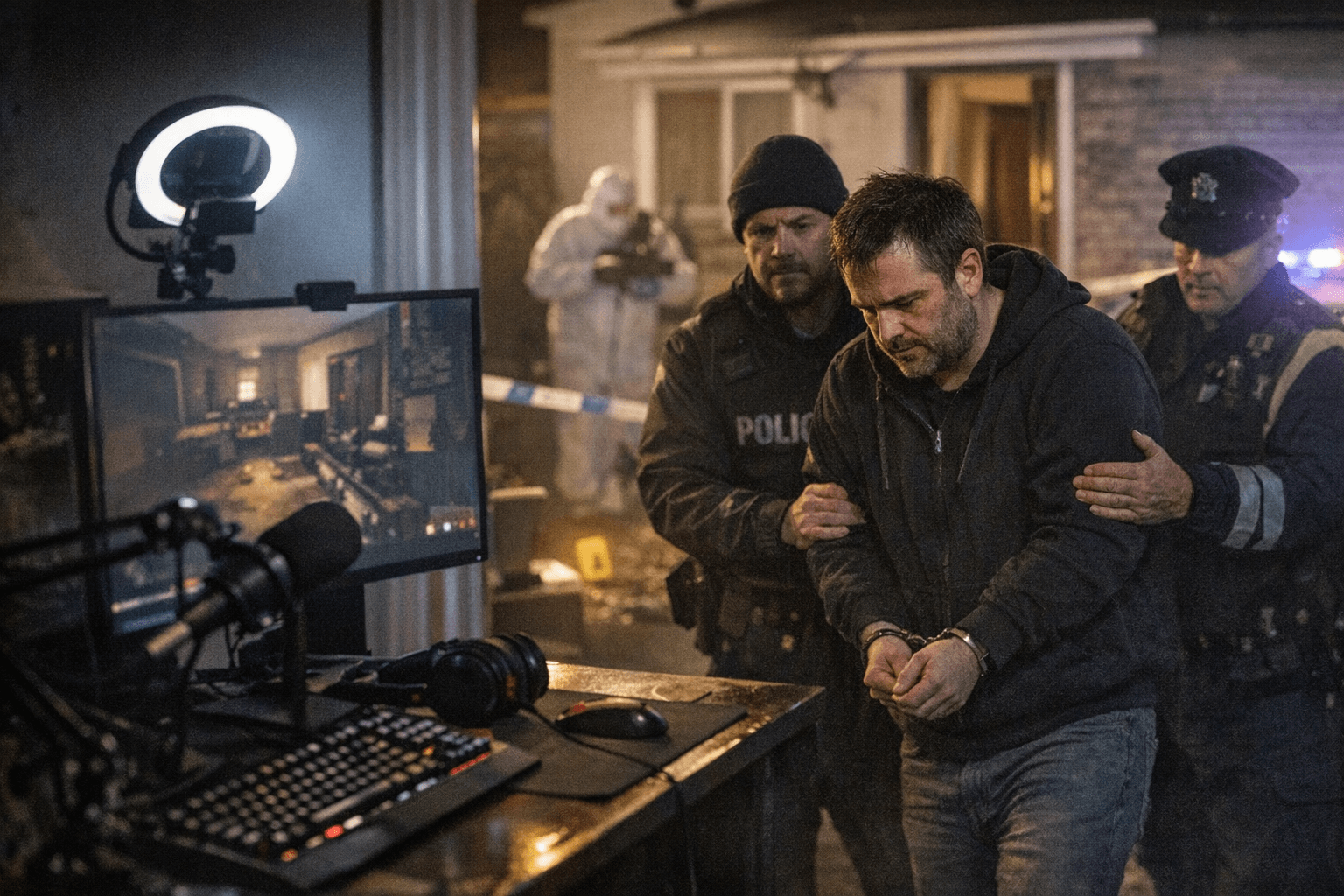
A YouTuber and gamer, he had posted a fake six-hour livestream on his account as a cover while he travelled from Lisburn to Lurgan to commit the murder. The stream showed McCullagh playing Grand Theft Auto: Vice City. He told viewers he could not interact with chat because of "technical issues," which later became a major clue in the case. McCullagh had been arrested soon after McNally's death but was initially ruled out as a suspect because the livestream appeared to give him an alibi. PSNI Detective Chief Inspector Neil McGuinness told the court that McCullagh later admitted during interviews that the video had been recorded around December 14, 2022, four days before the killing.
Had McCullagh not missed a train after the murder, he might have evaded justice entirely. A neighbor's CCTV footage showed a person get out of a taxi outside his Lisburn home, and that footage led police to rearrest him and seize his computer. It was this breakthrough that led cyber crime experts to discover that the live stream was false.
A post-mortem examination found that, in addition to multiple stab wounds, McNally had been severely beaten and had sustained several facial fractures and broken bones in her neck. Prosecution barrister Charles MacCreanor said that "flirty" messages between McNally and some males, including some of a "sexual nature," had been found on her phone, and these may have "enraged" McCullagh, who had the passcode to unlock her device.
The court also heard that McCullagh left his phone in McNally's family home after the killing to record audio and determine whether her family suspected him. Prosecutors described the scheme as a "sophisticated, calculated and cool-headed plot" carried out by someone "capable of deception beyond imagination."
McCullagh denied the charge and, in a case built entirely from circumstantial evidence, declined to give evidence on his own behalf, instead blaming an ex-boyfriend of McNally's. Judge Patrick Kinney thanked the McNally family for the "dignity" they had shown throughout the trial.
The YouTube account where McCullagh posted the fake livestream was deleted overnight following the verdict. Northern Ireland has one of the highest femicide rates in western Europe. Speaking outside the court, the McNally family thanked family, friends and the wider public for their support, saying that without it "we would not have got through this most difficult time in our lives." A tariff hearing is scheduled for May to decide the minimum time McCullagh must serve before he can be considered for release.
Know something we missed? Have a correction or additional information?
Submit a Tip