Norway to Ban Social Media for Children Under 16
Norway said it will force social platforms to verify users’ ages, putting the fight over underage access and privacy into law.
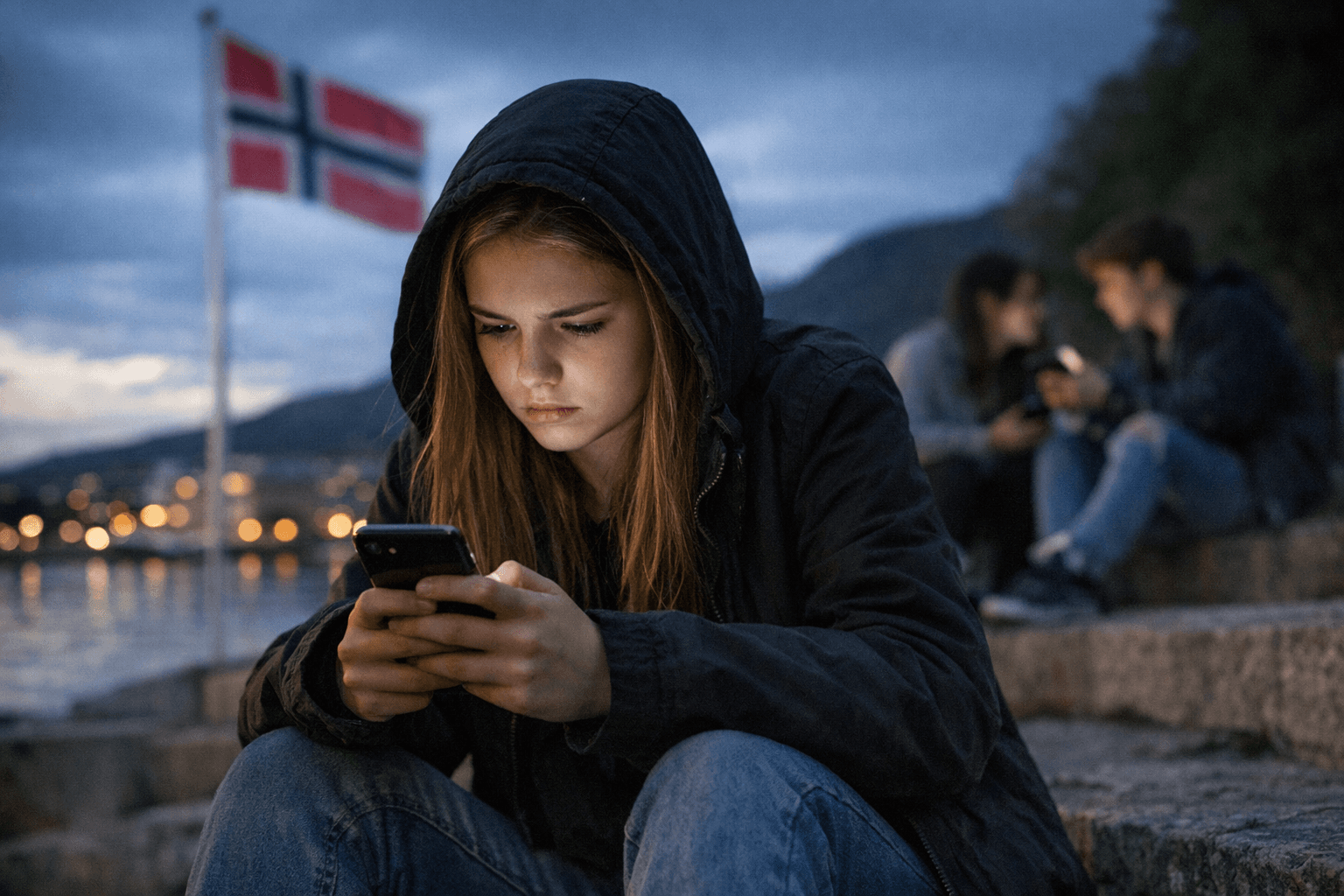
The hardest part of Norway’s under-16 social media ban may not be the vote in parliament. It is proving age, enforcing compliance, and forcing platforms to shut out children without building a new surveillance system in the process.
Norway said on April 24 that it would present a bill by year-end to bar children from using social media until they turn 16, and it would make technology companies responsible for age verification. That shifts the practical burden to the platforms themselves, turning a long-running policy debate into a legal test of whether companies can actually keep minors off their services.
Prime Minister Jonas Gahr Stoere framed the move as a defense of childhood, saying, “We want a childhood where children get to be children.” The government said the measure is meant to stop algorithms and screens from taking over everyday life, a message that reflects growing political concern across Europe about the role social media plays in children’s routines, attention and mental health.
The plan also places Norway alongside Australia, which moved earlier to ban social media use by children under 16. Across Europe, governments are trying to rein in the use of platforms such as Instagram, Facebook, TikTok, Snapchat, YouTube and X, though Norway has not said exactly which services would fall under its proposal. That uncertainty matters because the practical enforcement questions are the same no matter the app: how to verify age reliably, how to police compliance, and how to block underage users without making it easier for companies to collect sensitive personal data from everyone else.
That is the larger test case now unfolding in Norway. If platforms are required to enforce age limits, lawmakers will have to decide what counts as proof of age, who checks it, and what penalties apply when the system fails. If the rules are too weak, children will find easy workarounds. If they are too intrusive, the policy could create a broader privacy tradeoff that reaches far beyond the children it is meant to protect.
Norway’s proposal is one of the clearest efforts yet to push social media responsibility away from parents and onto the companies that profit from young users’ attention. Whether that approach improves children’s well-being or simply drives them toward less regulated corners of the internet will be watched closely by other democracies weighing tougher child-safety rules online.
This article was produced by Prism’s automated news system from verified source data, official records, and press releases, then run through automated quality and moderation checks before publishing. The system is built and supervised by the people who set the standards it runs under. Read our full AI policy.
Did this article answer your question?


