Global hunger deepens, 266 million faced acute food insecurity in 2025
Acute hunger hit 266 million people across 47 countries, while 35.5 million children were malnourished and two famines were confirmed in Gaza and Sudan.
Conflict, drought and shrinking aid pushed acute hunger to 266 million people across 47 countries and territories in 2025, leaving 1.4 million people in catastrophic conditions and 35.5 million children acutely malnourished. The 10th Global Report on Food Crises, produced by a network of 18 partners, said the total represented almost 23 percent of the analyzed population and nearly double the share recorded in 2016. The number of people facing catastrophic hunger was nine times higher than it was a decade ago, underscoring how quickly a crisis once treated as temporary has hardened into a long-running global emergency.
Conflict remained the main driver, accounting for more than half of all people facing severe hunger. Qu Dongyu, head of the Food and Agriculture Organization of the United Nations, called acute food insecurity “persistent and recurring,” while the report said nearly half of food-crisis contexts also faced nutrition crises tied to poor diets, disease and broken essential services. Famine was confirmed in Gaza Governorate and parts of Sudan in 2025, the first time the report recorded two separate famine contexts in the same year. The risk of famine still persists in Gaza, Sudan and South Sudan in 2026, and the report said the sharpest malnutrition problems remained in places where conflict and collapsed services overlap.
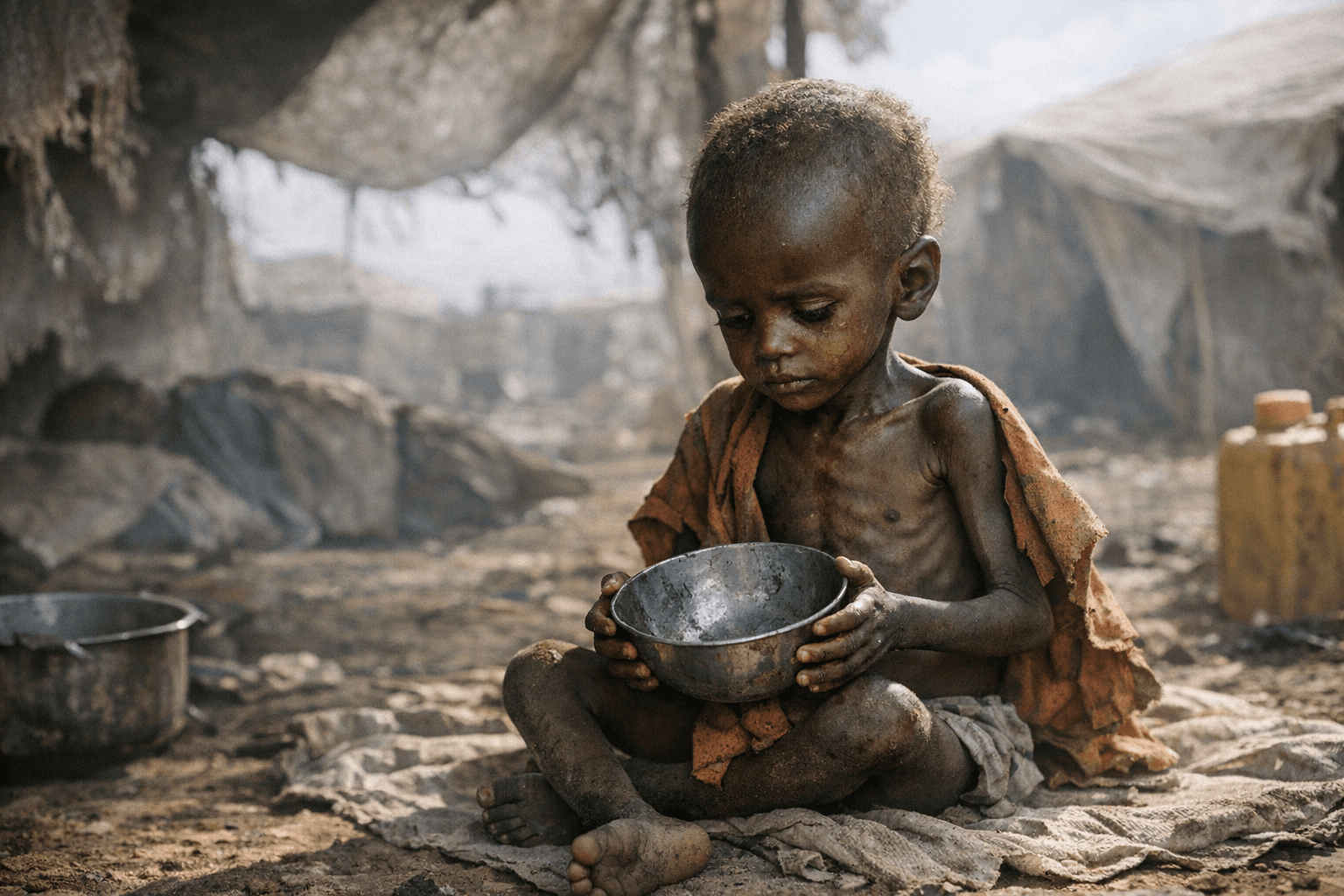
The crisis was also tightly concentrated. Ten countries, Afghanistan, Bangladesh, the Democratic Republic of the Congo, Myanmar, Nigeria, Pakistan, South Sudan, Sudan, the Syrian Arab Republic and Yemen, accounted for two-thirds of all people facing high levels of acute hunger. Haiti was expected to be the only country to move out of the most catastrophic band this year, helped by improved security and increased aid, but the report said pressure remained intense across West Africa and the Sahel, where conflict and inflation continue to collide. The report said 2025 was the second-highest severity year on record, a sign that the worst hunger shocks are no longer isolated to one conflict zone or one drought cycle.

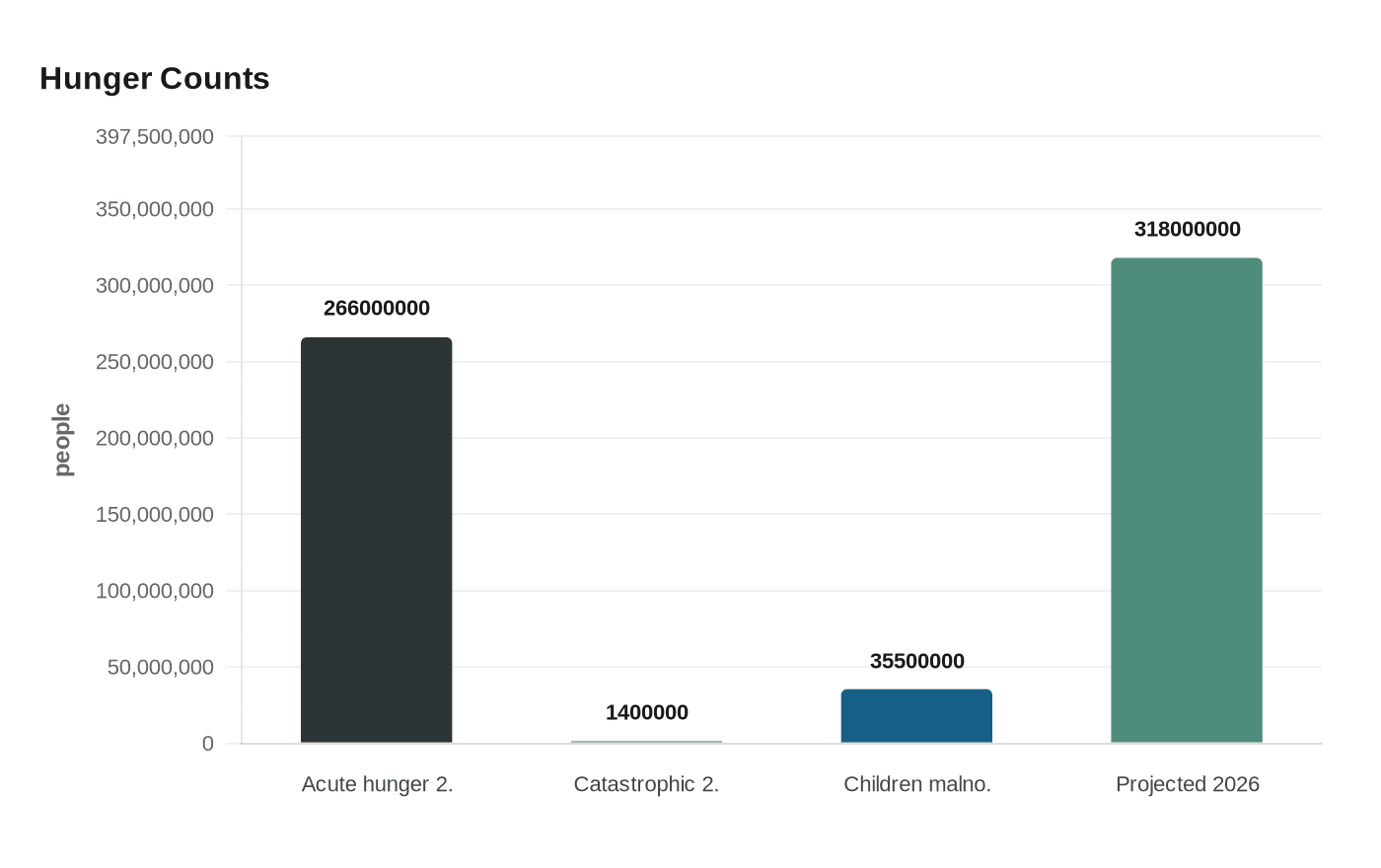
For 2026, the World Food Programme expects 318 million people to face crisis levels of hunger or worse, but says funding will allow it to prioritize only about 110 million of the most vulnerable people. The agency has put that effort at $13 billion, yet current funding forecasts indicate it may receive close to half that amount. Alvaro Lario, head of the International Fund for Agricultural Development, said the world is seeing “persistent shocks over time,” warning that food insecurity has become a stability issue, not just a humanitarian one. He also said the U.S.-Israeli war on Iran could disrupt energy and fertilizer trade, lift food prices in import-dependent countries and add another round of inflation over the next six months.
This article was produced by Prism’s automated news system from verified source data, official records, and press releases, then run through automated quality and moderation checks before publishing. The system is built and supervised by the people who set the standards it runs under. Read our full AI policy.
Did this article answer your question?


