Iranian Foreign Minister heads to Pakistan as U.S. talks linger
Araghchi was headed to Islamabad as Pakistan tried to keep U.S.-Iran talks alive. The move looked as much like a diplomatic pause button as a breakthrough.
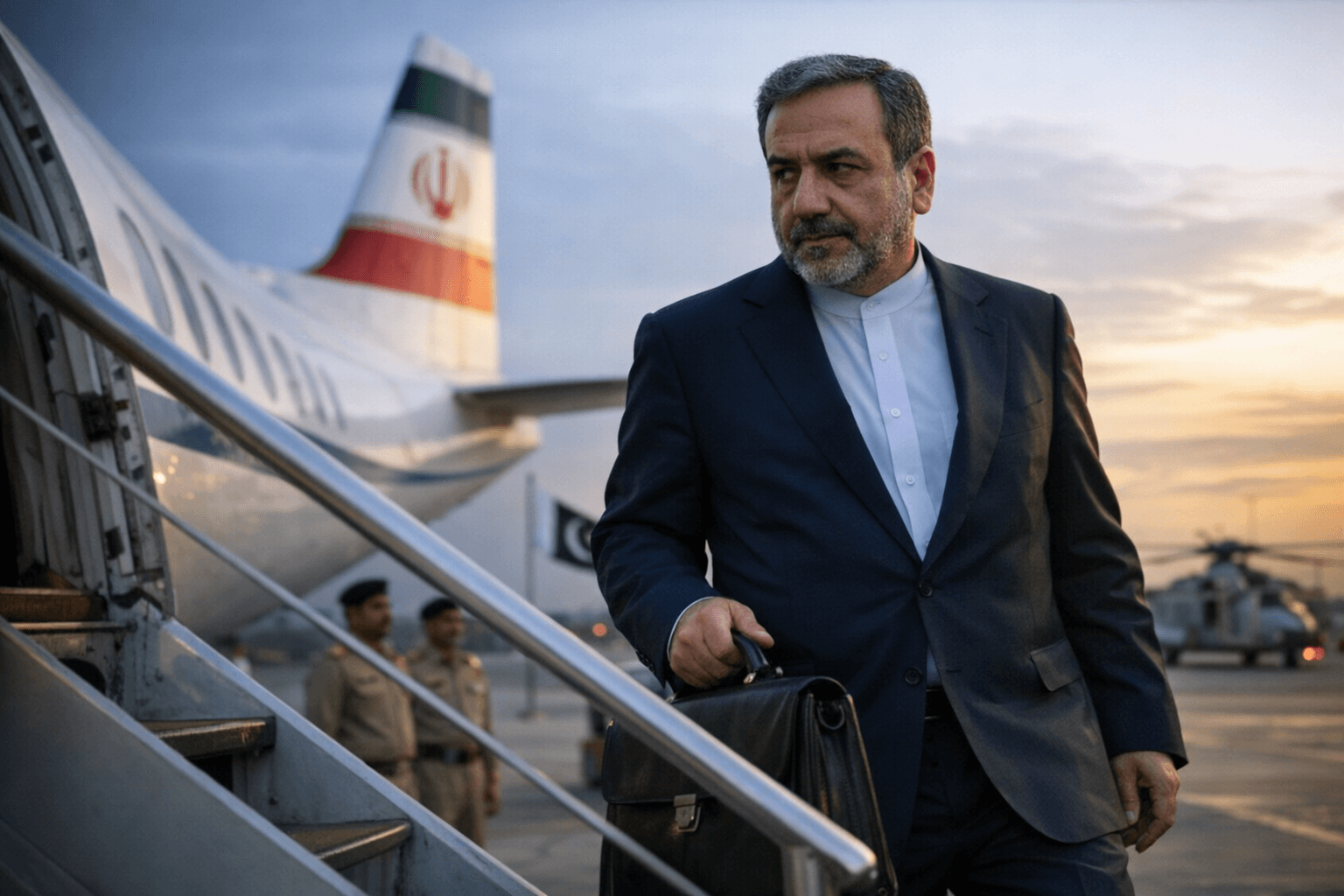
Abbas Araghchi was headed to Pakistan on Friday night with a small delegation, placing Islamabad at the center of a fragile effort to keep U.S.-Iran talks from stalling out completely. Pakistan had spent days working the channels on both sides, even as the first round of direct talks in Islamabad on April 11 and 12 ended without an agreement.
The visit came after Pakistan’s Interior Minister, Mohsin Naqvi, said on April 20 that preparations in Islamabad for a second phase of talks had been completed. Prime Minister Shehbaz Sharif had already traveled to Saudi Arabia, Qatar and Turkiye in mid-April to push diplomacy forward, a sign that Islamabad was trying to act as a regional relay point while the crisis widened beyond the negotiating table.
The leverage Pakistan actually had was limited but real. It was able to offer a venue, a set of channels and a measure of trust to both Tehran and Washington at a moment when neither side had much room to climb down publicly. President Donald Trump later said the United States would indefinitely extend its ceasefire with Iran at Pakistan’s request, after the ceasefire was reported to be due to expire on April 22. That extension bought time, but not a deal.
Even so, Araghchi’s stop in Islamabad did not read as a straightforward sprint toward direct negotiations. Iranian state media described the trip as bilateral in nature, and Araghchi was also expected to continue on to Moscow and Muscat. That itinerary suggested Pakistan was functioning more as a diplomatic hinge than as the final venue for a breakthrough, keeping contacts alive while the broader regional pressure continued to build.
The unresolved talks carried wider consequences than the bilateral file between Washington and Tehran. Shipping through the Strait of Hormuz remained a concern, and the ceasefire itself was only one part of a broader Middle East confrontation that had already pushed Pakistan into repeated rounds of shuttle diplomacy. If Islamabad succeeds, it will be because it can stay useful to both sides at once. If not, the trip will be remembered as a symbolic move that bought time while the military pressure continued.
This article was produced by Prism’s automated news system from verified source data, official records, and press releases, then run through automated quality and moderation checks before publishing. The system is built and supervised by the people who set the standards it runs under. Read our full AI policy.
Did this article answer your question?


