NTSB finds FAA ignored warnings before Reagan National collision
NTSB investigators say systemic FAA failures led to a midair collision near Reagan National that killed 67 people and was "100 percent preventable."
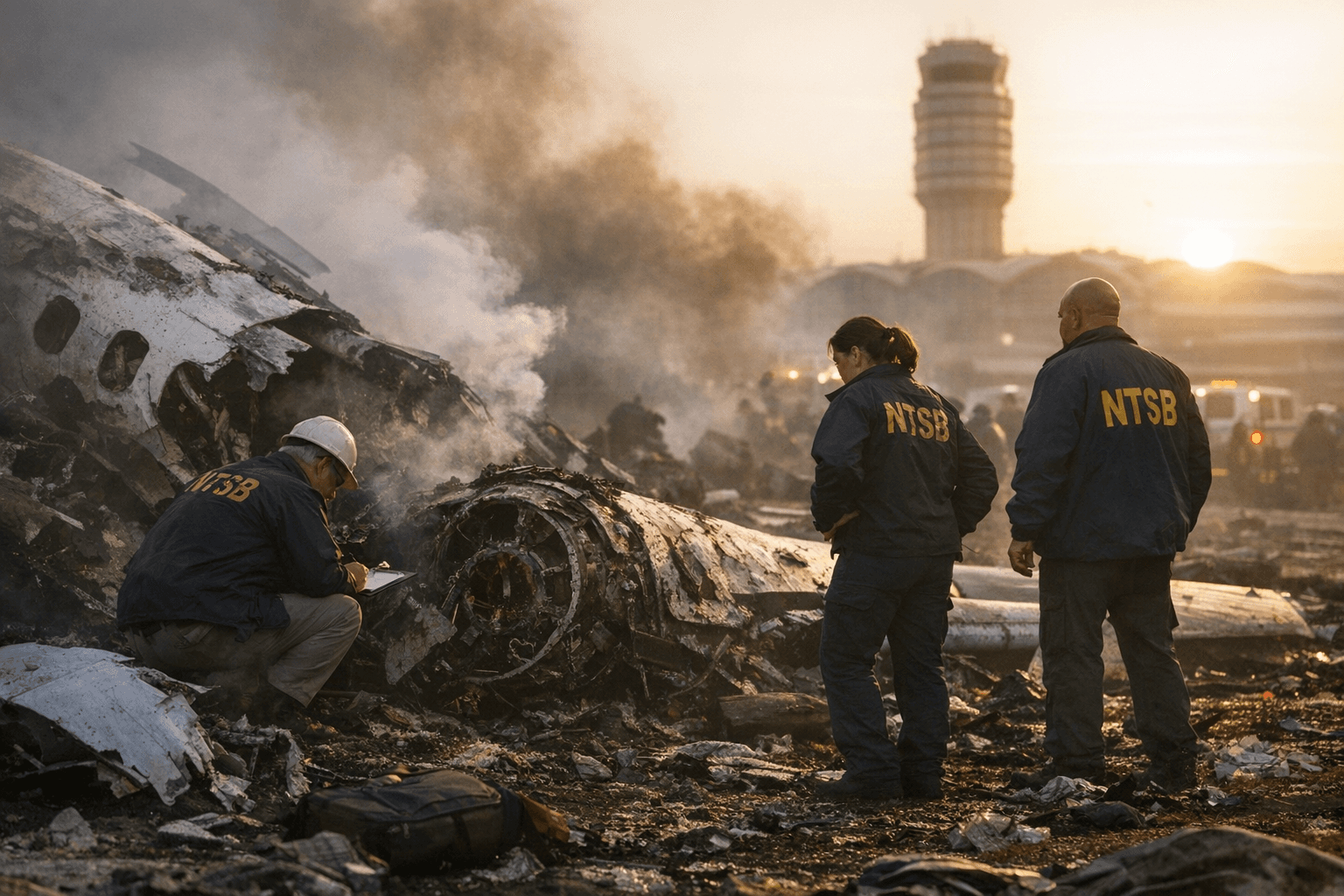
At an NTSB hearing, board chair Jennifer Homendy and investigators concluded that systemic failures at the Federal Aviation Administration contributed to the deadly midair collision near Reagan National Airport that killed 67 people. The agency said the crash was "100 percent preventable," and investigators faulted the FAA for ignoring warnings that might have averted the disaster.
The collision, which occurred Jan. 27 near Washington’s Reagan National, has prompted urgent scrutiny of the nation’s air-traffic oversight and emergency preparedness. NTSB members described a pattern of missed signals and lapses in safety management that left regulators and frontline staff unable to prevent a catastrophe that investigators say should not have happened.
The human toll was immediate and devastating. Local hospitals and emergency responders were pressed into mass casualty operations as families sought information about loved ones. The scale of the loss will ripple through communities for years, imposing long-term physical and mental health needs on survivors and bereaved families and straining local health systems already coping with tight budgets and staffing shortages.
Public health officials and hospital administrators are now planning for a prolonged recovery phase that will include trauma care, rehabilitation, and expanded behavioral health services. Past disasters show that survivors and first responders are at heightened risk for post-traumatic stress, depression, and chronic illness; ensuring access to equitable mental health care will be a critical challenge in the weeks and months ahead.
Beyond immediate care, the NTSB’s findings raise wider policy questions about how the FAA monitors risk and responds to warnings from within its system. Investigators described systemic weaknesses rather than isolated human error, framing the crash as a failure of regulatory culture and processes. That assessment is likely to intensify calls from safety advocates and lawmakers for more aggressive oversight, clearer lines of accountability, and strengthened reporting and remediation mechanisms at the agency.
For communities already subject to unequal access to care and support, the consequences can be especially severe. Low-income families, people without robust insurance coverage, and communities of color often face greater barriers to recovery after disasters. Advocates say federal and state responses should prioritize equitable access to medical care, counseling, financial assistance, and legal support for affected families to prevent the crisis from compounding existing disparities.
The NTSB will continue its investigation and is expected to move toward formal recommendations aimed at the FAA and other stakeholders. Those recommendations could include structural changes to safety oversight, staffing and training requirements, and mechanisms to ensure warnings are escalated and acted upon.
For survivors and families in the Washington region, the immediate need is for coordinated health services, transparent communication from authorities, and sustained support that recognizes both the physical and emotional scars of a tragedy deemed preventable. The NTSB’s stark conclusion places responsibility on federal regulators and elected officials to translate the finding into concrete reforms that reduce risk and protect communities moving forward.
This article was produced by Prism’s automated news system from verified source data, official records, and press releases, then run through automated quality and moderation checks before publishing. The system is built and supervised by the people who set the standards it runs under. Read our full AI policy.
Did this article answer your question?


